Gun Up Weapon Shooter: Upgrade Strategy and Survival Tips
What Kind of Game Is This?
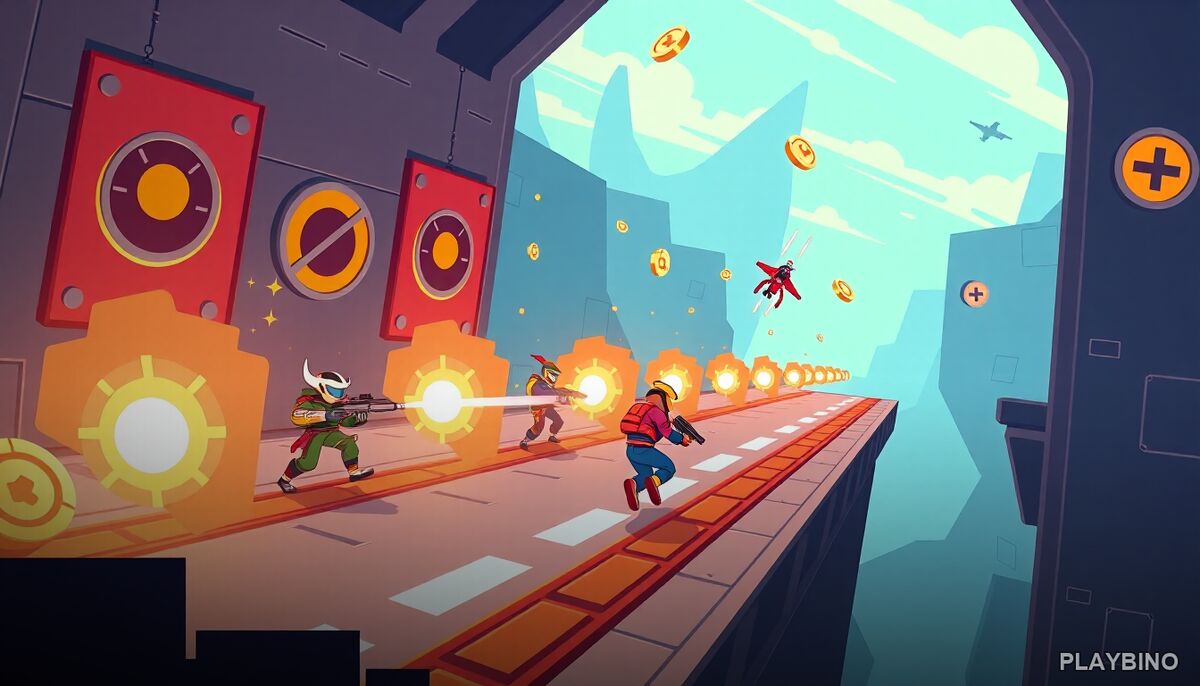
Gun Up Weapon Shooter blends endless runner momentum with idle-style upgrade decisions and fast shooting action. You sprint forward through increasingly dangerous courses, blasting targets and collecting coins while dodging hazards that demand sharp timing. The loop is short and punchy — each run ends quickly, but the upgrades you buy between attempts compound over time, making the next attempt feel meaningfully different. Try the full run on PlayBino and see how far your first build takes you.
The Three Upgrade Paths
The core decision in every session comes down to three distinct investment directions. Each one changes how your runs feel and how fast you progress through the difficulty curve.
Fire Rate
Pumping points into fire rate turns your weapon into a constant stream of damage. This works well early when enemies and targets appear frequently and you need sustained output rather than burst power. High fire rate also helps clear obstacles faster before they become a timing problem.
Income Boost
Increasing your coin income accelerates the entire upgrade cycle. If you invest here early, you unlock heavier weapons sooner and can pivot to other paths more freely. It feels slower at first, but the compounding effect becomes obvious after several runs.
Level Progression
Pushing through levels faster gives you access to heavier artillery earlier. This path rewards players who are already surviving long enough to reach later stages, making it a stronger choice once your dodging skills are consistent.
Hazards and Timing
Spinning blades are the most punishing obstacle in the game. They require you to read the rotation pattern and commit to a gap rather than hesitating mid-run. The game does not slow down for you — the runner keeps moving, so your decision window is narrow. Early on, losing to blades feels frustrating, but after a few attempts the timing becomes readable. Other hazards scale with distance, so runs that go further introduce new patterns that demand the same kind of pattern recognition.
Balancing Offense and Survival
One tension that defines the skill ceiling here is knowing when to prioritize shooting versus dodging. Aggressive players who focus entirely on targets can miss incoming hazard windows. Cautious players who focus on dodging may not collect enough coins to fund meaningful upgrades. The strongest approach treats both as simultaneous priorities rather than alternating between them. Coins appear along the run path, so route choices matter — cutting toward a coin cluster sometimes puts you closer to a blade, and that trade-off is worth thinking about consciously.
How Runs Scale Over Time
Distance and difficulty increase together, which means a run that reaches twice as far is also twice as demanding. This scaling keeps the idle progression from feeling too passive. Even with strong upgrades, the player still needs to execute. The game rewards both investment and execution, which gives it more staying power than a pure idle title. If you enjoy this kind of weapon-focused progression loop, the Gun Evolution experience covers similar ground with its own take on firepower upgrades.
Who Plays This Well
Players who like short, repeatable sessions with visible progression between attempts tend to get the most from this format. The action and shooting tags are accurate — this is not a passive experience. Reflexes matter, especially past the early stages. The idle element comes from the upgrade system rather than the gameplay itself, so do not expect to leave it running unattended. Each run requires active input, and the satisfaction comes from combining a well-built loadout with clean execution through a difficult stretch of hazards.
"