Headlight Heroes: Master the Two-Lane Multitasking Challenge
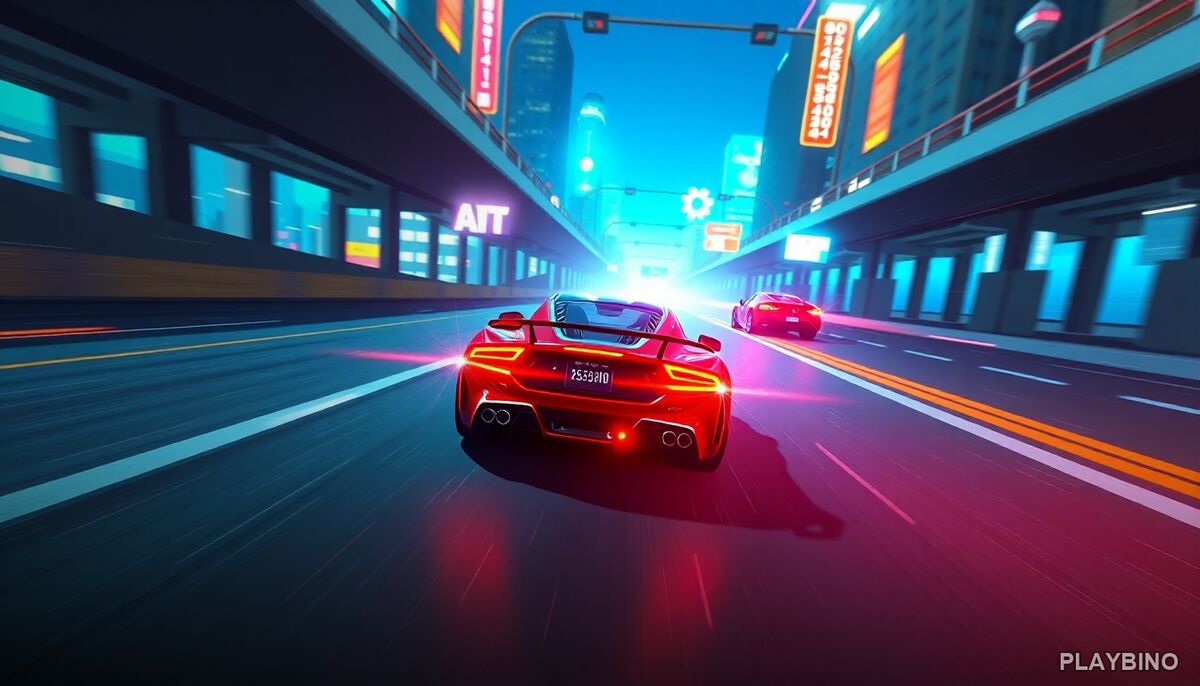
Two Cars, One Brain
Most endless runners ask you to watch one lane and react to one stream of obstacles. Headlight Heroes flips that assumption entirely. You control two vehicles simultaneously, each traveling down its own highway lane, both responding to your input at the same time. The result is something that feels genuinely different from standard arcade runners — and you can try the full challenge in your browser without any download.
The core tension is immediate. Moving one car to dodge an obstacle may push the other into danger. Every input carries double consequences, and that single design choice turns a simple mechanic into a surprisingly demanding skill test.
How the Split-Control Mechanic Works
Both vehicles move forward automatically, and your job is to shift their lane positions to avoid traffic and obstacles. The controls are intentionally simple — the complexity comes entirely from managing two independent threat streams at once.
Divided Attention Under Pressure
Early in a run, obstacles arrive at a pace that lets you process each lane separately. As speed increases, that luxury disappears. You start reading both lanes as a single field of information, developing peripheral awareness that lets you catch threats on either side without losing track of the other. This is where the skill ceiling actually lives — not in reaction speed alone, but in how efficiently you split your attention.
Flag Collection and Risk Management
Flags appear across both lanes, often in positions that require you to steer toward a risk to collect them. The game never forces you to grab them, but chasing a higher score means making judgment calls about whether the reward justifies the repositioning. That risk-versus-reward loop adds a layer of strategy on top of the core obstacle avoidance.
What Makes Each Run Feel Different
Traffic patterns shift as sessions progress. Obstacle density increases, and the spacing between safe gaps narrows. No two runs unfold identically, which keeps the arcade loop from feeling repetitive even after multiple attempts. The visual layout helps — both lanes stay clearly visible at all times, so you're never fighting the camera or guessing at off-screen hazards.
- Simultaneous dual-vehicle control with shared input
- Increasing speed and obstacle density as runs extend
- Flag collection with positional risk trade-offs
- Clean lane visibility for tracking multiple threats
- Endless format with score-based progression
Building a Rhythm
The players who last longest in Headlight Heroes aren't necessarily the fastest reactors. They're the ones who develop a scanning rhythm — a consistent left-right attention cycle that processes both lanes before threats become critical. Think of it less like reflex training and more like pattern recognition under time pressure.
Early sessions will feel chaotic. That's normal. After several runs, the brain starts grouping obstacle information more efficiently, and the movements begin to feel more fluid. Progress is real, even when individual runs end quickly.
Who This Game Suits
If you enjoy arcade skill games that reward genuine improvement over time, this format delivers. The multitasking mechanic is unusual enough to feel fresh, and the endless runner structure means there's always a reason to try one more run. It's also a solid mental warm-up — the kind of game that sharpens divided attention in a way that feels productive rather than frustrating.
Players who like obstacle-based arcade challenges with a timing focus may also want to look at another quick skill challenge on PlayBino — Pumpkin Spikes offers a different kind of precision-based arcade tension worth exploring.
The Depth Behind the Simplicity
Headlight Heroes earns its replay value through restraint. The mechanic is narrow by design, but the skill expression within that narrow space is real. Each session either confirms what you've learned or exposes a gap in your multitasking rhythm. That feedback loop — immediate, clear, and consistent — is what keeps the game interesting well past the first few runs.
"