Help Me Tricky Story: Puzzle Logic That Breaks the Rules
What Kind of Puzzle Game Is This?
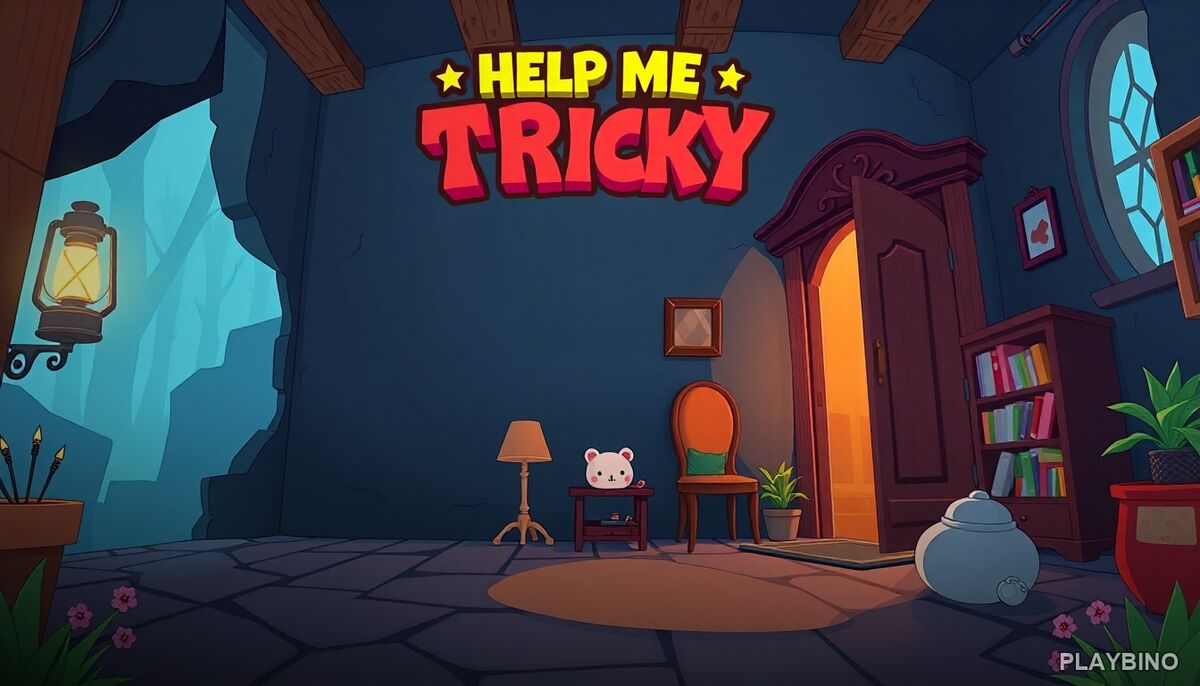
Most puzzle games reward pattern recognition. Help Me Tricky Story rewards the willingness to throw patterns out entirely. Across 17 scenarios, the game drops you into ordinary situations—a toothache, a cheese craving, a minor domestic crisis—and asks you to solve them. The catch is that the solution almost never resembles anything logical on the surface. You can play this brain puzzle on PlayBino directly in your browser, no download needed.
The game sits firmly in the brain and logic puzzle category, but it leans heavily into absurdist humor. Each level is a small scene with interactive elements scattered around, and the challenge is figuring out which ones matter, in what order, and sometimes in what combination. Nothing is explained. That's the point.
How the Puzzle Logic Actually Works
Every level starts with a simple premise. A character needs something. You look at the scene and spot a few objects. You tap what seems obvious. It doesn't work. You tap something else. Still nothing. Then, somewhere between frustration and curiosity, you try something that makes no conventional sense—and the level solves itself with a satisfying little animation.
Interaction and Experimentation
The core mechanic is tapping and dragging objects within each scene. There are no timers and no move limits, which keeps the experience relaxed even when the logic feels elusive. The game never punishes guessing, so experimentation is genuinely encouraged. You might drag one object onto another, tap a background element that looks purely decorative, or interact with something completely unrelated to the stated problem.
Hidden Logic vs. Lateral Thinking
What separates the stronger levels from the weaker ones is whether the solution feels earned. The best puzzles in the game have a hidden logic that clicks the moment you solve them—you laugh, groan, or both. The trick is usually a lateral leap: the game presents a problem in one frame, and the answer lives in a completely different frame of reference. Abandoning your first assumption is always the right move.
Difficulty Curve Across 17 Levels
The early levels ease you in with simpler one-step interactions. By the midpoint, scenarios start layering multiple steps or requiring you to manipulate the scene in a specific sequence. Later levels introduce more visual misdirection, placing obvious-looking objects that do nothing while the actual solution hides in plain sight. The difficulty never becomes punishing, but it does build steadily enough that later levels feel meaningfully harder than the opening ones.
Who This Game Suits Best
If you enjoy puzzle games where the satisfaction comes from the moment of realization rather than from executing a known strategy, this format works well. The whimsical art style and lighthearted scenarios make it accessible, but the lateral thinking required gives it enough depth to hold attention across all 17 levels. Players who like brain teasers, trick questions, or games that reward unconventional thinking will find the format familiar and enjoyable.
- 17 unique puzzle scenarios with distinct setups
- No timers or penalties for wrong attempts
- Colorful, cartoon-style visuals throughout
- Gradually increasing complexity across levels
- Single-player, browser-based, no installation required
A Similar Challenge Worth Trying
The lateral thinking format used here shares DNA with other browser-based brain puzzlers. If the style appeals to you, this look at another hidden-logic puzzle covers Brain Find Can You Find It 2, which uses a comparable trick-question structure across a different set of scenarios. It's a natural next stop if you want more of the same genre without repeating the same levels.
What Makes Each Solution Feel Satisfying
The small animations that play when you crack a level do a lot of work. They're brief, expressive, and often funny—a visual payoff that makes the moment of discovery feel complete. The game doesn't linger