Hero Pipe: Pipe Puzzle Logic Game Guide
What Hero Pipe Is About
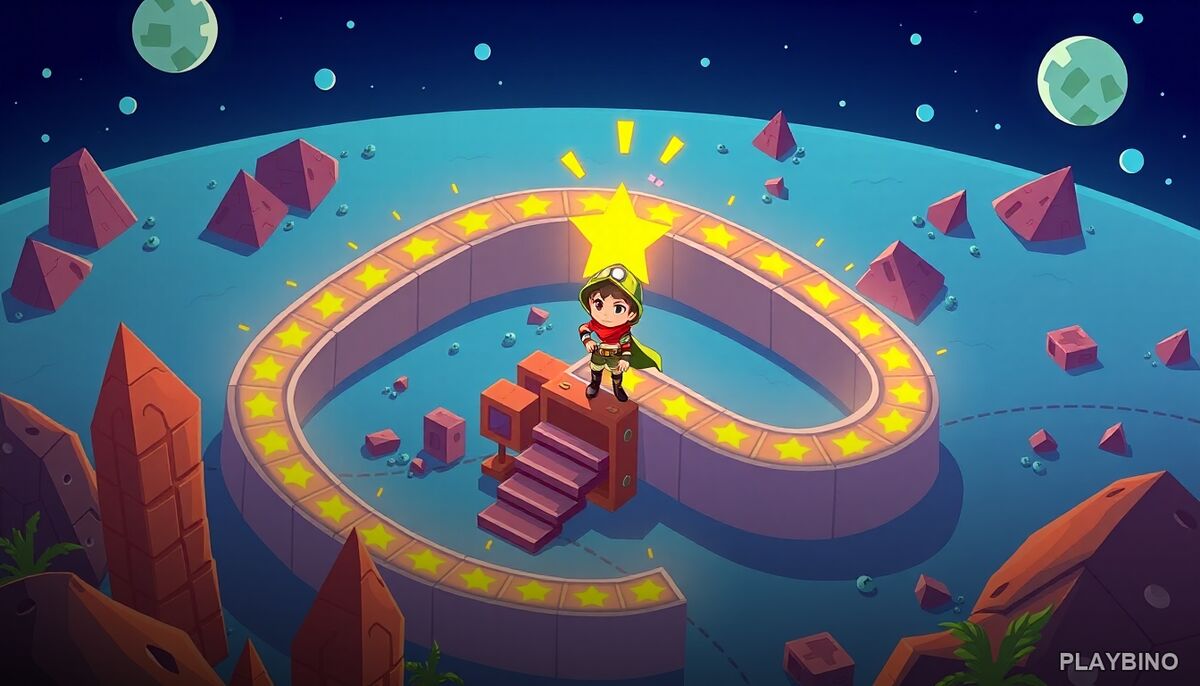
At its core, Hero Pipe is a spatial reasoning puzzle built around one satisfying idea: rotate the right pipe pieces into the right positions and watch a safe path snap into place. Each level drops you onto a grid filled with disconnected pipe segments, and your job is to rotate and arrange them until a continuous route forms from the hero's starting point to the exit. The stakes are simple but the layouts get surprisingly tricky. Play it directly in your browser and the first few levels ease you in gently before the real challenge begins.
Grid Logic and Pipe Mechanics
Every puzzle operates on a grid. Each cell holds a pipe segment — straight, curved, T-shaped, or crossing — and most of them start misaligned. A single tap or click rotates a piece ninety degrees. The goal is to chain every segment into one unbroken path without any dead ends or leaks.
Rotation and Placement
The rotation mechanic sounds simple, but the difficulty comes from the interdependence of pieces. Fixing one junction often exposes a misalignment two cells away. You end up working in loops, adjusting, backtracking mentally, and re-evaluating the whole grid before committing. That back-and-forth is where the brain puzzle element really lives.
Path Visualization
Before touching anything, experienced players scan the full grid and mentally trace possible routes. Identifying fixed pieces — segments that can only connect in one logical direction — gives you anchor points to build outward from. This visualization step separates fast solvers from players who rotate randomly and hope for the best.
How Difficulty Scales
Early levels use small grids with straightforward pipe shapes. Mid-game introduces larger grids, more complex junctions, and branching paths that need to be ruled out one by one. Later puzzles add monsters positioned along certain routes, meaning the correct path must also avoid hazards — not just connect start to finish. That layer of threat turns a pure logic puzzle into something with a light adventure feel, reinforcing why the hero framing works.
- Small grids with basic curves and straights in early levels
- T-junctions and crossings that multiply possible arrangements
- Hazard tiles that eliminate certain routing options
- Larger grids demanding full-board planning before the first rotation
- Treasure objectives that reward optimal path choices
Strategy That Actually Helps
Start from the endpoints. The hero's starting cell and the exit tile are fixed, so trace backward and forward from both ends simultaneously. Where those mental paths must converge narrows your options fast. Next, identify any pipe piece that has only one valid rotation given its neighbors — locking those in first creates a skeleton for the rest of the solution. Avoid rotating pieces at random; every unnecessary move adds cognitive noise and makes the grid harder to read.
When monsters appear on the board, treat their positions as hard walls. Any pipe segment that would route the hero through a monster tile is automatically invalid, which actually simplifies the logic by cutting down the solution space.
The Feel of Solving a Level
There is something distinctly satisfying about the moment a pipe puzzle clicks into place. Hero Pipe leans into that feeling — the visual feedback of a completed path lighting up, the hero moving through the connected route, the sense that your spatial reasoning did the work. It is not a twitchy or reflex-based experience. The pace is entirely yours. You think, rotate, adjust, and solve. That calm but mentally engaging rhythm is what keeps logic and brain puzzle fans coming back through progressively harder grids.
Players who enjoy redirecting beams or signals through a grid will recognize a familiar satisfaction here. Laser Overload Dose operates on a comparable routing concept, and that puzzle challenge is worth exploring once you have worked through Hero Pipe's later levels.
Who This Game Suits
Hero Pipe fits anyone who enjoys quiet, methodical puzzle-solving over fast reflexes. The logic-based structure rewards patience and spatial thinking rather than speed. It works well in short sessions — most puzzles take a few minutes — but the escalating grid complexity gives it enough depth to hold attention across many levels. PlayBino hosts it with no download required, making it easy to pick up between other browser games whenever you want a focused brain challenge.