Hill Climb Truck Transform Adventure: Physics, Strategy, and Vehicle Switching
What This Game Actually Is
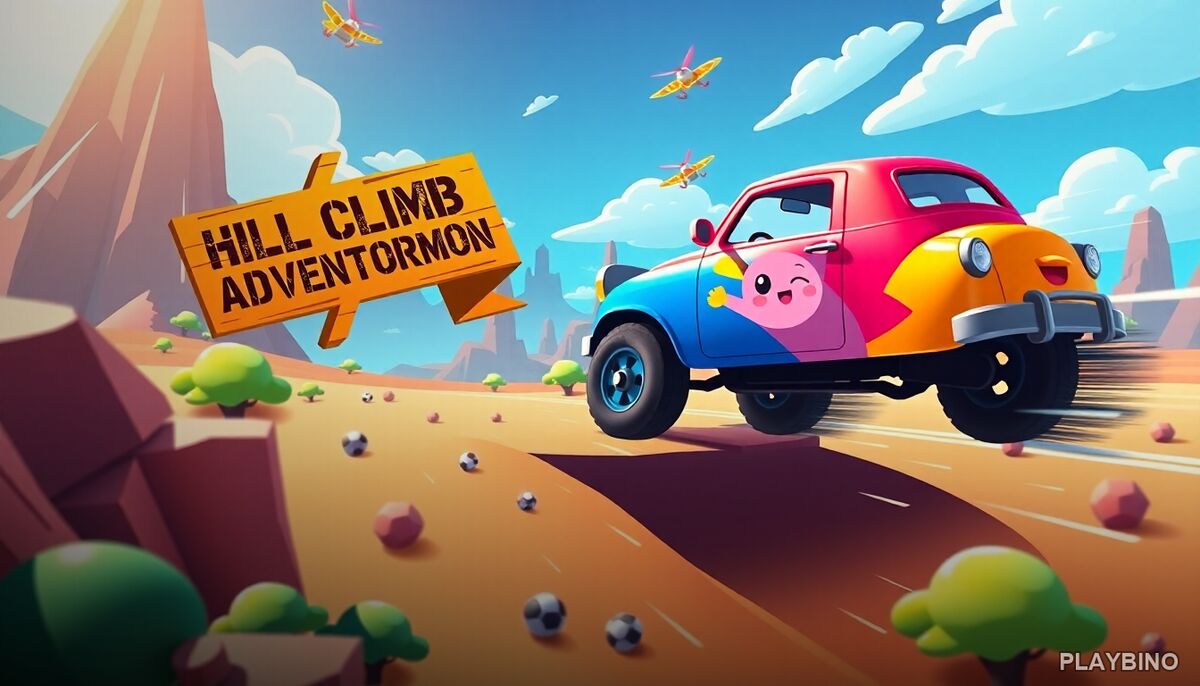
Most hill-climbing games hand you one vehicle and send you uphill. Hill Climb Truck Transform Adventure does something different. You get three vehicles to switch between mid-run, and the decision of when to swap is just as important as how well you drive. The terrain shifts constantly — steep inclines, loose rocky paths, and wide gaps that punish the wrong vehicle choice immediately. Try the full run to feel how quickly one bad transformation call can send you rolling backward.
The Transformation Mechanic
This is the core of the game. Each of the three vehicles handles differently, and the landscape is designed to expose those differences. One vehicle might power through a steep incline but struggle across a rocky flat. Another might skip over gaps that would swallow a heavier ride. Switching at the wrong moment — mid-slope, off-balance, or too late — often ends the run.
Timing the Switch
The best transformation moments are just before an obstacle type changes, not during it. Watching the terrain a few seconds ahead and pre-switching gives you the momentum and balance you need. Reactive switching usually comes too late and costs you the run.
Matching Vehicle to Terrain
Rocky sections reward vehicles with better suspension and grip. Steep inclines need torque and forward weight distribution. Gap sections require speed and a lighter frame. Learning which vehicle fits which surface is the real skill progression in this game.
Balance and Momentum
Physics drive every outcome here. Momentum builds as you accelerate downhill and bleeds away on steep climbs. Tipping too far forward or backward triggers a crash, and on uneven terrain that threshold shifts constantly. The simulation layer means you can't just hold the accelerator and expect results — you have to manage tilt, speed, and surface friction together.
Repair plates scattered across each course give you a recovery option when crashes damage your vehicle. They don't reset your position, but they let you keep going rather than restarting from scratch. Knowing where they appear on a course changes how aggressively you can push between them.
Acceleration Tiers
Four acceleration tiers let you tune power output to match what's ahead. Lower tiers give you more control on technical sections. Higher tiers push through long climbs but make balance harder to maintain. Switching tiers mid-run — like dropping power before a tricky gap and boosting again on the next flat — is one of the more satisfying skill expressions the game offers.
- Tier 1 – precise control, low speed, best for tight rocky sections
- Tier 2 – balanced output for mixed terrain
- Tier 3 – strong climb power with moderate instability
- Tier 4 – maximum speed, high tipping risk, best on open stretches
Who This Game Suits
If you enjoy racing games that reward observation and planning over pure reflexes, this one fits well. The skill ceiling is real — early runs will end in crashes, but each attempt teaches you something about the course layout and vehicle behavior. It plays like a simulation more than an arcade racer, and the transformation mechanic keeps it from feeling repetitive.
Among Hill Climber takes a lighter approach to the same genre — that hill-climbing challenge is worth a look if you want something with a different feel but similar uphill mechanics.
Course Design and Replayability
The punishing landscape design is intentional. Courses don't ease you in — gaps appear early, inclines get steep fast, and the repair plates are spaced to keep pressure on. PlayBino hosts the game in-browser with no install needed, which makes it easy to jump into a quick run and just as easy to lose twenty minutes trying to beat a difficult section. The combination of physics, vehicle choice, and terrain variety gives each course more replay value than a standard hill racer.