Hole Fighters: Precision Puzzle Game with Physics-Based Challenges
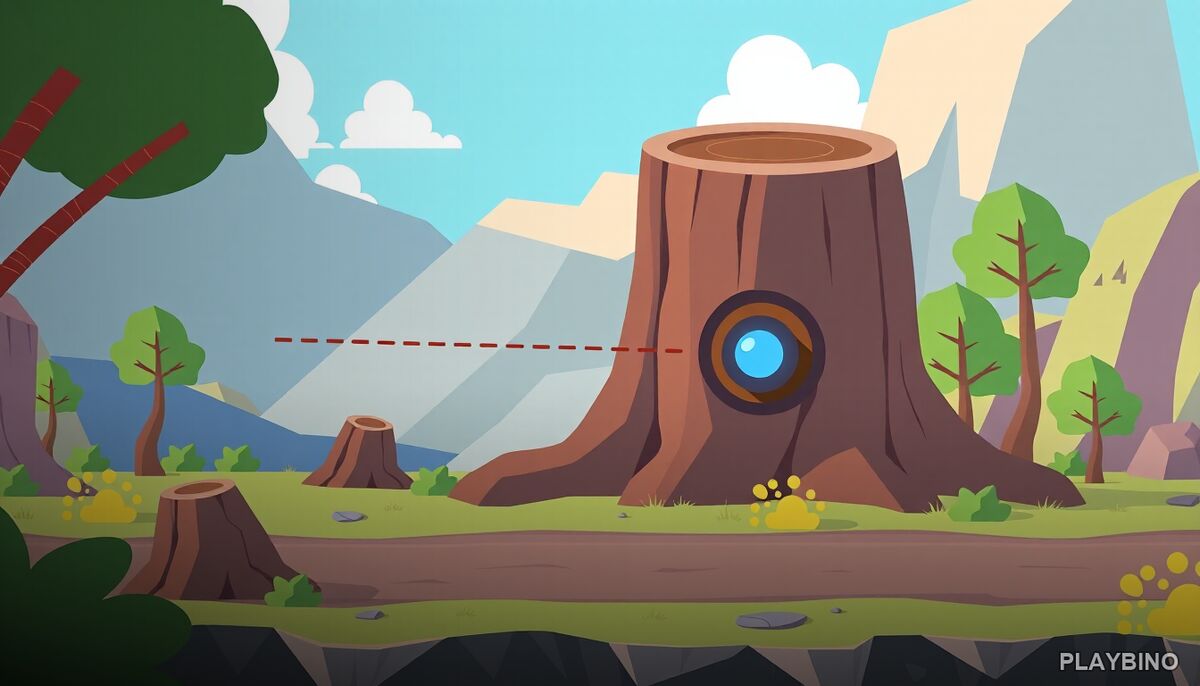
What Hole Fighters Is About
At its core, Hole Fighters is a single-player skill puzzle built around one satisfying mechanic: launching balls into carved wooden holes set into tree trunks. The woodland setting keeps things visually calm, but the challenge underneath is anything but relaxed. Each level asks you to read the layout, account for obstacles, and commit to a shot with the right angle and force. Try the full challenge and you'll quickly discover that guessing rarely works here.
Physics and Shot Mechanics
The physics engine is the backbone of every decision you make. Balls don't just travel in straight lines — they bounce, curve, and react to whatever stands between the launch point and the target. Getting a feel for how the ball behaves on different surfaces takes a few attempts, but once it clicks, the game opens up in a satisfying way.
Angle and Timing
Most failed shots come down to one of two things: a slightly wrong angle or poor timing on moving elements. The game rewards players who pause before shooting rather than firing repeatedly and hoping for the best. A few seconds of observation before each attempt often makes the difference between a clean solution and repeated failure.
Bouncing Off Obstacles
Some levels are designed specifically around ricochets. Rather than a clear path to the hole, barriers force you to use the environment as part of the trajectory. These stages feel more like geometry puzzles than traditional aim-and-shoot challenges, which keeps the puzzle variety strong across the level set.
How Difficulty Builds Across Levels
Early stages introduce the basic shot mechanics without much interference. As you progress, Hole Fighters layers in moving barriers, tighter openings, and combinations of obstacles that require more deliberate planning. The difficulty curve doesn't spike harshly — it builds steadily, giving you enough time to develop instincts before the harder configurations appear.
- Static barriers that require precise angle calculation
- Moving platforms that demand shot timing
- Narrow gaps that punish any deviation from the correct path
- Multi-bounce routes where the ball must hit intermediate surfaces
The Trial-and-Error Loop
A big part of what makes this game work is how it handles failure. Missing a shot doesn't feel punishing — it feels informative. Each attempt gives you slightly more data about how the level behaves, and that knowledge compounds quickly. Players who lean into experimentation tend to progress faster than those who try to solve each stage purely through logic before taking a shot.
This loop of attempt, observe, adjust, and retry is genuinely engaging for anyone who enjoys skill-based puzzles. The woodland visual design keeps the atmosphere light, which helps offset the occasional frustration of a tricky stage.
Who This Game Suits
Hole Fighters works well for players who enjoy single-player puzzle games that reward patience over speed. It's not a reflex-heavy arcade experience — the emphasis is on reading layouts, predicting physics, and refining your approach over multiple attempts. If you like games where the satisfaction comes from cracking a specific challenge rather than beating a score, this fits that preference well. On a completely different note, Little Princess Magical Tale offers a contrasting browser experience for players who want something story-driven and visually imaginative instead.
Practical Tips Before You Start
A few habits will help you move through levels more efficiently on PlayBino. First, always watch moving obstacles through at least one full cycle before shooting — the timing window is often narrower than it looks. Second, don't assume the most direct path is the intended one; many levels are designed around indirect routes. Third, if a shot keeps failing by a small margin, try adjusting the angle in tiny increments rather than making large corrections. Small changes in trajectory can produce dramatically different outcomes given how the physics system works.