Horror Hospital: Survive the Clown Waves in This First-Person Shooter
What You're Walking Into
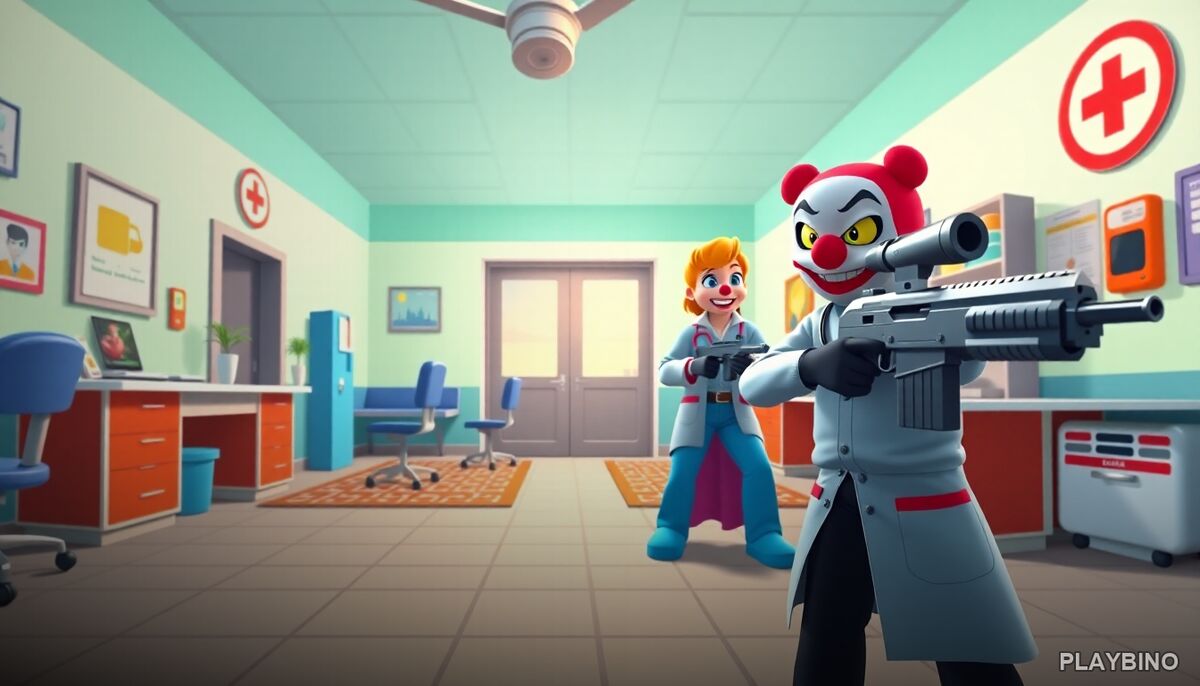
An abandoned hospital. Flickering lights. Clowns rushing at you from every darkened corridor. Horror Hospital wastes no time establishing its premise — you are trapped, outnumbered, and the only way out is through. This first-person shooter runs entirely in the browser, and the full experience is available on PlayBino without any download required.
The setting does a lot of heavy lifting here. Decaying rooms, peeling walls, and narrow hallways create a claustrophobic atmosphere that makes every incoming wave feel more threatening than the last. This is not a passive horror game. You are constantly making decisions about where to stand, what to shoot, and when to reload.
The Wave Structure and Why It Matters
Combat is organized into escalating rounds. Each wave sends a fresh batch of clown enemies at you, and they grow more aggressive and coordinated as the floors progress. Early rounds give you room to breathe and find your footing. Later rounds remove that comfort entirely.
Enemy Behavior
The clowns do not simply rush in a straight line. They converge from multiple directions, which means standing in one spot and spraying bullets will get you killed quickly. You need to read the room, identify chokepoints, and rotate your position when flanked. The pressure builds steadily, and the game rarely lets you relax between threats.
Scoring and the Leaderboard
Points accumulate with each enemy eliminated. Those points serve a dual purpose — they contribute to your leaderboard ranking and fund weapon upgrades between waves. The competitive element adds replay value for players who want to push their score higher after clearing a run.
Weapon Upgrades and Resource Management
Between waves, the points you earn convert into purchasing power for better weapons and improved firepower. Choosing when to upgrade and which weapon to prioritize is one of the more strategic layers the game offers. Spending everything immediately can leave you underprepared for a spike in difficulty. Holding back too long means you face stronger enemies with weaker tools.
The upgrade loop keeps each run feeling progressive. A stronger arsenal changes how you approach positioning and target priority, which means the game shifts in feel as you advance rather than staying static from round one to the end.
Positioning and Survival Strategy
Aim and reflexes matter, but positioning is where most runs are won or lost. The hospital layout includes corridors that funnel enemies toward you and open rooms where threats can surround you from multiple angles. Learning which spaces give you a defensive advantage takes a few runs.
- Use narrow hallways to limit how many enemies can reach you at once.
- Avoid staying in open rooms when a wave begins — corners and doorways offer better control.
- Prioritize faster-moving clowns before they close the distance.
- Reload during brief lulls, not mid-wave when enemies are still active.
- Save stronger weapons for the later, denser waves rather than burning them early.
Who This Game Suits
Horror Hospital is built for players who enjoy action-heavy single-player shooting with a horror atmosphere layered on top. The one-player format means every decision rests entirely on you, and there is no cooperative safety net. If you find wave-based FPS gameplay satisfying — managing resources, adapting positioning, and pushing through increasingly difficult rounds — this game delivers that loop in a compact browser format.
Players who enjoy action games with escalating difficulty and a dark aesthetic will find the pacing familiar but effective. The horror setting distinguishes it from more neutral shooting games without changing the core mechanics that make the genre work.
A Similar Challenge to Consider
If the intensity of wave-based action appeals to you, another action-heavy browser challenge worth trying is Demon Dash: 7 Levels of Mayhem, which pushes a different kind of escalating pressure across structured levels. The tone differs, but the demand for quick reactions and sustained focus carries over."