Horror Run: Surviving the Abandoned Hospital Escape
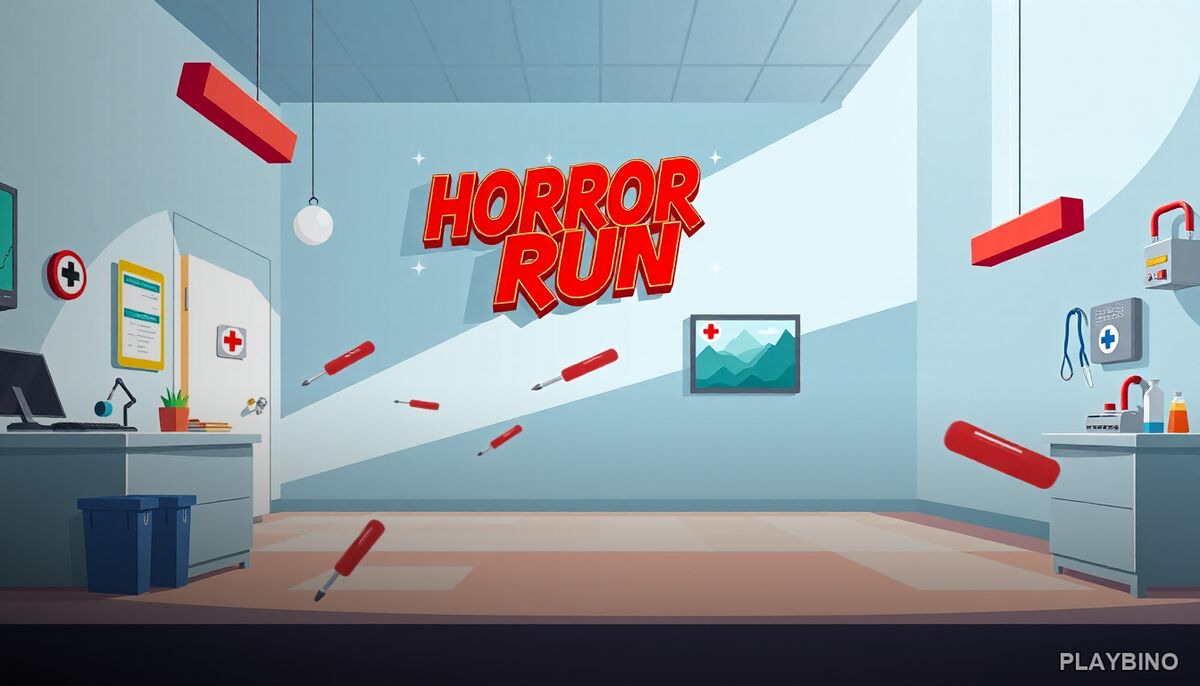
The Setup: An Escape With No Safe Room
Most endless runners put you on a bright track with coins and power-ups. Horror Run strips that comfort away entirely. The setting is an abandoned hospital, the lighting is oppressive, and the threats are not just obstacles — they feel like they belong there. From the first corridor, the atmosphere does real work. You are not collecting points for fun; you are trying to get out alive.
The single-player action format keeps the pressure entirely on you. No teammates, no respawn safety net. Each run is a fresh attempt to push deeper into the hospital before something ends it.
Movement and Corridor Logic
The core loop is familiar to anyone who has played an endless runner, but the execution here leans harder into reaction speed than memorization. Corridors shift in layout and hazard placement, so muscle memory only carries you so far. The full browser version of this escape captures that unpredictability well — the moment you feel settled, the next room resets your confidence.
Timing Your Moves
Jumping, ducking, and lateral movement all have weight to them. Rushing inputs leads to clipping hazards that a half-second of patience would have cleared. The game rewards players who read ahead rather than react at the last frame. Watch the shadows. Creatures and traps often telegraph their position before they become lethal.
Path Choices
Some corridors offer branching routes. Neither path is obviously safer, and the game does not signal which is better. Committing quickly matters more than finding the optimal line — hesitation in a split-path moment almost always costs you more than a slightly worse route chosen with confidence.
What Makes the Hospital Threatening
The hazard design is layered. Static traps like broken equipment and environmental debris sit alongside mobile threats — creatures that patrol or charge depending on their type. Learning the behavioral difference between a stationary hazard and an active enemy changes how you approach each room. A trap can be timed. A creature requires you to either outpace it or find a gap in its pattern.
- Environmental traps: predictable once spotted, punishing if ignored
- Shadow creatures: patrol-based, require timing to pass safely
- Charging enemies: fast and direct, best avoided with lateral movement
- Darkness zones: reduced visibility, forces slower and more deliberate movement
Scoring and Run Progression
Distance is the primary metric. Each run ends with a score tied to how far you reached before the hospital claimed you. There are no mid-run checkpoints, which keeps every attempt feeling consequential. The lack of a save point also means short sessions are just as valid as long ones — you can drop in, run hard for two minutes, and still feel like the attempt had stakes.
Improving your personal distance record becomes the natural goal. The game does not hand out milestones generously, which makes pushing past a previous best feel earned rather than automatic.
Who This Game Suits
If you like action games that use atmosphere as a mechanical tool rather than decoration, this one delivers. The horror framing is not cosmetic — the darkness and creature design actively affect how you read the screen and how quickly you process threats. Players who enjoy endless runners but want something with more tension than a typical obstacle course will find the pacing here genuinely different.
For a contrast in tone, a lighter endless runner experience like Majestic Dash offers a completely different energy if the hospital atmosphere gets too heavy. Both games share the same core reflex-driven structure but land in very different emotional registers.
Practical Tips Before Your Next Run
Stay centered in the corridor when possible — it keeps both branching exits reachable. Do not sprint through darkness zones; the speed advantage is not worth the reduced reaction window. Against charging enemies, move laterally early rather than waiting for them to close distance. And on repeat runs through familiar room types, resist the urge to autopilot — the game reshuffles enough that complacency is its own hazard on PlayBino.