Infinity Path Master: Endless Runner Strategy and Survival Tips
What Kind of Game Is This?
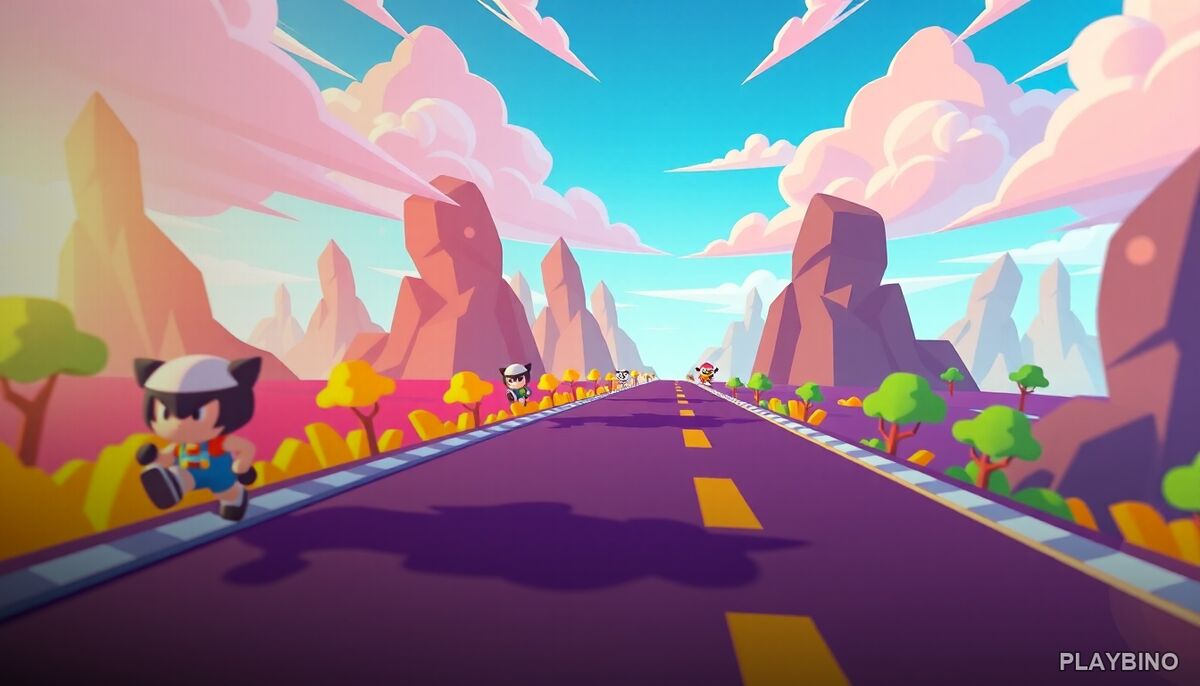
Infinity Path Master is an endless runner stripped down to its sharpest element: the fork in the road. There are no enemies to shoot, no coins to collect in elaborate patterns — just a continuous stream of branching paths demanding your immediate attention. The game builds its tension entirely from movement and choice, and that minimalism is exactly what makes it compelling. You can try the full run in your browser without any download or setup.
How the Path System Works
Each run begins at a manageable pace. Paths split and rejoin, giving you just enough time to read the route ahead. As distance increases, the geometry shifts faster. Lanes narrow, branches multiply, and the window for each decision compresses. The core loop is simple to understand but genuinely hard to execute consistently at speed.
Reading the Route
The key skill early on is learning to look ahead rather than reacting to what's immediately underfoot. Players who focus only on the current split tend to get caught by the next one. Training your eye to scan two or three forks forward makes a real difference in how far a run extends.
Momentum and Rhythm
There's a rhythm to clean runs that experienced players will recognize. When decisions flow without hesitation, the game feels almost musical — a series of timed inputs that build on each other. When that rhythm breaks, recovery is difficult because the pace doesn't slow down to accommodate mistakes.
What Makes Runs Fall Apart
Most failed runs come down to one of two things: hesitation or overconfidence. Hesitating at a fork — holding input too long before committing — often results in clipping the edge of a narrowing path. Overconfidence shows up when players start anticipating patterns that don't actually repeat. The route generation keeps things unpredictable enough that assumptions become liabilities at higher distances.
Difficulty Progression
Infinity Path Master scales pressure gradually rather than throwing sudden difficulty spikes at the player. The early game is almost meditative. The mid-game introduces tighter corridors and faster branching. The late game demands near-constant focus with almost no margin for drift. This layered progression feels fair even when runs end abruptly — the game earns its difficulty through escalation rather than cheap design.
- Early stages: wide paths, slow branching, room to adjust
- Mid stages: narrowing lanes, quicker decisions, less recovery time
- Late stages: compressed geometry, rapid splits, full reflex dependency
Who This Game Suits
Players drawn to action and skill-based arcade challenges will find a lot to work with here. The endless runner format rewards repetition — each attempt teaches something about timing and path reading that the next run can apply. It's not a game that hands out progress; it expects you to earn distance through attention and consistency. GermAway, another quick skill challenge on PlayBino, takes a different approach to arcade action but shares that same demand for fast reactions and focused play.
Practical Tips for Longer Runs
A few habits separate short runs from long ones. First, stay centered on the path rather than hugging either edge — centered positioning gives maximum reaction time for splits in either direction. Second, resist the urge to speed-read the screen; controlled scanning beats frantic eye movement at higher difficulties. Third, accept that some runs will end on decisions that felt correct — the unpredictability is part of the design, not a flaw to fight against.
The game's core appeal is that it asks very little of you conceptually while demanding a great deal physically. That contrast — simple rules, hard execution — is what keeps the endless runner format engaging across many attempts.