Jelly Merge 3D: Spatial Puzzle Strategy and Level Guide
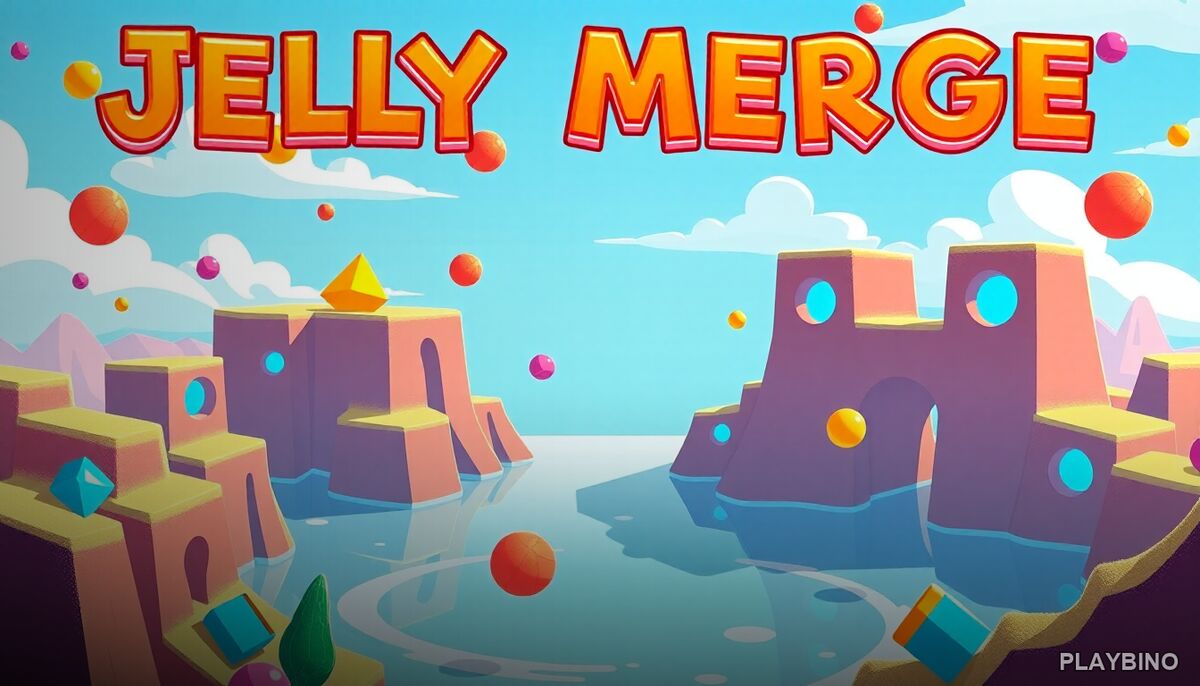
What Jelly Merge 3D Actually Is
At first glance, Jelly Merge 3D looks like a colorful toy. Wobbly, translucent cubes sit on a three-dimensional grid, and your job is simple in concept: slide matching blocks into each other until only one of each color remains. But the moment obstacles appear and the grid fills with four or five distinct colors, the logic puzzle underneath reveals itself. Play it directly in your browser and the spatial reasoning challenge becomes clear within the first few moves.
How the Sliding Mechanic Works
Each move sends a jelly cube sliding in one direction until it hits a wall, an obstacle, or another block. When two identical colors collide, they merge and vanish from the board. The goal is to clear every color by engineering these collisions deliberately.
Path Planning
Because cubes slide freely until stopped, a single move can send a block past the piece you actually wanted to merge it with. You need to think about what sits in the path before committing. Early levels forgive sloppy play, but by the mid-game, a misplaced cube can strand a color with no valid merge route left.
Obstacles and Blocked Cells
Fixed obstacles act as walls inside the grid. They redirect slides and create corridors that force specific sequences. Some puzzles are essentially about using obstacles as tools — bouncing a cube off one blocker to position it correctly for a later merge. Recognizing this turns the obstacles from annoyances into part of the solution.
Progression Across 70+ Stages
The game opens with two-color grids on compact boards. New colors are introduced gradually, and the grid layouts grow more irregular as levels advance. Around the midpoint, you encounter stages where five colors compete for limited space and every move has a ripple effect on the remaining pieces. The 3D perspective helps here — it lets you read the full board layout rather than guessing what sits behind other blocks.
Strategy That Actually Matters
- Work from the edges inward. Cubes near walls have fewer slide directions, so resolving them early reduces board clutter.
- Identify isolated colors first. If one color only has two cubes and a clear path, merge them before the board gets complicated.
- Count your moves mentally. Some stages have a fixed move limit, making efficiency more important than thoroughness.
- Use obstacles intentionally. Plan slides that use a blocker as a stopping point to set up the next merge.
- Avoid chain reactions you haven't planned. Merging one pair can shift the board in ways that block a later combination.
Visual Style and Game Feel
The jelly-textured graphics do more than look appealing. The slight wobble on each cube gives satisfying feedback when a merge happens, and the bright color palette keeps individual pieces easy to distinguish even on dense boards. The 3D camera angle is fixed but well-chosen — it provides enough depth to read spatial relationships without distorting the grid. PlayBino hosts the game with no download required, so the visual experience runs cleanly in a standard browser window.
Who This Puzzle Suits
Jelly Merge 3D sits in a comfortable space between casual match-3 play and genuine logic puzzles. It rewards players who enjoy planning two or three steps ahead but doesn't demand the rigid precision of a pure chess-style puzzle. If you like spatial reasoning and color-matching mechanics, Connect Fruits covers a similar kind of connection-based challenge and is worth comparing once you've worked through a few Jelly Merge stages. Both games share that quality of looking simple while hiding real depth in their later levels.