Jelly Runner: Shape-Shifting Obstacles and Endless Reflexes
What Kind of Game Is This?
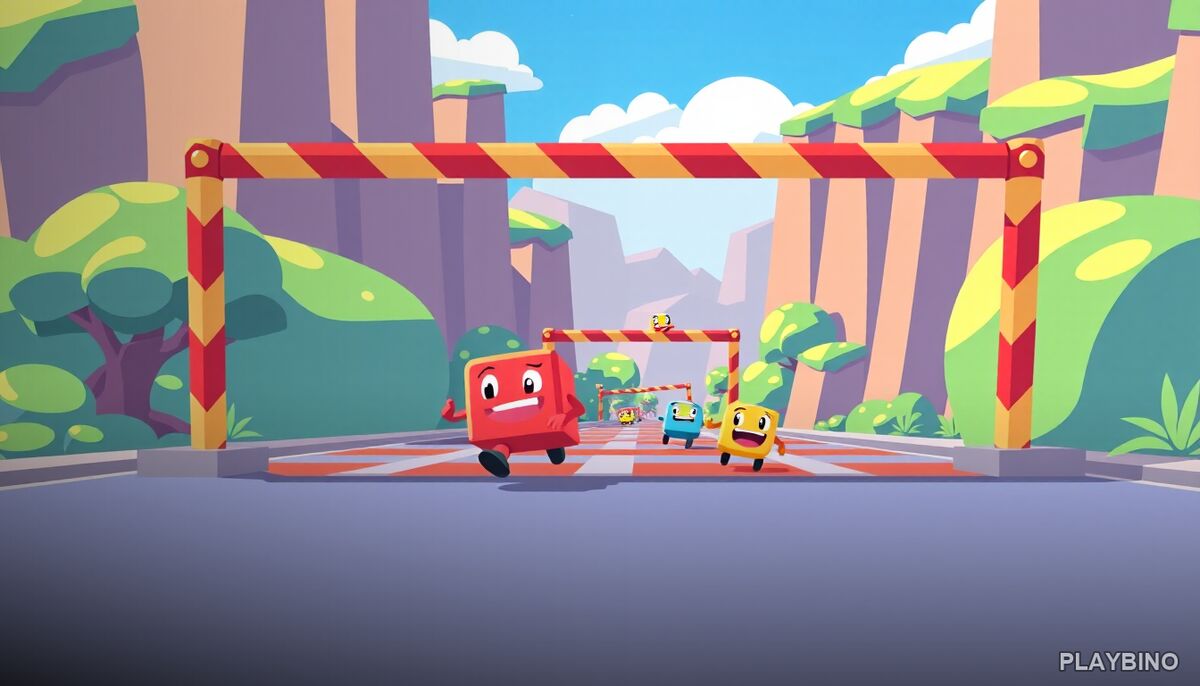
Endless runners usually ask you to jump, slide, or dodge. Jelly Runner adds a layer that most games in the genre skip entirely: you can reshape your character mid-run. You control a jelly cube that morphs on demand, stretching and compressing to fit through gaps that a fixed shape simply could not pass. Try the full run and you will notice immediately how different the moment-to-moment feel is compared to a standard endless runner.
The Shape-Shifting Mechanic
The core idea is deceptively simple. Obstacles appear ahead, and you have a brief window to morph your cube into the right form before impact. Squeeze too late and you collide. Morph too early and the shape may not match the next gap. That narrow timing window is where the real skill lives.
Timing and Spatial Awareness
Reading the track ahead is more important than raw reaction speed. The game rewards players who scan upcoming obstacles rather than reacting at the last moment. As the pace increases, that anticipation window shrinks, and what felt comfortable in early stages becomes a genuine coordination challenge later on.
Bonus Items
Scattered throughout each run are bonus collectibles that add a secondary objective. Chasing them is optional, but doing so often means threading through tighter paths or holding a morph longer than feels safe. It is a small mechanic that adds meaningful risk-reward decisions without complicating the controls.
How the Obstacles Escalate
Early stages introduce obstacles at a manageable pace, giving you time to understand how each gap shape maps to a cube transformation. Later passages tighten considerably. Narrow corridors appear in quick succession, and the speed ramps up enough that a single mistimed morph can end a run that was otherwise going well. The difficulty curve feels earned rather than arbitrary.
Visual Feedback and Flow
The colorful visuals and fluid animations do real work here. When you nail a sequence of transformations cleanly, the game produces a satisfying visual rhythm. The jelly physics look bouncy and responsive, which makes both successful runs and failed attempts feel immediate rather than frustrating. That visual clarity also helps with reading obstacle shapes quickly, which matters more as the speed increases.
Who Plays This Well
- Players who enjoy skill-based arcade challenges with a single focused mechanic
- Anyone who likes endless runners but wants something beyond jumping and sliding
- Players who enjoy improving through repetition and learning obstacle patterns
- Those who like short sessions with a clear sense of progression between runs
The one-player format keeps the focus entirely on personal improvement. There are no opponents to blame and no randomness to hide behind. Each run is a direct measure of how well you read and react to the track.
A Similar Challenge Worth Running
Speed-focused endless runners share a lot of DNA with this game. Run 71 Speed takes a comparable approach to fast-paced obstacle navigation, and that browser challenge is worth a look if the escalating pace here appeals to you. Both games reward the same kind of focused spatial reading, just through different mechanics. PlayBino hosts both titles alongside a wide range of skill-based browser games in the same genre.
"