Jive Jerry: Banana Bomblet — Explosive Puzzle Action in Your Browser
What Kind of Game Is This?
Somewhere between a physics puzzler and a fast-paced action game, Jive Jerry: Banana Bomblet carves out its own weird, entertaining niche. You play as Jerry, a character with an inexplicable banana-related crisis and a stockpile of explosive bomblets to deal with it. The core loop — toss, bounce, detonate — sounds simple, but the game layers in obstacles, moving enemies, and unpredictable wall ricochets that keep every stage feeling fresh. Play the full challenge in your browser and you'll quickly see why the difficulty curve earns its reputation.
The Throwing Mechanic and Why It Matters
The central skill here is trajectory. Each bomblet you launch follows a physics-driven arc, and walls don't just stop your shots — they redirect them in ways that can either save you or ruin a clean run. Early levels teach you the basics of angle and distance, but the real puzzle logic kicks in once the stage geometry gets more complex.
Timing Your Detonations
Lobbing a bomblet in the right direction is only half the equation. Knowing when to detonate matters just as much. Some enemies move in patterns, and catching them mid-path requires you to anticipate movement rather than react to it. A well-timed explosion in a tight corridor can chain into multiple targets, which feels genuinely satisfying when it lands.
Ricochet Routes
As stages progress, walls become tools rather than obstacles. Certain layouts practically demand that you bounce shots off two or three surfaces before they reach the target. Finding those angles takes experimentation, and the game gives you just enough room to fail and retry without making it feel punishing.
Obstacles and Stage Design
Each level introduces something new — a moving platform, a shielded enemy, a narrow gap that demands precise arc control. The design philosophy seems to be: teach one concept, then immediately complicate it. That rhythm keeps the action tag honest; this isn't a slow, methodical puzzle experience. You're making decisions quickly, adjusting on the fly, and occasionally improvising when your original plan falls apart.
- Wall ricochets that redirect bomblets unpredictably
- Enemies with varied movement patterns
- Narrow gaps requiring tight arc control
- Multi-target chain detonations for higher efficiency
- Escalating stage complexity across levels
Visual Style and Game Feel
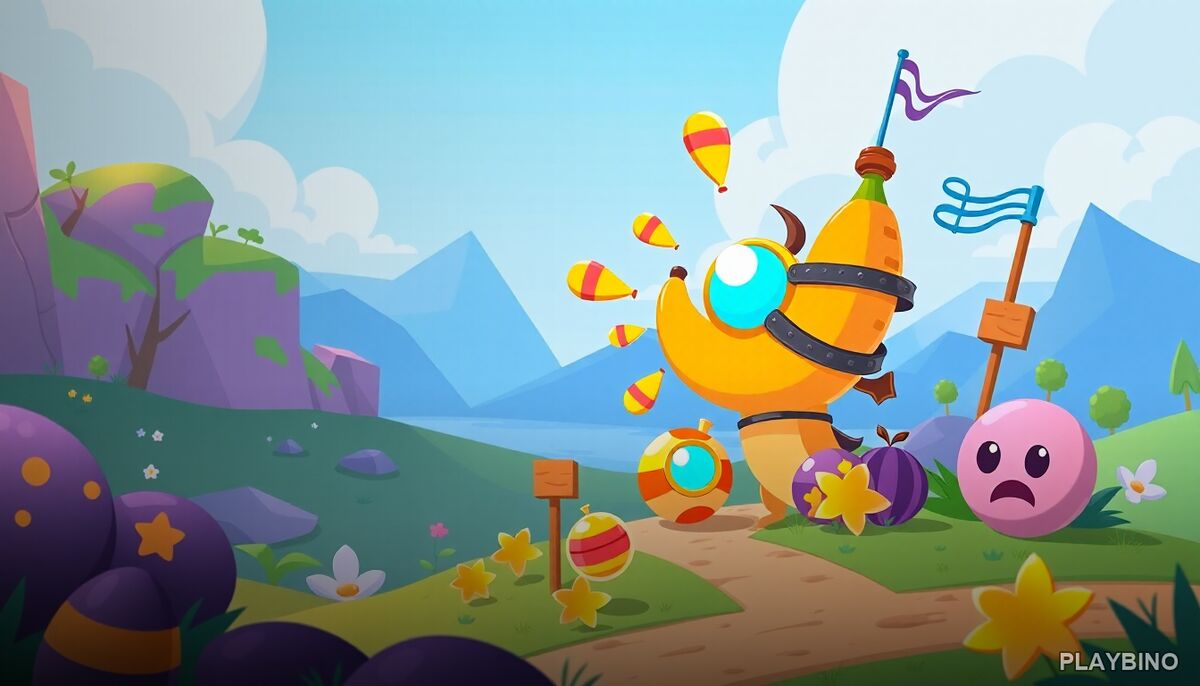
The cartoonish art direction does real work here. Bright colors, exaggerated animations, and a generally goofy energy make the game feel approachable even when the skill ceiling rises. Failure doesn't sting the way it might in a more serious action title — the visual feedback is punchy enough that a missed shot or botched detonation almost feels like part of the entertainment. That tone is a deliberate design choice, and it works.
Who This Game Suits
If you enjoy action-puzzle hybrids where reflexes and spatial reasoning both matter, this one delivers on both fronts. The skill ceiling is real — later stages demand consistent accuracy and timing — but the learning curve is gradual enough that casual players can make meaningful progress before things get genuinely difficult. It's the kind of browser game you pick up for five minutes and find yourself still playing twenty minutes later.
Players who like projectile-based puzzles with a bit of chaos baked in will feel right at home. The Be a Pirate game on PlayBino scratches a similar itch — that one's worth a look if you want another action-focused browser challenge with its own brand of unpredictable gameplay.
Strategy Tips for Tougher Levels
Once the difficulty spikes, a few habits separate clean runs from repeated restarts. First, scan the stage before throwing — identify where enemies will be in two or three seconds, not where they are right now. Second, treat walls as part of your toolkit from the start; players who only aim directly at targets hit a wall around the mid-game. Third, chain detonations whenever the layout allows. Clearing multiple enemies with one well-placed shot conserves resources and builds momentum through a level.
Patience and observation matter more than raw speed. The action framing can make it feel like you need to move fast, but the puzzle layer rewards players who pause for a second to read the stage before committing to a throw.