Jumping Jack: Pogo Stick Platformer with Crumbling Platforms and Crow Hazards
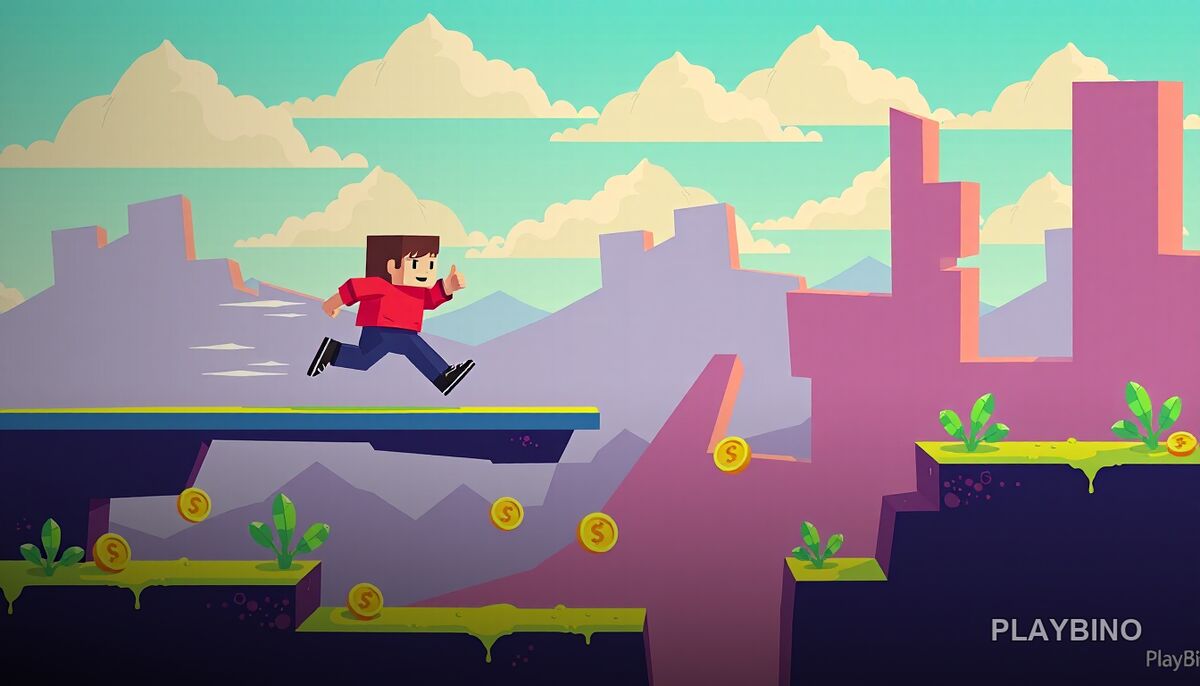
Bouncing on the Edge
Not every arcade game earns its difficulty honestly, but Jumping Jack does. You control a character riding a pogo stick that never stops bouncing, hopping across a series of platforms that begin to crumble the moment you land. The terrain shifts constantly, gaps widen as you progress, and the margin for error shrinks with every stage. The full browser version captures that classic arcade tension where one mistimed jump ends everything.
How the Movement Works
The core mechanic is deceptively simple: you are always in motion. The pogo stick provides constant vertical bounce, so your job is to steer left or right and time each landing on the next available platform. There is no standing still and thinking. The platforms collapse shortly after contact, which means hesitation leads directly to falling into the void.
Timing and Momentum
Momentum carries between jumps. Landing near the edge of a platform changes your launch angle slightly, which affects where you land next. Players who understand this start reading two or three platforms ahead rather than reacting to each one individually. That forward-thinking habit separates average runs from high-scoring ones.
Coin Collection
Coins are scattered across the platforms and in the air between them. Grabbing them adds to your score but sometimes pulls you toward a riskier landing spot. Deciding whether a coin is worth the detour becomes a genuine micro-decision as the stages grow more demanding.
The Crow Problem
Hostile crows patrol the airspace at various heights and timings. They swoop unpredictably, and a collision knocks Jack off trajectory mid-jump. This is where the game shifts from a pure platformer into something closer to an action arcade challenge. You cannot simply memorize platform layouts because the crow patterns introduce a second layer of unpredictability. Watching crow movement while also tracking the next landing spot requires split attention, and that combination is where most runs fall apart.
Platform Progression and Difficulty
Early stages give you wider platforms and more forgiving gaps, which lets new players build a feel for the bounce rhythm. As levels advance, platforms narrow significantly. Some become single-tile wide, and the gaps between them stretch far enough that mistiming by even a fraction sends you short. The game does not introduce new mechanics to compensate — it simply makes the existing challenge harder, which is the right approach for an endless runner built around skill.
- Platforms collapse on contact, forcing constant forward movement
- Crows appear mid-air and disrupt jump trajectories
- Coin placement creates risk-reward decisions during each run
- Platform width and gap distance increase with progression
- Pixel art visuals and sound effects reinforce the arcade feel
What Kind of Player Fits This Game
Jumping Jack suits players who enjoy short, intense sessions with a clear feedback loop. Each run lasts until one mistake ends it, and the restart is instant. That structure makes it easy to chase one more attempt without commitment. The pixel art aesthetic and straightforward controls make it accessible, but the precision required for high scores gives it staying power beyond the first few minutes. If you have played pogo-stick platformers before and want a comparable experience with a different character and stage design, the Pogo Peggy challenge on PlayBino follows a similar bounce-and-survive format worth exploring.
Strategy for Longer Runs
The most effective approach is to prioritize safe landings over coin collection in the early stages of each run. Build a rhythm first, then start incorporating coin grabs once the bounce timing feels natural. When crows appear, track their flight path for one full swoop before committing to a direction change. Reacting to them mid-jump usually causes overcorrection. Staying near the center of each platform rather than the edge also gives more consistent launch angles, which reduces the unpredictability of longer gaps.