Jungle Fight: Build Your Animal Army and Win Tactical Battles
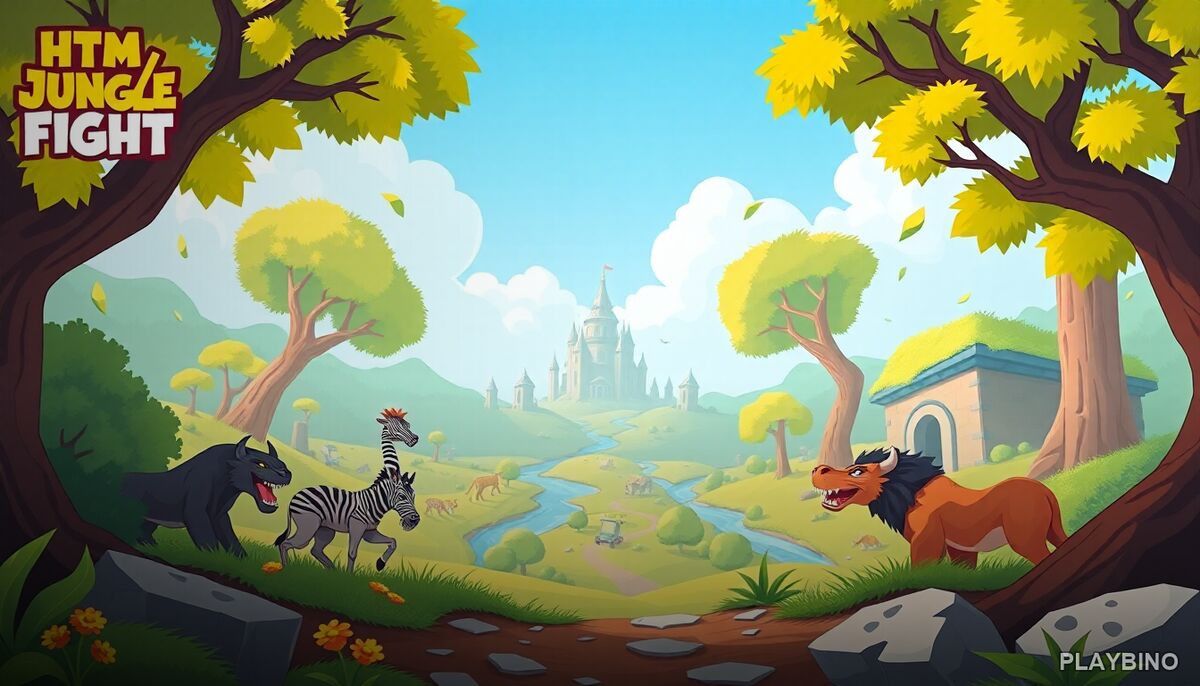
What Jungle Fight Is About
Most strategy games hand you soldiers, tanks, or wizards. Jungle Fight takes a different route — your army is built entirely from wild animals, each carrying unique combat abilities. The game blends action and simulation into a single-player tactical experience where formation, timing, and creature selection decide every outcome. You're not just throwing units at the enemy; you're building combinations that work together and adapting when the opponent's lineup doesn't match what you expected.
If that kind of layered tactical thinking appeals to you, the full game is available on PlayBino and runs directly in your browser without any download.
Creature Selection and Army Building
Before each battle, you assemble a roster of animals to bring into the fight. This is where the strategy begins. Different creatures serve different roles on the battlefield.
Role Variety
Some animals are built for raw power — heavy chargers that crash through defensive lines and absorb damage. Others rely on speed and stealth, slipping past frontline units to strike at weaker targets behind them. Knowing which role each creature fills is the foundation of building a useful army.
Combining Abilities
The real depth comes from pairing creatures whose abilities complement each other. A fast flanker becomes far more dangerous when a tank-style animal has already pulled enemy attention forward. Timing ability activations so they overlap creates chain reactions that can break even a well-organized opponent's formation in a few seconds.
How Jungle Terrain Changes the Fight
The battlefield isn't an open field. Dense vegetation, natural obstacles, and irregular terrain force you to think about positioning in ways that flat maps never would. Units moving through heavy cover slow down. Chokepoints create opportunities to funnel enemies into kill zones — but those same chokepoints can trap your own units if you commit too early.
Studying the map before deploying matters as much as studying your opponent's lineup. A creature that performs well in open ground may struggle when the route to the enemy is blocked by jungle obstacles. Adapting your formation to the terrain is a consistent theme across every match.
Combat Flow and Tactical Decisions
Deployment Timing
Sending all your units at once is rarely the right call. Staggering deployments lets you react to how the enemy responds. If your first wave draws out their heavy hitters, your second wave can target the gaps they leave behind.
Defense and Counterplay
Jungle Fight isn't purely offensive. Holding back certain creatures to intercept enemy flankers, or positioning a durable unit to absorb charge damage while lighter animals attack from the sides, creates a defensive layer that prevents quick losses. The balance between offense and defense shifts constantly depending on what the opponent deploys.
What Kind of Player Enjoys This
The game rewards players who think a few steps ahead rather than reacting purely in the moment. It's closer to a tactical simulation than a reflex-based action game, even though the action plays out in real time. If you enjoy figuring out why a formation failed and adjusting it for the next match, the loop here is genuinely engaging.
Players who also enjoy naval combat strategy might find this alternative take on tactical battles worth exploring alongside Jungle Fight.
Key Mechanics at a Glance
- Animal roster with distinct ability types: charge, stealth, support, and tanking
- Jungle terrain that affects movement speed and unit positioning
- Ability timing that creates combo damage when coordinated correctly
- Opponent formation reading as a core part of pre-battle preparation
- Staggered deployment as a tactical tool rather than an optional approach