KaI Archer: Precision Platforming With Traps and Hidden Keys
What Kind of Game Is KaI Archer?
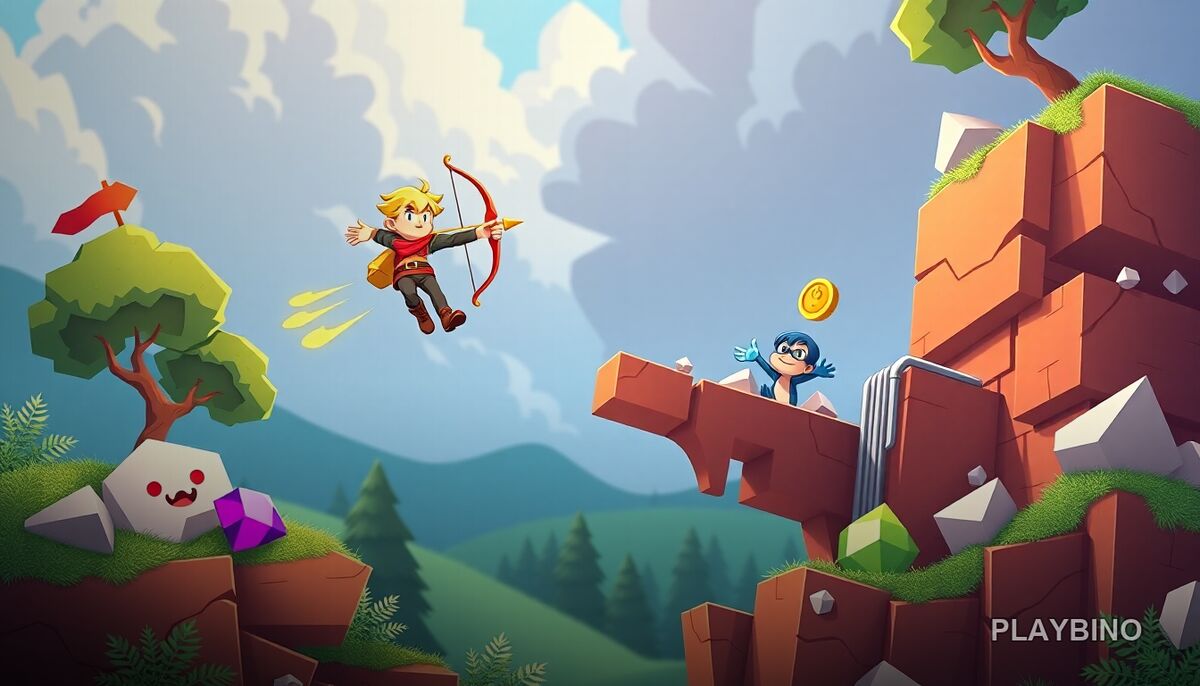
KaI Archer sits at the crossroads of action and puzzle design. Each level is a compact environment loaded with spikes, traps, and a single hidden key you need to find before the exit door will open. The challenge is not just reaching the end — it is surviving long enough to explore, locate the key, and retrace your path without making a single careless step. You can play this browser platformer on PlayBino without any downloads or setup.
Level Structure and Progression
The game builds difficulty gradually. Early stages introduce the core mechanics: moving through tight corridors, spotting spike placements, and learning how the key and door system works. Later levels rearrange those same ideas into far less forgiving layouts where the margin for error shrinks considerably.
Every stage is self-contained, which means restarting after a mistake only costs you that level's progress. That structure keeps frustration manageable while still demanding real effort to advance. There is no stamina system or time limit pushing you forward — the only pressure comes from the traps themselves.
The Trap Design
Spikes and Static Hazards
Most of the danger in KaI Archer comes from fixed spike placements. These are not random. The level designer has positioned each hazard to punish rushed movement and reward players who slow down and read the layout before committing to a path. Touching a spike sends you back to the start of the stage, so a single mistimed jump can undo a full run.
Cleverly Placed Traps
Beyond static spikes, certain stages include traps that require you to anticipate movement rather than simply react. These elements push the game closer to puzzle territory, asking you to think about the order in which you approach different sections of the map. Recognizing a trap pattern early is often the difference between clearing a level on the third attempt or the thirtieth.
Finding the Key
The hidden key mechanic gives each level a secondary objective beyond pure survival. Some keys are tucked behind obvious obstacles; others require exploring areas that initially look like dead ends. The act of searching for the key also forces you deeper into the stage, which means more exposure to hazards before you can safely reach the exit.
Patient exploration pays off here. Rushing toward what looks like the key often leads straight into a trap. Taking a moment to map out the visible hazards before moving gives you a cleaner path and reduces the number of resets needed per level.
Who Plays Well Here
KaI Archer rewards a specific kind of player: someone comfortable with failure as a learning tool. Each death carries information. Where the spike was, how far the jump needed to go, which route was the wrong one. Players who treat resets as data rather than setbacks will find the difficulty curve satisfying rather than punishing.
The single-player format means there is no competitive pressure, which suits the methodical pace the game encourages. It is not a speed-run experience by default — though mastering a level quickly becomes its own secondary challenge once you know the layout.
A Similar Experience Worth Exploring
If the combination of exploration, traps, and careful movement appeals to you, another puzzle-platformer with a distinct atmosphere covers similar ground with a different visual theme and its own set of stage challenges. The core appeal — navigating hostile environments with limited room for error — translates well between both games.
- Action-puzzle hybrid with single-player focus
- Key-and-door progression across multiple stages
- Spike and trap hazards requiring precise movement
- Gradual difficulty increase without artificial timers
- Clean visuals that keep the focus on navigation