Kart Strop Challenge: Racing Meets Cognitive Reflex Training
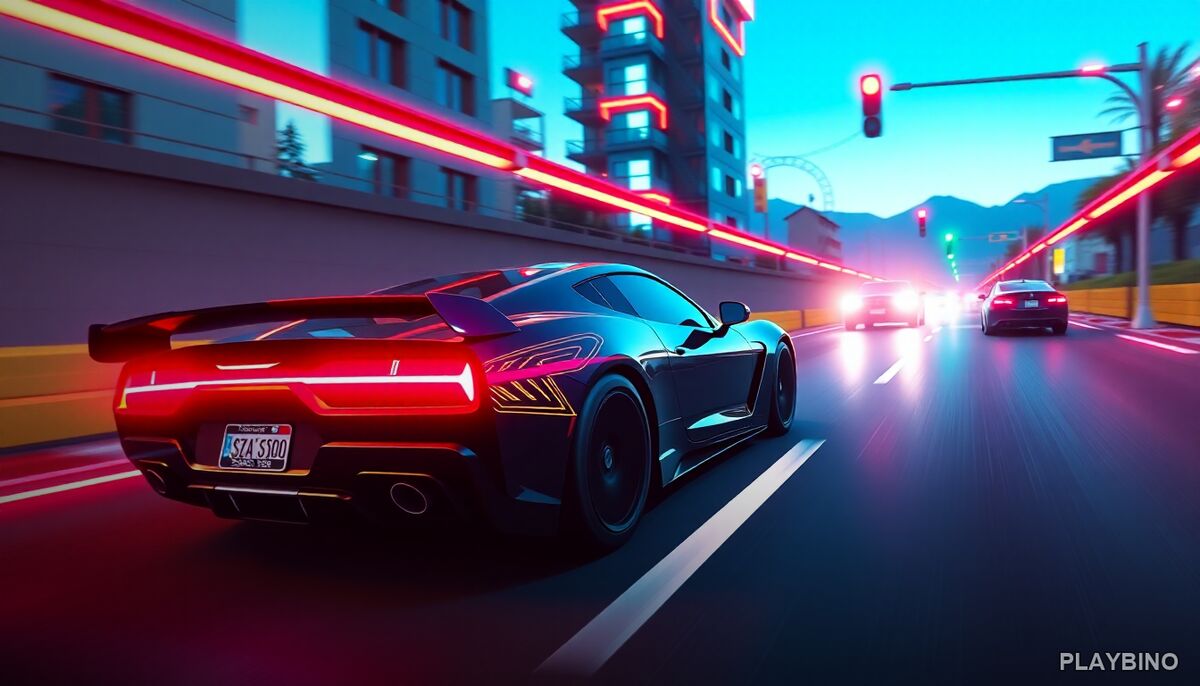
What Kind of Game Is This?
Most racing games ask you to steer, brake, and accelerate. Kart Strop Challenge asks you to do all of that while your brain fights itself. The core mechanic is built around the Stroop effect — a well-documented cognitive phenomenon where the brain slows down when a word and its display color contradict each other. See the word "RED" written in blue ink and your mind hesitates. That hesitation, multiplied across a full race, is what makes this game genuinely demanding.
You can play Kart Strop Challenge directly in your browser without any download. It sits comfortably in the brain and racing tag space — a single-player car game that rewards mental sharpness as much as driving instinct.
The Stroop Mechanic in Practice
During each race, words flash on screen at intervals. The prompt might ask you to identify the color the word is printed in, or it might ask you to read the word itself. The trick is that these two things rarely match. Your brain's automatic reading response constantly tries to override your color perception, and vice versa.
Why It Slows You Down
A wrong response or a missed prompt directly affects your kart's momentum. You lose speed at exactly the moments when maintaining pace matters most — approaching a corner, navigating a narrow section, or pushing through a faster sequence. The penalty is mechanical, not just cosmetic. That connection between cognitive accuracy and racing performance is what separates this from a standard trivia-on-wheels concept.
Escalating Pressure
Early tracks give you enough time to process each prompt before the next one appears. Later tracks compress that window significantly. You are steering through tight bends while new words flash faster than you expect. The mental load climbs steadily, and the game does not offer much breathing room once the difficulty ramps up.
Controls and Steering Feel
The kart controls are responsive and straightforward. Steering is handled with keyboard inputs, keeping the driving side accessible so the cognitive challenge remains the true focus. Tracks are colorful and clearly designed, with corners that require actual braking judgment rather than just holding a direction key. The balance between driving mechanics and mental prompts feels deliberate — neither side overwhelms the other.
Customization and Progression
As you complete races, customization options unlock for your kart. This gives the game a light progression layer that keeps repeated runs feeling purposeful. Personalizing your vehicle does not change performance in a deep simulation sense, but it adds a sense of ownership over your racer as you push through harder tracks.
- Colorful track designs with increasing obstacle density
- Stroop prompts that alternate between word-reading and color-identification tasks
- Speed penalties tied directly to incorrect or missed responses
- Kart customization that unlocks through race progression
- Single-player format focused on personal improvement and reaction time
Who Will Find This Rewarding
Players who enjoy brain training games will find the Stroop mechanic genuinely engaging rather than gimmicky. The racing frame gives it urgency that a static cognitive test lacks. If you tend to play puzzle or logic games and want something with more kinetic energy, this sits in an interesting middle space. It is also a solid pick for anyone who has plateaued on standard racing games and wants an added layer of mental challenge.
For a different kind of speed-focused experience without the cognitive twist, another driving-focused challenge worth exploring is Wild Race Master 3D, which takes a more traditional approach to arcade racing.
Strategy Under Pressure
The most effective approach is to separate your reading instinct from your color perception before each race begins. Experienced players often describe a mental mode-switch — consciously deciding which type of prompt to prioritize in the early laps before the pace forces pure reaction. Staying calm when the prompts accelerate is harder than it sounds. Panic responses tend to produce the wrong answer even when the player knows the correct one. Slowing your internal processing speed, paradoxically, often produces faster race times.