Kids Build House: Help Animals Find Their Perfect Home
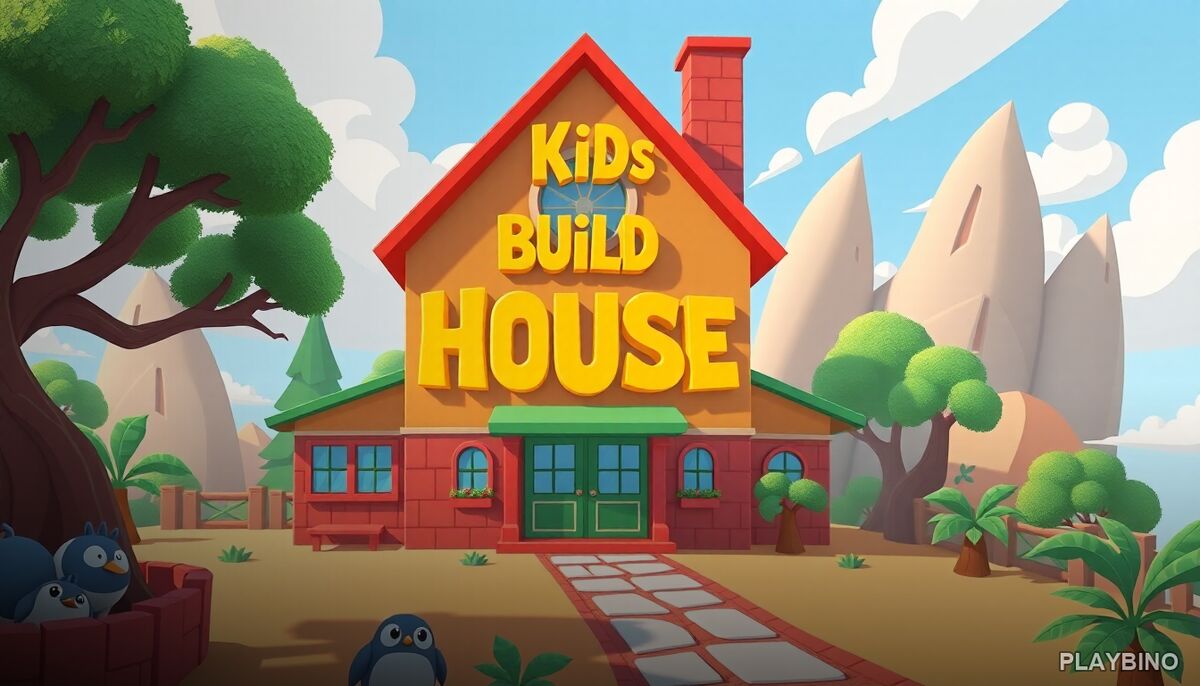
What the Game Is About
Not every construction game asks you to think about who you're building for. Kids Build House flips the usual approach by centering each project around a specific animal with specific needs. A penguin won't be happy in a treehouse. A monkey has no use for an igloo. The puzzle layer comes from understanding what each creature actually needs before picking up any materials.
Young players take on the role of a builder-architect, moving through different environments and helping animals settle into homes that fit their natural habitats. The full browser version on PlayBino keeps things accessible without stripping out the decision-making that makes each build feel meaningful.
How Each Build Works
The construction process isn't freeform. Each level presents a specific animal with a set of requirements, and the player's job is to match the right materials, shapes, and features to satisfy those needs. Bears get wooden lodges built from forest materials. Bunnies work alongside you to raise a greenhouse stocked with fresh carrots. Every habitat has its own logic.
Materials and Matching
Choosing the wrong material doesn't just look odd — it doesn't fit the animal's environment. The game gently teaches cause and effect through this matching mechanic. Icy textures belong in frozen zones. Leafy, organic structures suit rainforest settings. Players experiment with combinations until the pieces click into place.
Shapes and Colors
Beyond material type, the building process involves selecting shapes and colors that work for each design. This keeps the simulation side active even for younger players, encouraging visual thinking rather than just button-pressing.
Animal Interactions and Rewards
Once a home is complete, the animal moves in. This isn't just a cutscene — the creature actually interacts with the space, reacting to the choices made during construction. A well-matched home produces a more enthusiastic response, which reinforces the connection between habitat and inhabitant in a way that feels earned rather than automatic.
These small reward moments keep the pacing light and encouraging. There's no penalty for experimenting, and the feedback loop between building and animal reaction gives younger players a clear signal that their decisions matter.
Who This Game Suits
- Young children who enjoy creative building without complex controls
- Kids curious about animal habitats and natural environments
- Players who prefer puzzle-style simulation over fast-paced action
- Parents looking for a calm, single-player browser game with gentle progression
The single-player format means there's no pressure from opponents or timers. Each build moves at whatever pace the player sets, making it a relaxed but still engaging experience.
Puzzle Logic Underneath the Construction
What separates this from a pure creativity tool is the underlying puzzle structure. Every animal introduces a new constraint. The rainforest monkey needs elevation and banana trees. The arctic penguin needs cold-climate materials. Players aren't just decorating — they're solving a habitat-matching problem with each new character.
If your child enjoys this kind of hands-on assembly puzzle, a similar hands-on challenge worth exploring is Toy Assembly 3D, which applies comparable step-by-step construction logic to toy building.
Visuals and Accessibility
The art style leans into bright, saturated colors that make each environment immediately readable. Frozen zones look cold. Forests feel lush. The visual language does a lot of work in communicating where you are and what belongs there, which reduces the need for lengthy instructions.
Interactions are kept simple enough for young builders to navigate independently, while the variety of animals and environments gives the game enough range to stay interesting across multiple sessions.
"