Letter Ball: Rolling Through Words and Puzzles
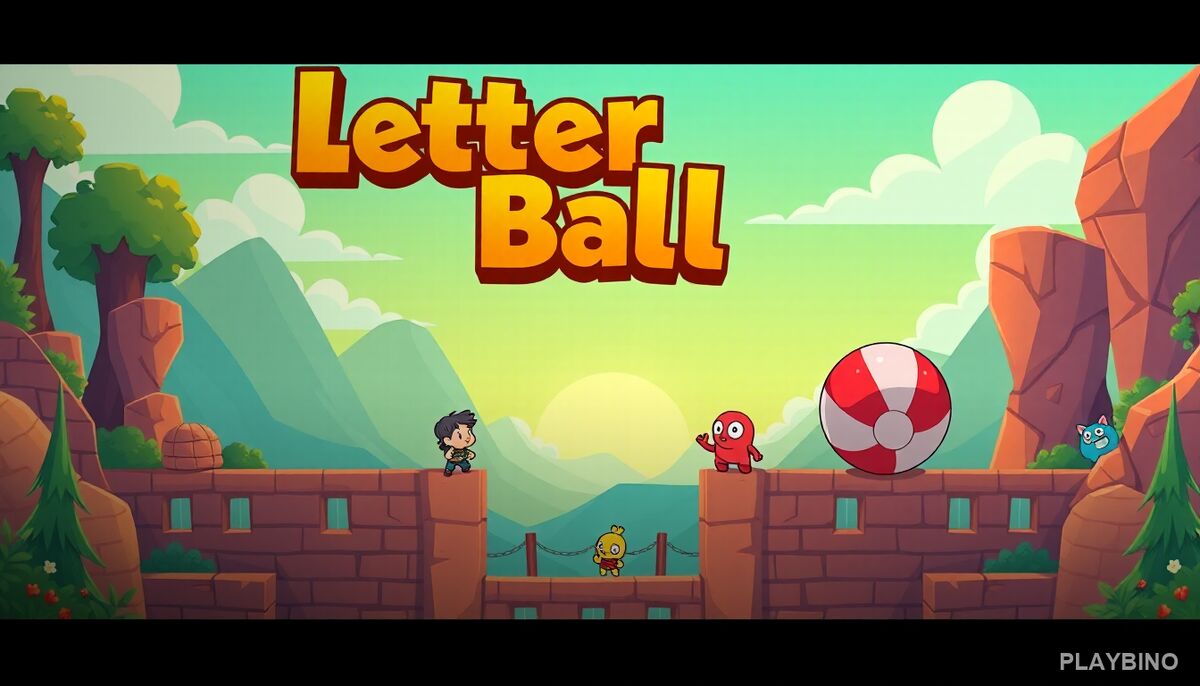
What Letter Ball Actually Is
Most puzzle games stick to one idea. Letter Ball mixes two: rolling physics and vocabulary. You control a ball through colorful platforming stages, but the goal isn't just to reach an endpoint. Each level scatters letters across platforms and gaps, and you need to collect them in the exact sequence that spells a target word. Miss the order, and you'll need to rethink your route. The combination of action timing and language logic makes it feel genuinely different from standard puzzle or action titles.
You can try this word-rolling challenge on PlayBino directly in your browser, no download needed.
How the Rolling Mechanics Feel
The physics engine is central to everything. Your ball doesn't snap to grid positions or teleport between platforms. It rolls, bounces, and builds momentum the way a real object would. That means you're constantly managing speed and angle, not just plotting a path on a map.
Momentum and Angle
Hitting a letter at the wrong speed can send the ball past the next one entirely. You learn quickly that slow, deliberate movement sometimes beats rushing. Ramps and curved surfaces redirect momentum in ways that feel satisfying once you understand them, but punishing when you don't account for them.
Obstacles and Gaps
Later stages introduce moving platforms, narrow ledges, and timed gaps. These aren't decorative. They directly interfere with your letter-collection route. A platform that shifts left every two seconds might block the path to your third letter right when you need it. Reading the stage layout before committing to a direction matters a lot here.
The Word-Building Layer
The vocabulary element isn't just cosmetic. Because letters must be collected in sequence, the arrangement of letters across a level is itself the puzzle design. The game essentially asks you to solve two problems at once: figure out the physical path your ball needs to take, and track where you are in the word.
Early levels use short, simple words with letters placed close together. As difficulty climbs, words grow longer and letters spread across more complex terrain. You might need to cross a gap, loop back around a platform cluster, then drop down to grab the final letter, all while keeping track of what comes next in the sequence.
Strategy That Develops Over Time
There's a clear learning curve, and it rewards players who observe before acting. A few habits that help:
- Scan the full stage before moving. Identify where each letter sits and mentally map the collection order.
- Use slow momentum near letters to avoid overshooting into a gap or wrong letter.
- Watch moving obstacles through at least one full cycle before committing to a timed jump.
- When stuck, focus on the next letter only rather than the full word route at once.
The game doesn't hand out hints, so developing your own read of each layout becomes part of the satisfaction.
Who This Game Suits
Letter Ball works well for players who like action games but want something with a mental layer beyond reflexes. It's a single-player experience, so the pace is entirely yours to control. Language enthusiasts will find the word-building aspect adds a layer of familiarity, while players drawn to physics-based games will appreciate how the rolling mechanics demand real spatial reasoning.
If you also enjoy obstacle-course style action with a different kind of challenge, this obstacle-run browser game covers another movement-focused title worth a look.
Level Progression and Replayability
Stages don't repeat themselves in terms of layout or word choice, which keeps the experience from feeling repetitive. Each new level introduces at least one mechanic or arrangement you haven't handled before. The steady difficulty increase means the game stays engaging well past the early tutorial-style rounds without suddenly becoming unfair. Players who enjoy replaying stages to find cleaner routes will find value in going back to earlier levels with a better understanding of the physics.