Mad Truck: Physics-Based Truck Balancing Game
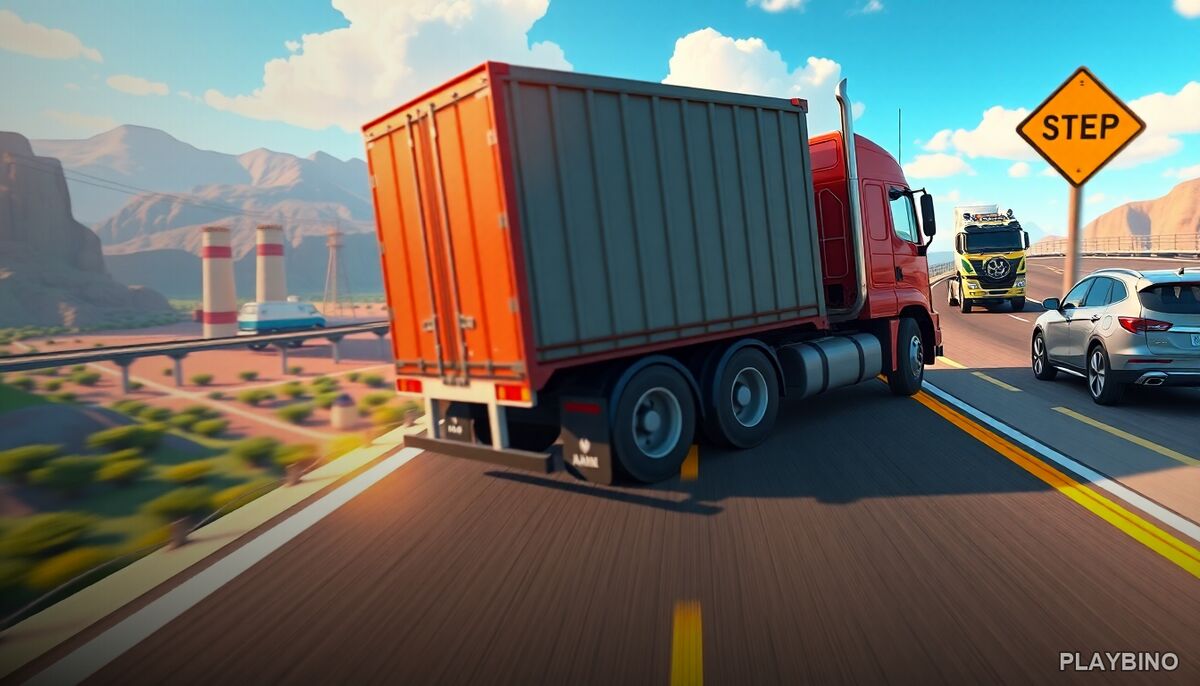
What Mad Truck Actually Is
Most racing games reward raw speed. Mad Truck takes a different approach — it rewards control. You're piloting a heavy truck across narrow platforms suspended high above the ground, and the physics engine makes every input count. Lean too far forward on a steep ramp and the truck flips. Gun the throttle on a tight corner and you're falling into the void. The game punishes impatience in a way that feels fair rather than frustrating. Try the full run on PlayBino and you'll notice within the first level how much the terrain demands your attention.
Reading the Terrain
Each course is built around a different layout of ramps, drops, and narrow passages. Before you can go fast, you need to understand what's coming. The physics engine models momentum realistically — a truck moving at speed off a jump will land differently than one that approaches cautiously. Sharp inclines require a slow, steady throttle to avoid flipping backward, while flat stretches let you push harder to recover lost time.
Throttle Control
The single most important skill in this game is knowing when to ease off. Full throttle works on open ground, but the moment a ramp steepens or a platform narrows, you need to back down. Partial throttle keeps the truck stable on inclines and gives you more time to react to obstacles ahead.
Momentum on Jumps
Jumps are where many runs fall apart. Too little speed and you land short. Too much and the truck pitches forward on landing. The sweet spot is consistent — once you've played a level a few times, you'll start to feel the right entry speed for each launch point.
Star Ratings and the Time Pressure
Mad Truck scores each level with a star rating based on two factors: speed and stability. Finishing quickly earns stars, but so does completing the course without tipping. The tension between those two goals is where most of the replayability lives. You can clear a level safely on your first run, then go back and push for a faster time once you know the layout. The clock creates genuine pressure without making the game feel unfair — you choose how much risk to take.
Obstacles That Change the Equation
Later levels introduce layouts that combine multiple challenge types at once. You might face a steep uphill section immediately followed by a narrow platform with no guardrails, forcing you to shed speed at exactly the right moment. Some courses include gaps that require a confident launch, while others pile on tight corners in sequence. The variety keeps the skill-based gameplay from feeling repetitive across the level progression.
- Steep ramps that punish over-throttling
- Narrow suspended platforms with no margin for error
- Jump sections where entry speed determines the landing
- Sharp corner sequences that require early braking
- Time-based scoring that rewards route efficiency
Who This Game Suits
If you enjoy single-player skill challenges where the learning curve is tied to reading physics rather than memorizing patterns, Mad Truck fits well. It's a 1-player racing experience built around spatial awareness and throttle discipline rather than reflexes alone. Players who like to replay levels for better times will find the star system gives that loop a clear goal. Those looking for a comparable driving challenge with a similar hill-climbing feel might also want to check out this take on Hill Climb Race, which shares the same uphill momentum mechanics in a different format.
Why the Physics Engine Matters
A lot of browser-based truck games use simplified physics that let you recover from bad inputs easily. Mad Truck doesn't. The weight of the vehicle, the angle of the terrain, and your current speed all interact in ways that feel consistent and learnable. That consistency is what makes the game satisfying — when you flip, you understand why, and you know what to do differently next time. It's a skill-based loop that rewards attention rather than luck.