Magic Solitaire: Fantasy Card Game Guide for Browser Play
A Familiar Card Game in a New Setting
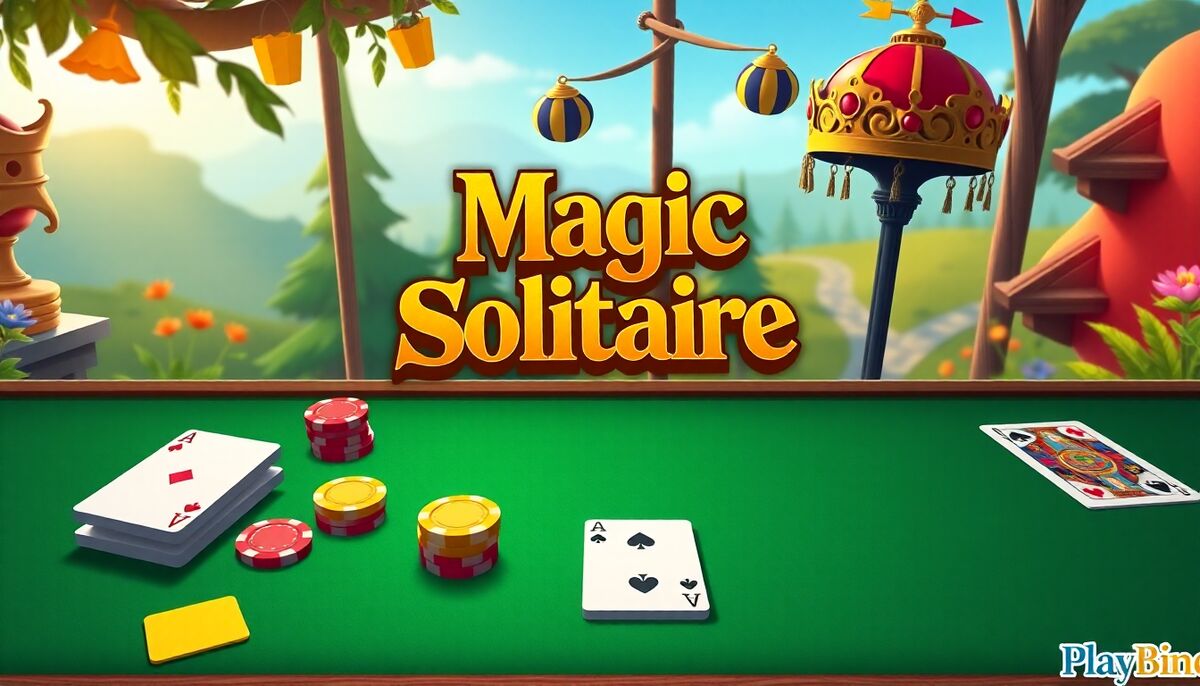
Solitaire is one of the most recognized card games in the world, and Magic Solitaire wraps those well-known rules inside a fantasy world filled with illustrated environments and a fairy companion who offers guidance along the way. The core logic stays intact — stack cards in descending order while alternating colors, build foundation piles by suit, and work through the tableau until the board is clear. What changes is the atmosphere. Play it directly in your browser and you'll notice immediately how the visual design sets this version apart from a plain card table.
How the Card Mechanics Work
The rules follow the classic Klondike format that most players already know. Cards are dealt into columns, and you move them by matching descending number sequences with alternating red and black suits. Aces go to the foundation piles first, and from there you build upward by suit until all cards are placed.
The Tableau and Foundation
The tableau is where most of the action happens. You're constantly scanning for legal moves — a red six on a black seven, a black queen on a red king. When a column empties, only a King can fill it, which makes those open spaces valuable. The foundation piles sit at the top and fill from Ace upward, one per suit. Completing all four is the win condition.
The Fairy Hint System
When no obvious move appears, the fairy companion steps in with a visual hint. This feature makes the game more accessible without removing the satisfaction of solving sequences yourself. It's a soft assist — useful for newer players or moments when the layout feels stuck — but experienced solitaire players can simply ignore it and work through the logic independently.
Strategy That Actually Matters
Solitaire looks simple on the surface but rewards deliberate thinking. Rushing through moves without considering the order of operations often leads to a locked board where no legal moves remain. A few principles help avoid that:
- Prioritize uncovering face-down cards in longer columns before moving cards that are already visible.
- Avoid filling empty columns with cards that block better sequences later.
- Build foundation piles evenly — advancing one suit too far ahead can limit your flexibility in the tableau.
- Use the draw pile strategically; cycling through it multiple times is often necessary.
Environments and Atmosphere
Each game session takes place in a different illustrated location — a tavern corner, a forest clearing, a quiet magical space. The backgrounds shift as you progress through layouts, giving the experience a sense of travel and discovery without changing the card rules at all. The calming soundtrack matches the visual tone, making longer sessions feel unhurried. This is a brain and logic game at its core, but the design choices lean toward relaxation rather than pressure.
Who Plays This and Why
Magic Solitaire suits players who enjoy single-player logic games and want something that rewards patience and strategic thinking without demanding fast reflexes. The 1-player format means there's no competition or time pressure unless you choose a challenge mode. Sessions can be short — a quick five-minute game during a break — or extended into longer puzzle-solving runs when you want to work through trickier layouts.
Players who enjoy other strategy and brain games on PlayBino will find the pacing here familiar. If you also like deep single-player thinking games, Elite Chess offers a very different kind of strategic challenge worth exploring alongside this one.
Challenge Levels and Replayability
Multiple layouts and difficulty settings keep the game from feeling repetitive after a few sessions. Some deals are straightforward and clear quickly; others require careful sequencing and several passes through the draw pile before a path opens up. The randomized card deals mean no two games play out identically, which gives the format natural replay value without requiring new content to be added constantly.