Marble Match Origin: Chain Reactions, Precision Aiming, and Escalating Puzzle Pressure
What You're Actually Doing
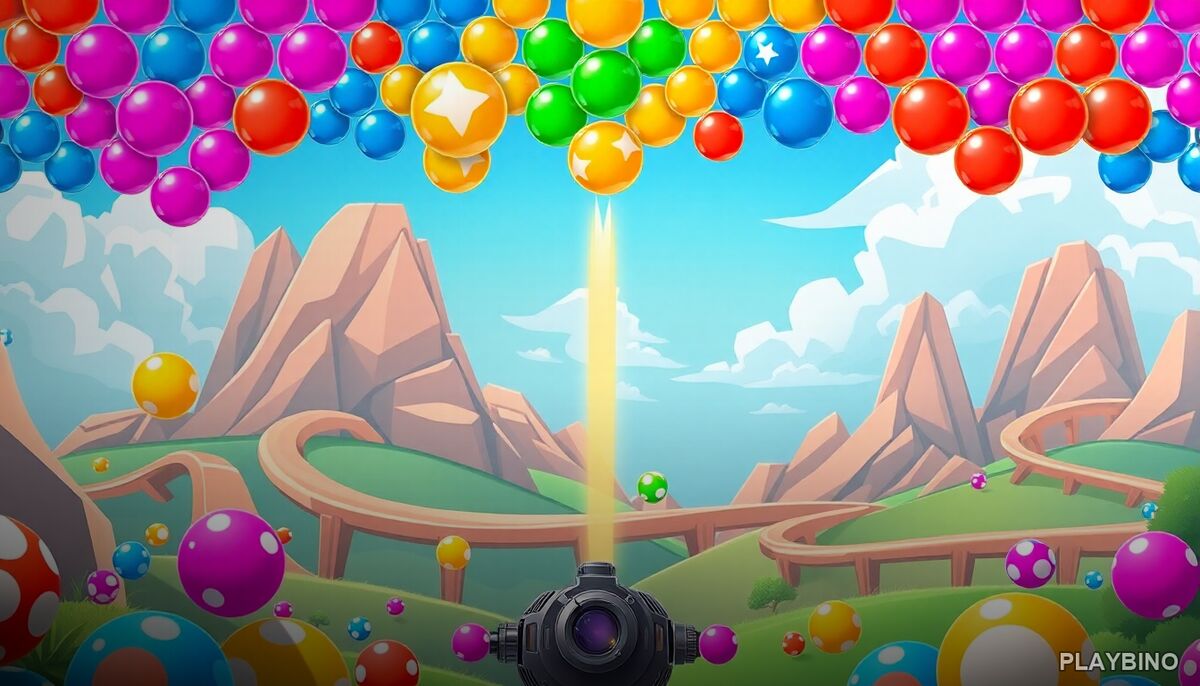
Marble Match Origin puts a launcher at the center of the screen and sends a winding chain of colored marbles creeping toward a drain point. Your job is to fire marbles into that chain, matching three or more of the same color to pop them out before the chain reaches the end. It sounds simple, but the spatial pressure builds fast. Play it directly in your browser and the first few levels will feel approachable — then the paths start curving, the chains start speeding up, and everything changes.
The Core Mechanics
The launcher rotates to aim, and you fire one marble at a time. Matching three identical colors removes that cluster from the chain, and if the removal creates a new adjacent match, a chain reaction fires off automatically. Those chain reactions are the satisfying core of the game — landing a shot that clears four or five groups at once feels genuinely rewarding.
Timing and Anticipation
The chain never stops moving. That means you're not just aiming at a static target — you're predicting where a marble will be when your shot arrives. On curved tracks especially, this requires reading the path ahead and leading your shot. Players who react to immediate threats rather than planning two or three shots ahead will find the chain advancing faster than they can handle.
Power-Ups and Special Marbles
Occasionally a power-up marble appears in the launcher rotation. These include options that can clear nearby marbles, slow the chain, or explode a section on impact. Using them at the right moment — not just firing them immediately — is often the difference between clearing a tight section and watching the chain slip through. Patience with power-ups pays off more than impulse firing.
How Difficulty Escalates
Early levels give you wide paths and slow-moving chains with obvious color clusters. As you progress, the marble patterns become more fragmented, colors are distributed in ways that make clean three-matches harder to find, and the chain speed increases noticeably. Narrow curved pathways reduce the margin for error on your aim, and the game starts introducing sections where the only viable move is a precise bank shot into a gap in the chain.
- Wider color variety makes matching harder to plan
- Curved tracks distort the visual line between launcher and target
- Chain speed increases mean less time between shots
- Fragmented clusters force longer setup sequences
Strategy That Actually Helps
The most effective approach is to look ahead on the chain rather than focusing only on the nearest marbles. Identify color clusters that are three or four positions back and set up shots to reach them before they get too close. When the chain is moving fast, it's tempting to fire constantly — but a missed shot that doesn't create a match wastes time and lets the chain advance further.
Shooting into the back of the chain rather than the front is often smarter. Clearing marbles from behind reduces the chain length overall, while clearing from the front only delays the immediate threat. This kind of positional thinking separates players who clear levels cleanly from those who scramble through on luck.
Puzzle Logic Meets Arcade Pressure
What makes this match-3 arcade format work is the combination of spatial reasoning and time pressure. It's not purely a calm puzzle where you can think indefinitely — the chain is always moving, which forces decisions under pressure. But it's also not a pure reflex game, because random firing rarely works. The sweet spot is methodical play executed quickly, and that tension keeps sessions engaging.
Epic Blocollapse takes a different approach to block-clearing mechanics — that collapse-based puzzle is worth a look if you enjoy clearing grouped tiles with a different kind of spatial logic. The two games share a satisfying pop-and-clear rhythm but feel distinct in how they build pressure.
Who Will Enjoy This
If you like arcade puzzle games that reward planning over reaction speed, Marble Match Origin fits well. The escalating complexity means there's a genuine learning curve, and players who enjoy optimizing their shot selection will find the later levels genuinely challenging. Casual players can still progress through early stages without deep strategy, but the game rewards those who develop consistent patterns rather than improvising every shot. PlayBino hosts a solid range of browser puzzle games, and this one sits comfortably among the more demanding color-matching options available.
"