Math Challenge Online: Grid Navigation Meets Mental Arithmetic
What the Game Actually Asks You to Do
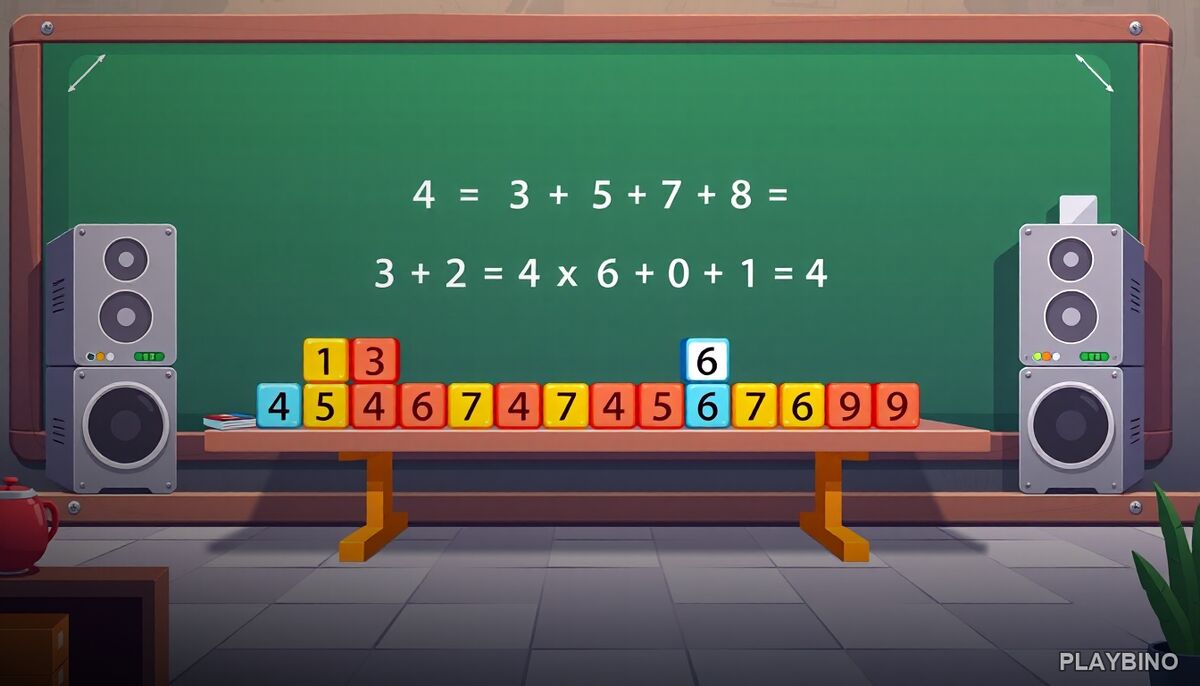
Most math games stop at flashcards. Math Challenge Online goes further by turning arithmetic into a movement problem. An equation appears on screen, and the player must guide a character across a number-filled grid to land on the correct answer before the timer runs out. The pressure is real, and the format keeps both the brain and the fingers busy at the same time. You can try the full challenge in your browser without any downloads or setup.
Grid Navigation and the Time Pressure
The grid layout is central to how the game feels. Multiple numbers sit across the board, and not all of them are correct. Players must scan the options quickly, calculate the answer mentally, and move toward it before the countdown expires. That combination of spatial awareness and arithmetic speed is what separates this from a standard quiz format.
Early levels use addition and subtraction with small numbers, giving players time to get comfortable with the movement controls. As difficulty increases, multiplication and division enter the mix, and the time window shrinks. The grid itself can feel like a maze when you are also trying to verify whether 48 divided by 6 is 8 or 9 under pressure.
Timing and Route Choices
The shortest path to an answer is not always the safest. Other numbers on the grid can distract or block efficient movement. Good players learn to identify the correct answer first, then plot a clean route rather than reacting instinctively. A few seconds of mental confirmation before moving often saves more time than rushing.
How Difficulty Scales Through the Levels
Progression in this logic and brain puzzle game feels deliberate rather than arbitrary. Each new level introduces either a harder operation or a tighter time limit, rarely both at once in the early stages. This gives players a chance to adapt to one new challenge before the next arrives. Later levels combine complex division problems with very short countdowns, which is where the game's real difficulty lives.
Points are awarded for correct answers, and missed solutions push players to recalibrate. There is no penalty mechanic that ends the run immediately, which keeps the experience from feeling punishing while still rewarding accuracy and speed.
Mental Math as a Core Skill
Why Speed Matters More Than Perfection
In most puzzle games, players can pause and think. Here, thinking must happen while moving. That real-time arithmetic demand is genuinely useful for building mental math fluency. The game does not reward slow, careful calculation. It rewards fast, confident answers, which is a different skill set worth developing.
Operations Covered
- Addition and subtraction in early levels
- Multiplication introduced in mid-game stages
- Division problems appearing in harder levels
- Mixed operations as levels advance
Math Forest Match takes a different structural approach to number-based puzzles, and that match-based experience is worth exploring if the grid format here leaves you wanting a change of pace.
Who This Game Suits Best
The game works well for players who want arithmetic practice that does not feel like homework. The competitive element of the timer and the spatial challenge of the grid turn number work into something closer to an arcade run than a classroom exercise. Students looking to sharpen mental calculation speed, or adults who want a quick brain workout between tasks, will find the format engaging without being overwhelming. PlayBino hosts the game directly in the browser, making it accessible on most devices without friction.
"