Maze Controlling: Navigate Labyrinths with Logic and Speed
What Kind of Game Is This?
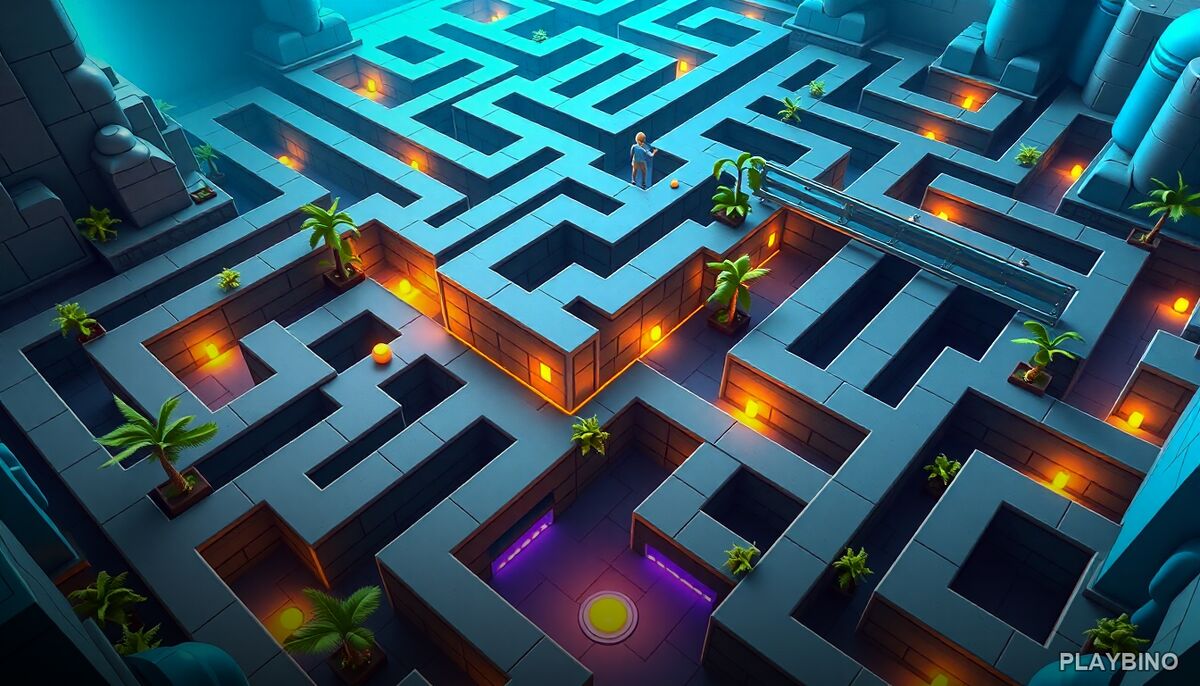
Maze Controlling drops you into a series of intricate labyrinths where the objective is straightforward but the execution is anything but. Each level presents a network of winding corridors, branching paths, and dead ends that force you to think before you move. The core loop is built around spatial awareness — reading the layout, committing to a direction, and correcting course when a path closes off. If you enjoy logic and brain puzzles that reward careful observation, this browser challenge is worth your attention.
Navigation and Route Logic
The central mechanic is pathfinding. You move through each maze searching for the correct exit route while avoiding the trap of backtracking too often. Dead ends are frequent and deliberate — the level design uses them to slow down players who rush without thinking. The spatial layout of each maze changes with every playthrough thanks to random generation, so memorization is not a viable strategy. You have to read the current maze on its own terms each time.
Reading the Layout
Before committing to a long corridor, it helps to scan what is visible around you. Corners that curve away from the exit direction are usually dead ends. Paths that open into wider junctions tend to lead toward progression. Developing this visual instinct takes a few runs, but it becomes a reliable tool as the difficulty increases.
Bonus Pickups
Scattered throughout each level are bonuses that reward players who explore rather than sprint for the exit. Collecting them requires taking detours, which introduces a tension between efficiency and thoroughness. Deciding when to chase a bonus and when to ignore it is one of the more interesting micro-decisions the game offers.
Puzzle Twists Inside the Maze
Beyond standard navigation, the game introduces puzzle elements that interrupt the flow in unexpected ways. These are not just decorative — they require a brief shift in thinking before you can continue moving. The combination of spatial navigation and embedded puzzle logic keeps the experience from feeling like a simple point-to-point run. It adds a layer of brain engagement that pure maze games often skip.
Difficulty Progression
Early mazes are compact and manageable, giving new players time to develop a feel for the controls and layout reading. As levels advance, the corridors multiply, the correct routes become less obvious, and the bonus placements grow more tempting. The escalation feels natural rather than punishing — each new maze introduces slightly more complexity without a sudden difficulty spike that breaks momentum.
- Randomly generated layouts ensure no two runs are identical
- Bonus items scattered across levels reward exploration
- Embedded puzzles add logic challenges within the navigation
- Difficulty scales gradually through increasingly elaborate maze designs
- Speed and planning both factor into efficient route completion
Strategy That Actually Helps
Timing Your Moves
Rushing through corridors without pausing at junctions leads to wasted movement. Taking a brief moment at each fork to assess visible paths reduces backtracking significantly. The game rewards deliberate movement over frantic speed, especially in later levels where the maze density increases.
Prioritizing Exploration Early
In shorter mazes, it is worth sweeping for bonuses before committing to the exit route. In longer, more complex layouts, it makes more sense to locate the general exit direction first and collect bonuses on the return path if time allows. Adapting this approach based on maze size is a habit that improves overall performance.
A Similar Challenge Worth Exploring
Maze Controlling shares some structural DNA with other spatial puzzle games that combine navigation with layered mechanics. Stack Maze Challenge takes a different angle on the maze concept — another browser game in the genre that puzzle fans may find equally engaging. Both games demand spatial thinking, though they approach the format from different directions. PlayBino hosts both titles, making it easy to move between them and compare how each one handles maze-based logic.