Memory Match Magic: Card Matching Puzzle Guide
What Kind of Game Is This?
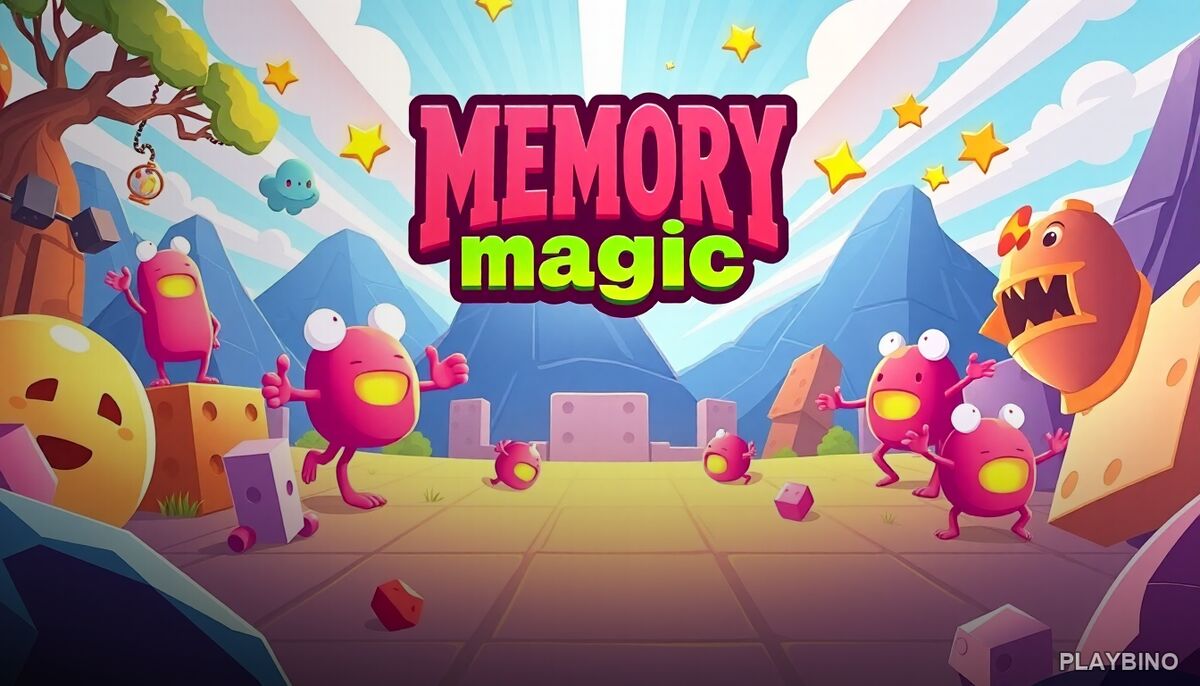
Memory Match Magic is a card-matching puzzle built around concentration and recall. Each session places you in front of a grid of face-down cards, and your job is to flip them two at a time, hunting for identical pairs. The visual design is clean, the animations are smooth, and the themed card sets give each round a slightly different personality. If you enjoy brain-focused puzzle games that reward attention rather than reflexes, this browser puzzle is a solid pick.
How the Grid Works
Every round starts with a fully face-down grid. You flip one card, see the illustration, then flip a second. A match clears both cards from the board. A mismatch flips them back over, and you have to rely on what you remember about their positions. The core loop is simple, but the mental load builds quickly as the grid expands.
Grid Size and Difficulty
Early rounds use smaller grids that are manageable even for first-time players. As you progress, the layout grows, adding more pairs and increasing the number of cards you need to track simultaneously. The jump from a compact grid to a larger one is noticeable — your memory has to work harder, and a single lapse can cost you several extra flips.
Themed Card Sets
The artwork changes across themed collections, ranging from mystical creatures to everyday objects. This keeps the visual experience varied and prevents sessions from feeling repetitive. Each theme also subtly affects how easy it is to distinguish cards at a glance, which adds a layer of visual challenge beyond pure memorization.
What Actually Determines Your Score
Success in Memory Match Magic comes down to two things: precision and recall. Precision means not flipping cards randomly — every flip should be intentional, based on what you already know or suspect. Recall means building a mental map of card positions as you uncover them. Players who flip methodically and retain positions will clear grids faster and with fewer wasted moves than those who guess.
- Flip cards in a structured order early in the round to build your mental map
- Prioritize completing pairs you already have partial information on
- Avoid random flips late in a round — by then, you should know most positions
- Pay attention to card illustrations carefully; similar-looking artwork can cause mismatches
Casual Play vs. Brain Training
The game works well in two different modes of engagement. As a casual experience, it is relaxing — the animations are satisfying, the themes are pleasant, and a single round does not demand a long commitment. As a brain training exercise, it pushes working memory and visual recall in a way that feels genuinely useful. Both approaches are valid, and the mechanics support either without forcing a particular pace on the player.
A Similar Memory Challenge Worth Trying
Memory Exclusive takes a comparable approach to card-matching concentration, and another memory-based puzzle experience is covered in detail if you want to compare mechanics and see how the two games differ in structure and difficulty curve.
Who This Game Suits
Memory Match Magic on PlayBino works for players who want a low-pressure puzzle that still engages the brain. The accessibility of the mechanics means anyone can start immediately, but the expanding grids and varied themes give experienced players enough to work through. It is a straightforward concept executed with enough polish that the experience stays engaging across multiple sessions.