Merge 2048 Cake: Tile Merging Puzzle with a Sweet Twist
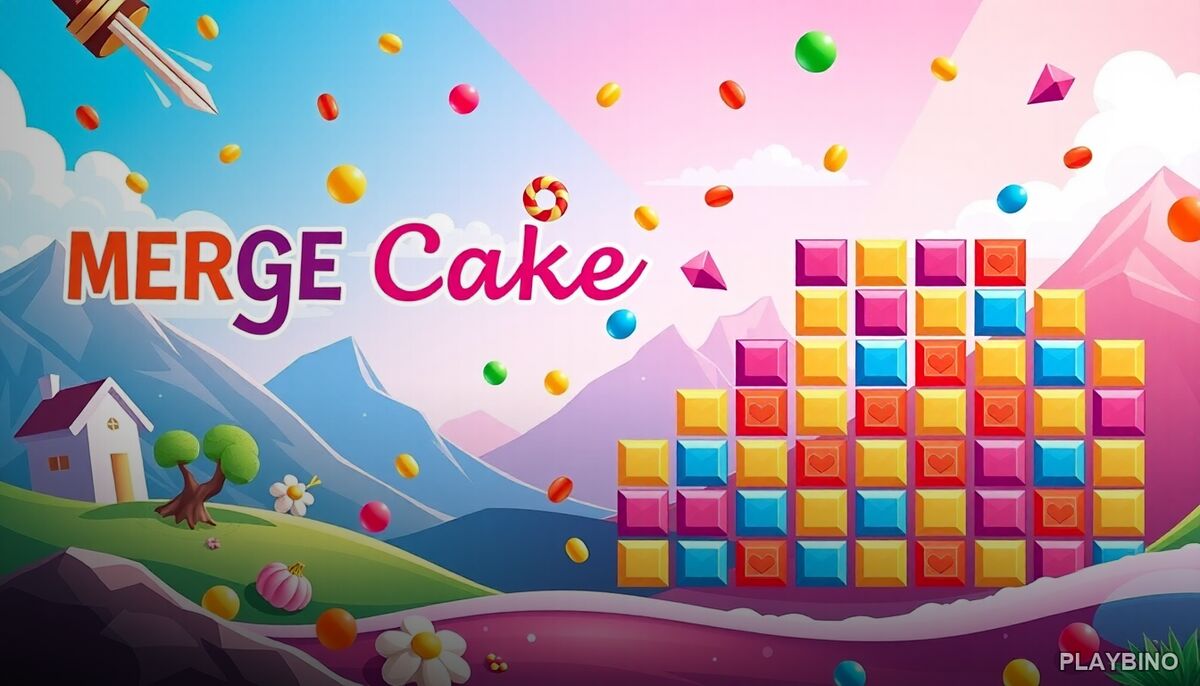
What the Game Is About
Tile-merging puzzles have a reliable appeal: simple rules, growing complexity, and one more move always feeling possible. Merge 2048 Cake takes that familiar loop and wraps it in a pastel dessert theme, replacing plain numbered blocks with illustrated cakes that evolve as values climb. The core goal stays focused — slide tiles across the grid, combine matching numbers, and keep the board from filling up.
The dessert visuals are more than decoration. Each successful merge triggers a small animation as two matching tiles combine into a more elaborate cake design. It creates a satisfying feedback loop that makes the number progression feel like genuine progress rather than abstract arithmetic.
How the Merging Mechanic Works
Each turn, a new numbered block drops onto the grid. Sliding it into a matching tile merges the two into a single block with double the value. A pair of 2s becomes a 4, two 4s become an 8, and so on toward 2048 and beyond. The challenge is that every slide moves all tiles in that direction simultaneously, so positioning matters far more than it first appears.
Planning Around the Grid
New tiles arrive constantly, and the board fills faster than expected once higher-value blocks start accumulating. Keeping one corner anchored with your highest tile is a common approach — it limits how often that block gets displaced and creates a predictable merging path for smaller tiles feeding into it.
When the Board Tightens
The real pressure arrives when three or four columns are nearly full. At that point, every placement decision carries weight. Dropping a tile in the wrong column can block a merge chain and leave a cluster of mismatched values with no clean solution. The game does not punish mistakes with a timer, but a single poor placement can cascade into a losing position within a few turns.
Puzzle Logic and Strategy
Merge 2048 Cake rewards deliberate thinking over speed. Because there is no time pressure, each move can be evaluated before committing. The strongest players tend to work with a consistent tile flow — smaller values merging on one side of the board while larger combinations build toward a corner. Disrupting that flow by placing a high tile in an awkward position often creates problems that take several moves to recover from.
- Keep your highest tile in a fixed corner whenever possible
- Build merge chains from smallest to largest in a consistent direction
- Avoid filling rows or columns that block access to key tiles
- Prioritize clearing space over chasing the next big merge
Visual Design and Atmosphere
The bright pastel palette and smooth transition animations make the puzzle feel relaxed rather than stressful. Cake illustrations range from simple frosted rounds at low values to multi-tiered decorated designs at higher numbers. The visual progression gives a clear sense of how far a run has come without needing to track every number individually. It is the kind of aesthetic that makes long sessions easy to settle into.
Who This Game Suits
Anyone drawn to logic and brain puzzles will find the mechanics immediately familiar. The match-3 and tile-merging structure means the learning curve is minimal, but the depth of positioning strategy keeps it engaging past the first few attempts. It works well as a single-player puzzle session — no opponents, no time limits, just the board and the decisions on it. PlayBino hosts the game directly in the browser with no download required.
Players who enjoy this kind of number-based merging logic might also find value in another merge-focused puzzle experience that approaches the concept from a different angle worth exploring.
Scoring and Progression
The score climbs with each merge, rewarding higher-value combinations more than simple low-number pairings. Reaching 2048 is a milestone, but the game continues beyond it, letting dedicated players push toward 4096 and higher. The open-ended scoring structure means every run has a personal benchmark to beat, which gives the single-player format a natural sense of ongoing challenge without requiring leaderboards or external competition.