Merge Cooking Game: Build Your Culinary Empire One Merge at a Time
What Kind of Game Is This?
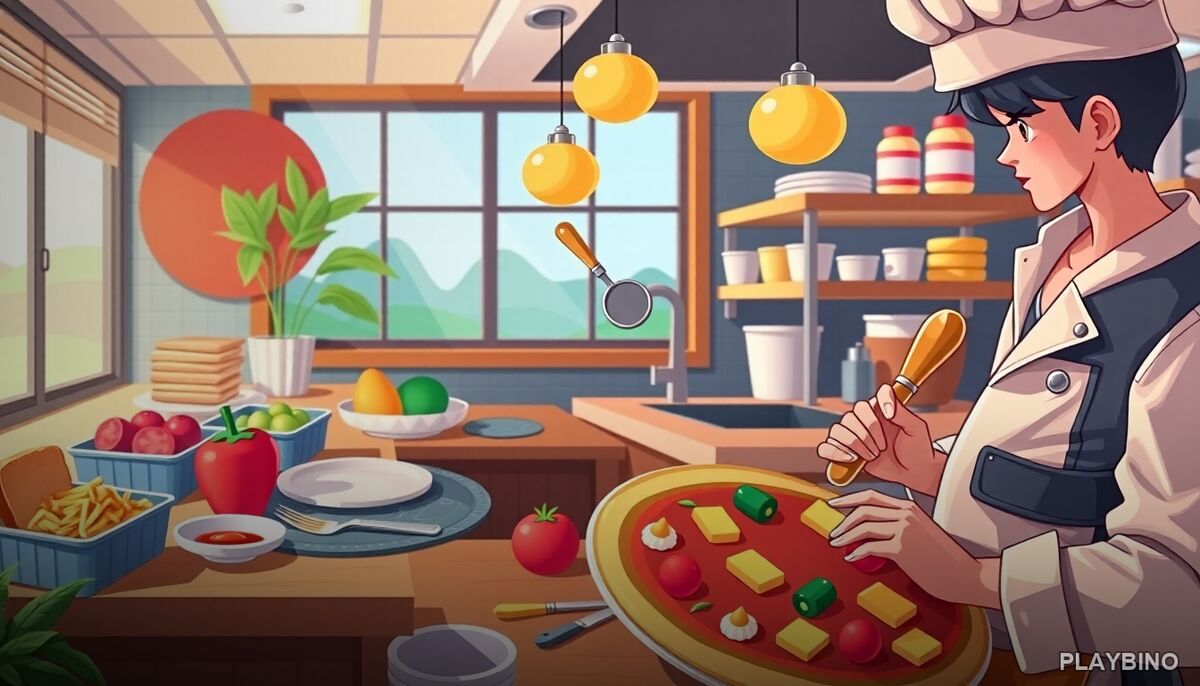
Merge Cooking Game sits at the crossroads of idle strategy and culinary collection. You start with a handful of basic ingredients — bread, vegetables, simple staples — and combine matching items to produce something new. A couple of bread slices become a sandwich. Merge those sandwiches with the right components and a burger appears. The chain keeps building, and before long your kitchen counter holds dishes you never expected to unlock.
The drag-and-match mechanic keeps the interaction tactile and satisfying. There is no complex input required; the challenge lives entirely in deciding what to merge, when to merge it, and how to manage the limited space on your board. You can play the full browser version on PlayBino without any download or account needed.
How the Merging Works
Every item on your board occupies a tile. When two identical items share the same space — or get dragged onto each other — they combine into the next tier of food. The progression follows a logical culinary ladder: raw ingredients become prepared foods, prepared foods become full dishes, and full dishes unlock new cuisine categories.
Managing Board Space
Space is the core pressure in this game. Your kitchen grid fills up quickly if you merge without a plan. Keeping a few open tiles at all times gives you room to receive new ingredients and experiment with combinations. Letting the board get cluttered stalls your progress entirely, so clearing lower-tier items into higher ones regularly is essential.
Unlocking New Cuisines
As you advance through levels, entirely new cuisine branches open up. Sushi, pasta, curry, and other international dishes each arrive with their own ingredient chains and merging paths. This expansion of the menu keeps the idle loop from feeling repetitive — just when one cuisine feels familiar, a new category adds fresh combinations to explore.
Strategy Over Luck
Merge games can feel passive, but this one rewards deliberate thinking. A few strategic habits make a real difference:
- Prioritize merging your most common low-tier items first to free up tiles.
- Keep rare or high-value dishes in corners where they won't accidentally block new drops.
- Focus on completing one cuisine branch before spreading resources across several.
- Use idle time to accumulate ingredients, then return for a burst of active merging.
The idle element means the game generates progress even when you step away, but the players who advance fastest are the ones who return and merge efficiently rather than letting the board sit full.
The Recipe Collection Loop
One of the strongest hooks in this game is the collection aspect. Hundreds of food pairings exist across all the cuisine types, and discovering a rare dish for the first time carries a genuine sense of reward. The game tracks which recipes you have unlocked, giving you a visible goal beyond just the next merge. Completionists will find the full recipe collection a long-term target worth chasing.
Restaurant themes also unlock as you progress, changing the visual backdrop of your kitchen and adding a light sense of narrative progression. It is cosmetic, but it makes the idle loop feel like it is going somewhere.
Who This Game Suits
If you enjoy idle strategy games where decisions accumulate over time rather than demanding constant attention, this fits naturally. The cooking theme makes it approachable for players who might not typically gravitate toward strategy titles. Sessions can be short — a few minutes of active merging — or longer if you want to push through a new cuisine unlock in one sitting.
For something with a completely different feel but a similarly satisfying collection mechanic, Grab Them All offers another browser challenge worth exploring between cooking sessions.
Progression and Patience
The mid-game is where Merge Cooking Game earns its depth. Early levels move quickly, but later cuisine unlocks require more patience and board management. The game never feels punishing — there are no failure states — but players who approach it casually may hit a wall where progress slows noticeably. Treating the idle periods as part of the strategy rather than dead time is the mindset shift that keeps the experience moving forward.
"