Mermaids: Spot The Differences – Underwater Visual Puzzle Guide
What You're Actually Doing
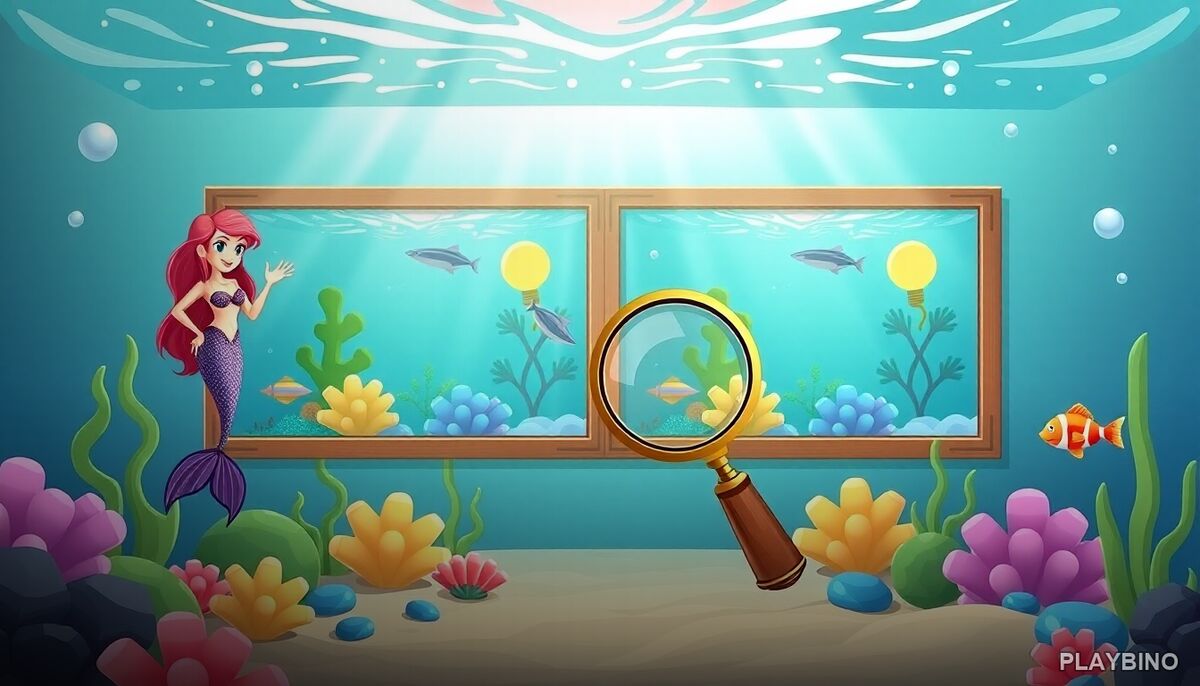
Each level places two underwater illustrations side by side. Your job is to identify every subtle change between them — a shifted coral branch, a recolored fish, a missing bubble trail, or a repositioned mermaid tail. Some differences jump out immediately. Others blend into the dense ocean scenery and require careful, methodical scanning. Play it in your browser and you'll quickly realize that rushing through a level almost always means missing the trickiest changes.
The Visual Challenge
The game leans on your brain's ability to detect inconsistency across complex patterns. Underwater scenes are naturally busy — coral reefs, swaying seaweed, scattered shells, and marine life fill every corner of the frame. That visual density is exactly what makes this a genuine memory and attention puzzle rather than a casual time-killer.
Where Differences Hide
The most common hiding spots are background elements that players naturally overlook: the color of a distant fish, a slightly altered shadow on the ocean floor, or a small object that disappears entirely from one image. Foreground characters like mermaids tend to have more obvious changes, but the background is where the real difficulty lives.
Scanning Strategy
Rather than comparing the images randomly, try dividing each scene into horizontal zones and scanning left to right. Start at the top, work downward, and revisit areas that feel cluttered. This systematic approach reduces the chance of missing a subtle color swap or a repositioned element buried in a seaweed garden.
Difficulty Progression
Early levels introduce differences that are relatively easy to spot — a missing accessory or a clearly changed color. As the game advances, the alterations become smaller and more cleverly placed within complex patterns. The gradual ramp in difficulty keeps the brain puzzle aspect feeling earned rather than arbitrary. New underwater scenes appear with each completed level, so the visual vocabulary keeps expanding.
Why the Aquatic Setting Works
The ocean theme isn't just decoration. Coral reefs and seaweed create natural visual noise that serves the puzzle mechanics directly. The soft color palette — blues, teals, and sandy browns — creates a calm atmosphere that makes long sessions feel comfortable rather than stressful. It's a deliberate contrast to the mental focus the game actually demands. The mermaid characters add a fantasy element that keeps the scenes visually interesting across multiple levels without feeling repetitive.
Who This Game Suits
- Players who enjoy observation-based brain puzzles without time pressure
- Anyone looking for a relaxing single-player session that still requires genuine focus
- People who want to sharpen visual memory and attention to detail
- Casual puzzle fans who prefer a clear objective over complex rule sets
The mechanics are immediately accessible — no tutorial needed, no complicated controls. The challenge comes entirely from the visual puzzle itself, which makes it a clean, no-friction experience from the first level.
A Similar Challenge Worth Exploring
Spot-the-difference games share a core mechanic regardless of their theme, but the visual context changes everything about how you scan. Cars Differences applies the same comparison logic to automotive scenes — that one takes a different approach to the genre and is worth trying if you want to see how the puzzle format feels with a completely different visual style. Both are available on PlayBino and both reward careful observation over speed.