Mineblock Obby: Parkour Precision in a Voxel World
What Kind of Game Is This?
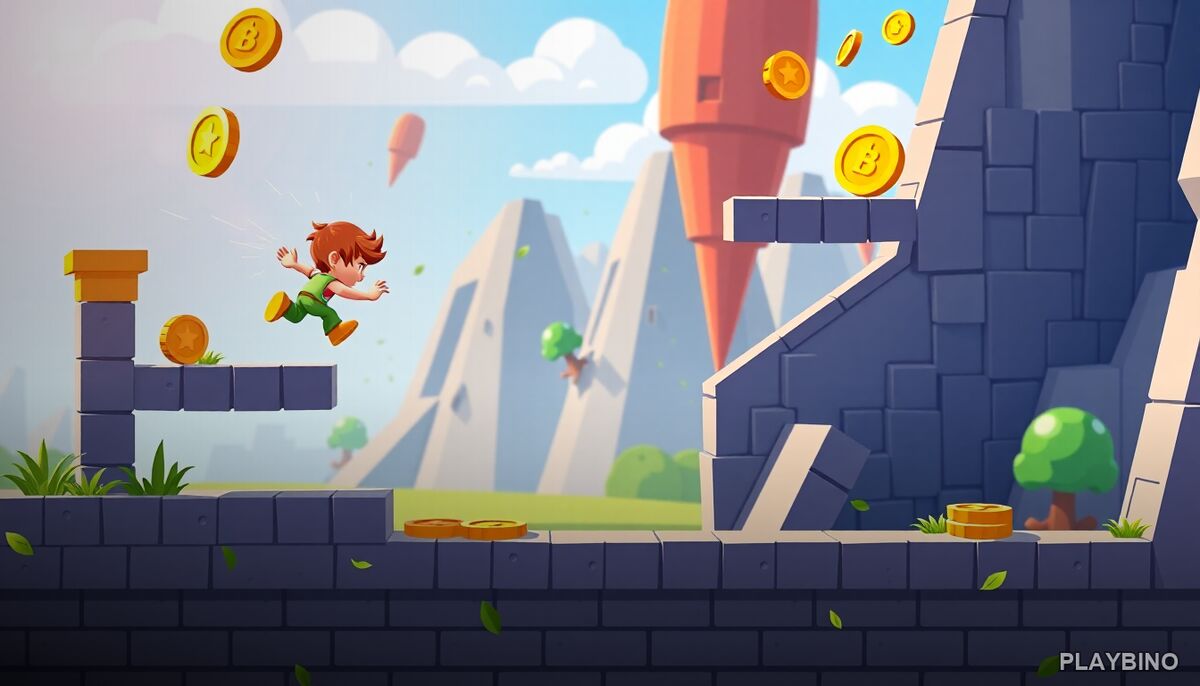
Mineblock Obby is a browser-based arcade and skill game that puts precision movement at the center of everything. The setting is a blocky voxel world, but the challenge is pure parkour — floating platforms, deadly gaps, and timed leaps that punish hesitation. If you enjoy action games where reflexes and spatial awareness matter more than combat, this voxel obstacle course is worth a serious look.
The Core Loop: Jump, Fail, Learn
Each level is built around an obstacle course — an ""obby"" — where the player must cross a series of floating platforms suspended over open drops. Fall and you restart from the beginning of that course. The loop is simple: attempt the route, read the platform layout, adjust your timing, and try again.
What keeps it from feeling repetitive is the course design. New hazards appear as you progress, and platform arrangements grow more demanding. Some gaps require a running start. Others involve narrow ledges where a single pixel of misalignment sends you back down. The blocky visual style actually helps here — edges are clear, platforms are readable, and there is rarely any ambiguity about where you can land.
Controls and Responsiveness
The controls are tight. Jumps register cleanly, and the movement feels direct rather than floaty. When you miss a platform, it is almost always a timing or positioning error rather than a control failure. That distinction matters in a skill-based game. Losing should feel instructive, and here it usually does.
Coins, Swords, and Progression
Scattered across each course are coins that reward players who take riskier paths. The safest route through a level often skips the most valuable pickups. Choosing to chase coins means accepting more exposure to the drops below, which adds a layer of decision-making to what could otherwise be a straightforward run.
Collected coins unlock swords and equipment upgrades, giving the game a light progression system on top of the core parkour challenge. These unlocks do not change the movement mechanics directly, but they add a reason to replay courses and push for cleaner, greedier runs rather than just surviving to the end.
Risk vs. Safe Route
This tension between the safe path and the rewarding detour is one of the more interesting design choices in the game. Players who want to complete courses quickly can take conservative lines. Players who want to unlock everything need to practice the riskier segments until they become reliable. Both approaches are valid, and the game supports both without forcing either.
Obstacle Variety and Difficulty Curve
Early courses ease you into the mechanics with wider platforms and forgiving gaps. As the levels progress, layouts tighten. Platforms shrink, gaps widen, and some sections introduce moving or irregular surfaces that require a different kind of timing. The difficulty curve is steady rather than punishing, which makes the game accessible without removing the sense of challenge.
- Floating platforms over open drops
- Coin pickups on riskier side routes
- Sword and equipment unlocks via collected coins
- Increasing hazard complexity across levels
- Responsive controls with clear visual feedback
Who Plays This and Why
Mineblock Obby fits players who enjoy arcade-style skill games where improvement comes from repetition and pattern recognition. The voxel aesthetic will appeal to fans of block-based games, but the core gameplay stands on its own as a parkour challenge. There is no story, no timer pressure, and no combat — just the course in front of you and the gap between platforms.
Players who like reflex-driven browser games with light progression will find the coin and upgrade system satisfying. Those who prefer pure completion challenges can ignore the detours entirely. The game works either way.
A Different Kind of Arcade Challenge
If the skill-based arcade format appeals to you but you want something with a completely different mechanic, another quick skill challenge worth exploring is Looper Fruit Hit, which trades platforming for a different kind of timing and precision. PlayBino hosts both, and the contrast between the two shows how varied browser-based skill games can be.
"