Minecraft Skibidi Hidden Toilet: Find Every Toilet Before Time Runs Out
What Kind of Game Is This?
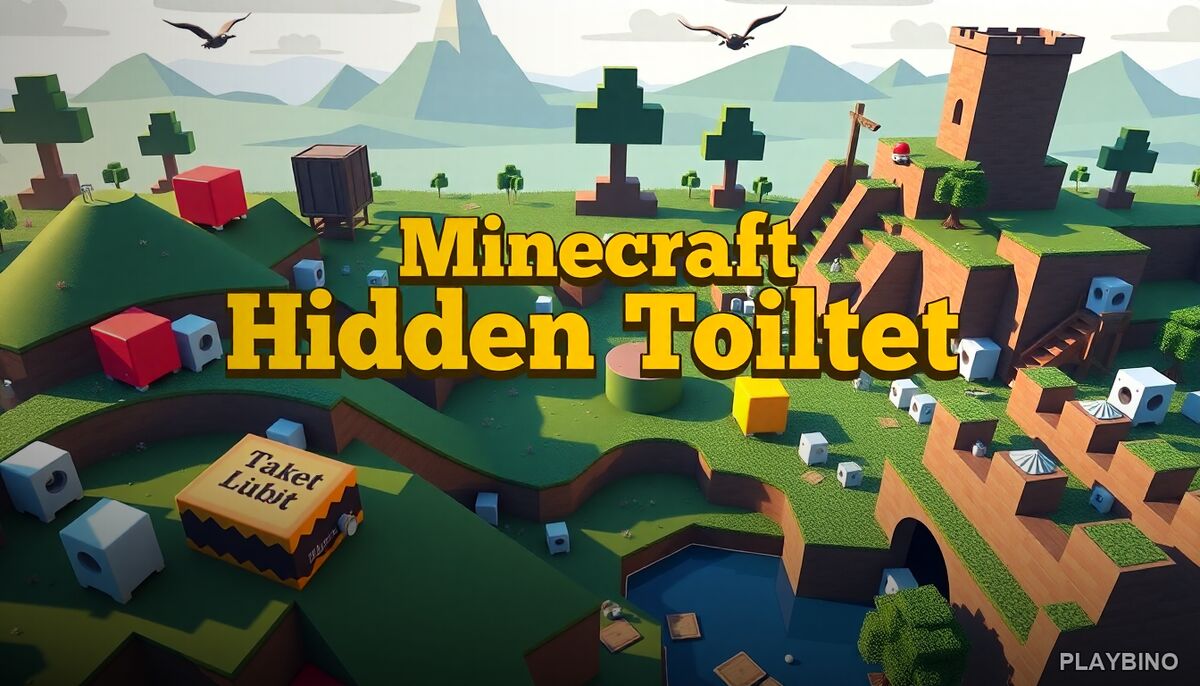
Minecraft Skibidi Hidden Toilet drops you into pixelated Minecraft environments and asks one simple thing: find all the hidden toilets before the clock hits zero. It sounds straightforward, but the game earns its difficulty through clever placement, visual noise, and a penalty system that punishes guessing. This is a single-player puzzle and skill game that rewards patience over speed — even when the timer is screaming at you to move faster.
The Skibidi meme aesthetic gives it an unmistakably absurd personality. Toilets are tucked into shadows, blended into block textures, and wedged into corners you'd never think to check. If you want to take on the full challenge, the game runs directly in your browser with no downloads required.
How the Penalty System Changes Everything
Most hidden object games let you click freely. This one doesn't. Every wrong click costs five seconds off the clock, which sounds minor until you're on level seven with forty seconds left and two toilets still missing. That single mechanic transforms the experience from a casual scan into something that requires genuine focus.
The pressure builds naturally across ten levels. Early stages give you time to breathe and develop a scanning rhythm. Later levels shrink that margin considerably. The five-second penalty means that one impatient click can cascade into a failed run, so the game quietly trains you to slow down even as the countdown accelerates your instincts.
Why Wrong Guesses Hurt More Than They Should
The penalty doesn't just cost time — it costs composure. After a wrong click, many players rush the next guess to recover lost seconds, which often leads to another wrong click. Breaking that cycle is one of the core skills the game develops. Deliberate scanning, not frantic clicking, is what clears levels consistently.
Scene Layout and Object Placement
Each of the ten levels presents a distinct Minecraft-themed scene. The blocky visual style works both for and against the player: the pixelated textures create natural hiding spots, but they also mean toilets can be partially obscured by identical-looking blocks nearby. Corners, elevated structures, and shadowed areas are the most common hiding zones.
Where to Look First
- Scan the edges and corners of the scene before the center — objects placed centrally are usually the easier finds.
- Check elevated platforms and rooftops, where toilets blend into block silhouettes.
- Look for slight color breaks in shadow areas; the toilet shape often disrupts an otherwise uniform texture.
- Don't ignore foreground objects — some toilets are hidden in plain sight behind visual clutter.
Progression Across Ten Levels
The game doesn't introduce new mechanics between levels — the challenge escalates purely through placement difficulty and time pressure. Early levels establish the visual vocabulary: what a partially hidden toilet looks like in a Minecraft environment. Later levels use that familiarity against you, placing objects where your eye has learned not to look.
Finding the tenth toilet on a late level with three seconds remaining produces a specific kind of relief that hidden object games do well. The escalation feels earned rather than arbitrary, which keeps the one-player format engaging across the full run.
Who This Game Suits
Players who enjoy puzzle games that reward observation over reaction speed will find the format satisfying. The Minecraft visual style makes it accessible to anyone familiar with that aesthetic, while the Skibidi theme adds a layer of humor that keeps the mood light even when the timer is stressful. It's a short-session game — each attempt runs maybe five to fifteen minutes — which makes it easy to replay when a run goes wrong.
Minecraft Hidden Diamond Blocks follows a similar search-and-find structure inside the same blocky world, and that hidden object experience is worth exploring if this format clicks with you. The core loop of scanning pixelated scenes under time pressure translates well across both games.
Timing and Scanning Strategy
The most effective approach is a structured sweep rather than a random scan. Start from one corner and move systematically across the scene in horizontal or vertical passes. This prevents the common mistake of repeatedly checking areas you've already cleared while missing untouched zones entirely.
When you're down to the last one or two toilets and time is short, resist the urge to click anything that looks vaguely right. A five-second penalty at that stage is almost always fatal to the run. Narrow your focus to unchecked areas and commit only when you're confident. That discipline, more than sharp eyes, is what separates clean completions from failed attempts on PlayBino.