Mini Bubbles: Puzzle Strategy, Scoring, and Chain Reactions
What Kind of Game Is This?
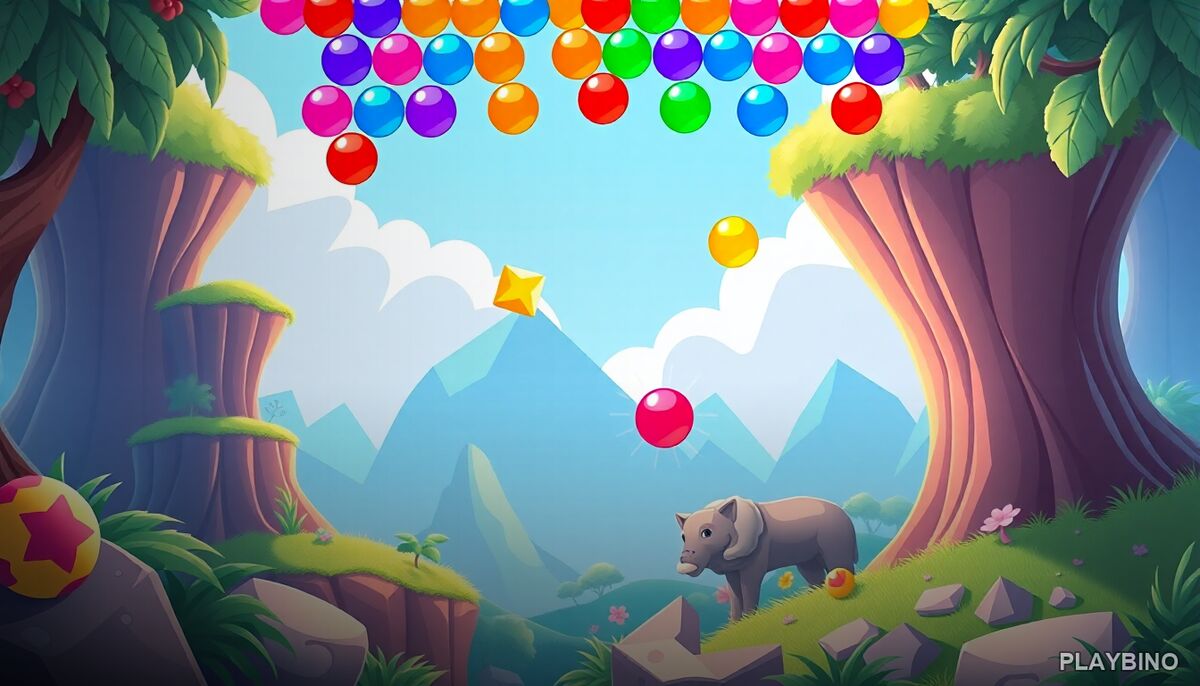
Mini Bubbles sits comfortably in the match-3 puzzle space, but it leans harder into arcade tension than most games in the genre. The core loop is straightforward: aim, shoot, and connect groups of same-colored bubbles to clear them from the board. But the pressure builds steadily, and that simplicity becomes genuinely demanding as rows creep downward and your margin for error shrinks. You can play it directly in your browser without any download or setup.
How the Shooting Mechanic Works
You control a launcher at the bottom of the screen that fires one bubble at a time. The goal is to connect three or more bubbles of the same color so they pop. Larger clusters disappear all at once, and any bubbles hanging below a cleared section fall away automatically, which can trigger secondary clears without an extra shot.
Aiming and Angles
Shots can bounce off the side walls, which opens up angle plays when a direct path is blocked. Learning to read the board and use wall bounces effectively is one of the more satisfying skills to develop. A shot that looks blocked often has a clean diagonal route if you adjust your aim slightly.
Bubble Queue
You can see the next bubble in your queue before you shoot. This matters more than it might seem. Knowing what color is coming next lets you plan two moves ahead instead of reacting to whatever appears. Players who ignore the queue tend to run into situations where the wrong color arrives at the worst possible moment.
Scoring and Cluster Logic
Points scale with cluster size. Popping three bubbles at once earns basic points, but clearing eight or ten in a single shot multiplies the reward significantly. The game encourages you to set up large clusters rather than picking off small groups as they appear. Patience in the early rounds pays off when a single well-placed shot collapses a large section of the board.
Hanging bubbles — those that detach when their support is removed — add another layer to the scoring. Triggering a cascade where multiple groups fall at once is both visually satisfying and mechanically rewarding. The game rewards players who think a few moves ahead rather than shooting at the first available match.
Pace and Difficulty Curve
The early stages move slowly enough that you can experiment with angles and cluster setups without much consequence. Around the midpoint, the downward creep of new bubbles accelerates, and the board starts filling faster than you can clear it if you're not efficient. Misplaced shots don't just waste a turn — they add clutter that makes future shots harder to land cleanly.
This is where the match-3 puzzle structure really tightens. Color distribution becomes less predictable, and you'll occasionally receive a bubble color that doesn't match anything useful on the board. Managing those moments without letting the board fill is one of the more interesting challenges the game presents.
Visual Style and Feel
The visuals are bright and clean without being distracting. Colors are distinct enough that reading the board stays easy even when it gets crowded. The pop animations and chain reaction effects give each successful cluster clear visual feedback, which keeps the experience feeling responsive. Nothing about the presentation gets in the way of the puzzle logic underneath.
Similar Challenge to Try
If the chain reaction and ball-clearing mechanics appeal to you, Extra Ball Chains offers a comparable arcade experience worth exploring on PlayBino. The two games share a focus on clearing connected groups under pressure, though the mechanics and feel differ enough to make both worth your time separately.