Mr. Bean Hidden Objects: Spot Everything Before the Clock Runs Out
What You're Actually Doing
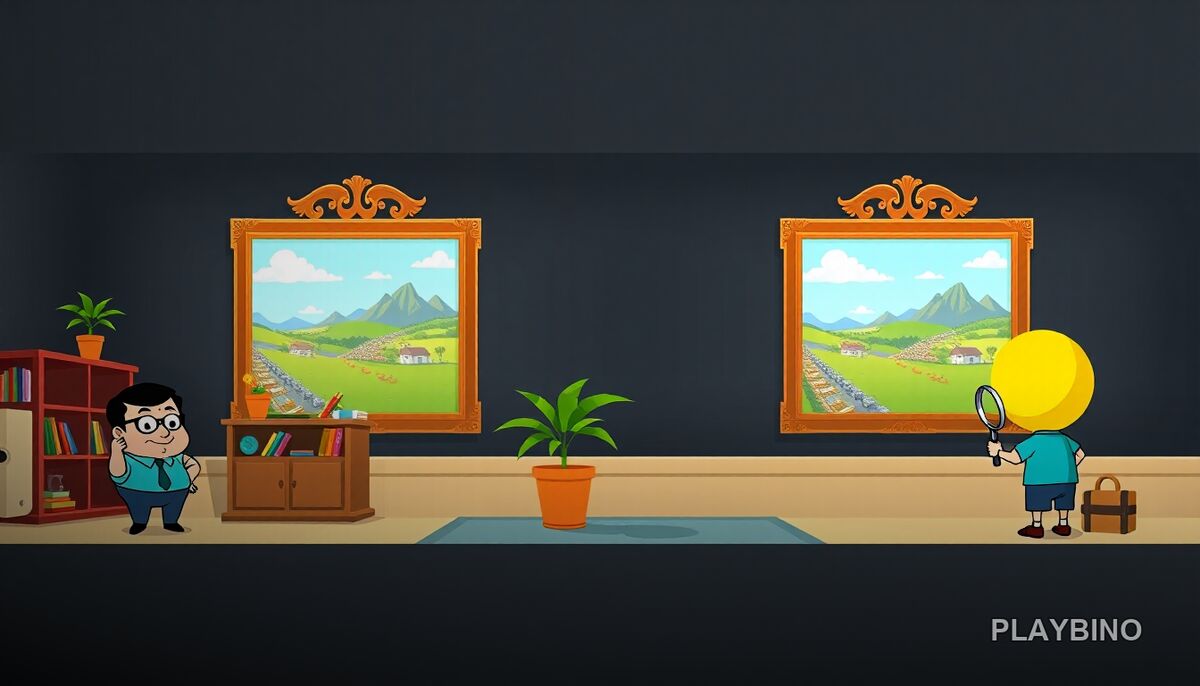
Every level drops you into a scene filled with the kind of cheerful disorder that defines Mr. Bean's world. A list of objects appears on screen, and your job is to find each one before the timer reaches zero. Nothing moves, nothing attacks you — the challenge is purely visual. Items are tucked behind furniture, blended into wallpaper patterns, or half-hidden under other objects. The faster you spot them, the better your score.
You can play this browser puzzle on PlayBino without any downloads or setup. It loads quickly and works well on both desktop and mobile, making it easy to pick up for a few minutes or a longer session.
How the Timer Changes Everything
Hidden object games without a clock are relaxing. With one, they become something else entirely. The countdown in Mr. Bean Hidden Objects turns a calm scan into a focused hunt. You start methodically, moving left to right across the scene, but as the seconds drop, you start second-guessing yourself and scanning faster. That shift in mental pace is where the game finds its tension.
Accuracy vs. Speed
Clicking randomly to beat the clock usually backfires. Misclicks don't just waste time — they can cost you stars at the end of the round. The star rating system rewards both completion and efficiency, so players who slow down slightly and click with intention tend to score higher than those who rush and miss repeatedly.
Scanning Strategy
A useful habit is to read the full object list before scanning. Knowing what you're looking for — a rubber duck, a remote control, a shoe — lets your eyes filter the scene instead of processing every pixel. Grid scanning (top-left to bottom-right in rows) works well in dense scenes, while sparse scenes reward jumping to obvious hotspots first.
Scene Design and Visual Clutter
The environments are built around Mr. Bean's signature aesthetic: lived-in spaces, mismatched items, and a general sense of lovable chaos. That design choice isn't just cosmetic. It directly serves the gameplay by creating backgrounds where objects look like they belong, making them genuinely hard to separate from the environment. A teacup sitting on a cluttered kitchen counter is far harder to spot than one floating in empty space.
Each scene has its own color palette and density. Some levels use warm, busy interiors that hide objects in plain sight through color matching. Others use outdoor or semi-structured spaces where the challenge comes from scale — small objects placed far back in the scene.
Replay Value and Star Ratings
Finishing a level isn't always enough. The three-star rating system gives players a reason to return. Earning one star for completion is straightforward, but pushing for three stars requires a clean run — fast, accurate, and without wasted clicks. For players who enjoy squeezing the best possible score out of a simple format, that loop is genuinely motivating.
- Three-star ratings reward speed and accuracy together
- Each scene has a fixed object list, so repeat runs become more efficient
- Timer pressure increases the difficulty without changing the core mechanic
- Familiar character presentation keeps the tone light even when the challenge is real
Who Plays This Kind of Game
Single-player puzzle and brain games like this one attract a wide range of players. Some come for the relaxed format and familiar character. Others are drawn in by the observation challenge and stay for the score optimization. It doesn't require fast reflexes in the traditional sense — no jumping, no shooting — but it does demand sharp focus and the ability to stay calm under a ticking clock.
If the hidden object format appeals to you, another search-focused puzzle worth trying is Find The Candy Pro, which takes a different approach to visual discovery with its own set of mechanics and scene design.
The Core Appeal
Mr. Bean Hidden Objects works because it keeps the concept clean. There are no complex menus, no upgrade trees, no mechanics to learn beyond looking carefully and clicking correctly. The difficulty comes entirely from scene design and time pressure. That simplicity makes it easy to start, and the star system gives it enough structure to keep experienced puzzle players engaged beyond a single run.