My Fire Station World: Build Your Own Emergency Rescue Scenes
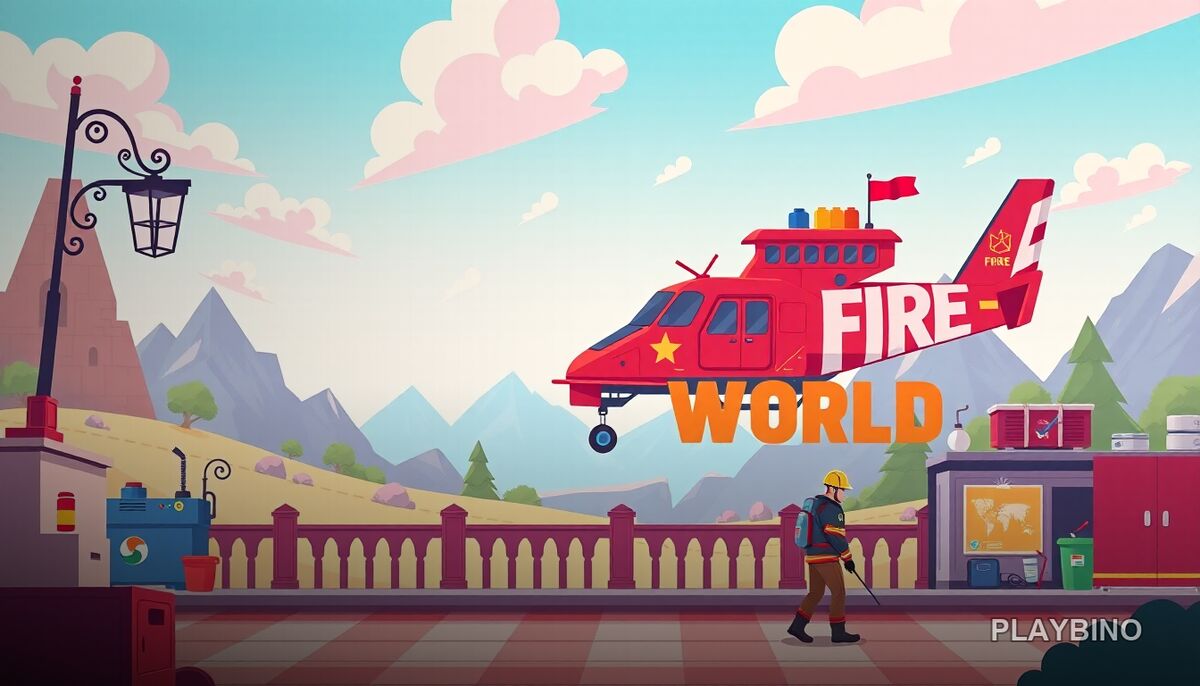
What Kind of Game Is This?
Not every browser game asks you to compete or survive. Some hand you a set of tools and say: build something. My Fire Station World falls into that second category. It is a single-player simulation that puts you in charge of staging emergency rescue scenes, deciding where firefighters stand, how equipment is arranged, and how each dramatic moment plays out. There are no timers counting down and no enemies to defeat. The satisfaction comes from construction and creativity.
If you want to jump straight in, this firefighting simulation on PlayBino runs entirely in the browser with no downloads required.
Six Scenarios, Six Blank Canvases
The game presents six distinct emergency situations. Each one starts as an open stage where nothing is predetermined. You decide the story. That might mean positioning a crew around a burning building, arranging a ladder rescue on an upper floor, or staging a coordinated response with multiple vehicles and personnel.
The variety across scenarios keeps the experience from feeling repetitive. One setup might focus on a structural fire while another leans toward a rescue operation with different props and layout options. Switching between them gives you a reason to experiment rather than replicate the same scene every time.
Drag-and-Drop Controls
Everything in the game moves through drag-and-drop interaction. You pick up a character, a piece of equipment, or a prop and place it where you want it. There is no complex input to learn. The controls stay out of the way so attention stays on the scene itself. For younger players especially, this makes the creative process feel immediate and low-friction.
Costume Customization
Firefighters can be dressed in different outfits before being placed into a scene. This adds a layer of personalization that makes each setup feel more like your own. It is a small detail, but it encourages players to think about the crew as characters rather than generic placeholders.
What You Actually Learn From Playing
The open-ended design does something useful beyond entertainment. Because players are arranging real firefighting equipment and placing crews around realistic emergency structures, the game quietly introduces concepts from actual fire response work. Where does a ladder truck park? How do rescue teams approach a burning structure? What gear gets used in different situations?
None of this is delivered through lectures or pop-up facts. It comes through the act of building scenes and noticing what looks right or wrong. That kind of incidental learning tends to stick better than passive reading.
Who Plays This and Why
My Fire Station World works well for players who prefer creative play over competition. Younger audiences drawn to emergency vehicles and firefighter themes will find plenty to engage with. Parents looking for something constructive rather than purely reflex-based will appreciate the calm, open format.
- Six emergency scenarios with distinct layouts and props
- Drag-and-drop placement for characters and equipment
- Costume options to personalize each firefighter
- No time pressure or failure states
- Encourages scene-building and creative storytelling
The simulation tag fits accurately here. This is not an action game dressed up as firefighting. It genuinely asks you to think about arrangement, coordination, and presentation.
A Similar Creative Experience Worth Exploring
If this style of imaginative, character-focused play appeals to you, another world-building simulation in a similar vein is Baby Panda Emotion World, which takes a comparable open-ended approach with its own cast of characters and interactive scenarios. The two games share a creative, low-pressure format that rewards curiosity over competition.
Making the Most of Each Scene
Because there are no wrong answers, the most rewarding way to play is to set yourself informal goals. Try to recreate a realistic emergency response using only the props available. Or go the opposite direction and build the most chaotic, overcrowded scene possible just to see how it looks. The game supports both approaches without judgment.
Replaying each scenario with a different setup reveals how much variety the prop and character combinations allow. What looks like a limited toolkit often turns out to have more flexibility than it first appears.