Mystic Blocks Match: Physics Puzzle Strategy and Tips
What Kind of Puzzle Is This?
Not every puzzle game rewards fast fingers. Mystic Blocks Match is built around deliberate thinking, where the challenge is figuring out which block to remove without sending the whole structure crashing down. The physics engine does the heavy lifting in terms of tension — one wrong tap and a tower that was standing fine a second ago suddenly tips past the point of no return. Try it directly in your browser and you'll quickly notice how much the game relies on reading structural weight before acting.
The Core Mechanic: Block Removal Under Gravity
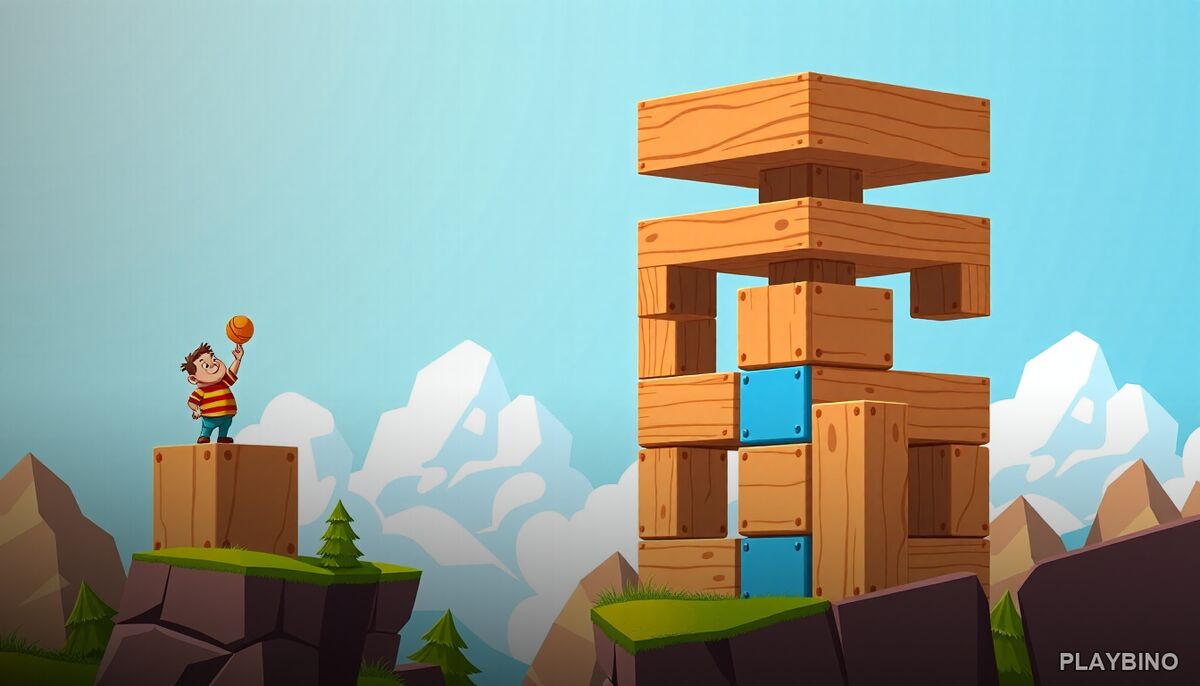
Each level presents a colorful arrangement of stacked and interlocked blocks. Your job is to tap and remove them one at a time. The catch is that gravity is always working against you. Every block you pull out shifts the load onto whatever remains, and the physics simulation calculates that shift in real time. Towers sway. Pieces slide. Sometimes a structure holds together by what feels like pure luck, and that near-collapse moment is exactly what makes the game satisfying.
The puzzle logic here is genuinely spatial. You're not matching colors or solving equations — you're reading load paths, identifying keystones, and deciding which pieces are load-bearing versus which ones are floating free. That distinction becomes the entire game at higher levels.
Identifying Safe Blocks
Early levels teach you to spot blocks that sit on the outer edge of a structure with nothing resting on top of them. These are usually safe to remove first. As arrangements grow more complex, safe blocks become harder to identify, and the margin for error shrinks considerably.
Keystones and Collapse Points
Some blocks act as keystones — remove them and the whole structure comes apart. Learning to recognize these visually, before tapping, is the core skill the game develops. The shape of the arrangement usually gives hints: narrow contact points, overhanging masses, and asymmetric stacks are all warning signs worth pausing over.
How Difficulty Scales Across Levels
The early stages are accessible enough to build intuition without frustration. Structures are simple, the physics behave predictably, and there's usually a clear sequence that works. But the game doesn't stay gentle for long. Later levels introduce arrangements where nearly every block has something resting on it, and the order of removal becomes a strict logic puzzle rather than a casual experiment.
Patience genuinely pays off here. Rushing a tap because a solution looks obvious is one of the most common ways to fail a level that should have been manageable. The game rewards players who pause, mentally simulate the collapse, and then act.
Strategy Tips Worth Knowing
- Start from the outside edges and work inward rather than pulling from the center first.
- Watch for blocks that are only touching one other piece — those are usually removable without cascading effects.
- When a structure sways after a removal, wait for it to fully settle before making the next move.
- Asymmetric towers tend to fall toward their heavier side, so remove weight from the heavier end early.
- If a level feels impossible, try reversing your usual removal order — sometimes the counterintuitive sequence is the correct one.
The Feel of Playing It
There's a specific kind of satisfaction in watching a precarious tower hold together after a risky extraction. The game leans into that feeling deliberately. Structures wobble at dramatic angles, and the physics feel weighty enough to make each removal feel consequential. It doesn't feel like a casual time-killer — it feels like a logic challenge with a tactile reward built in.
Players who enjoy spatial reasoning, structural thinking, or any kind of skill-based puzzle will find a lot to work through here. The puzzle design stays focused on the one mechanic without padding it with unnecessary systems.
Similar Logic Puzzles on PlayBino
If block removal puzzles appeal to you, Dice Puzzle: Fruits! takes a different angle on logic-based challenges worth exploring — that puzzle experience covers how the mechanics work and what kind of thinking it demands. Both games reward careful analysis over reflexes, making them a natural pair for anyone who prefers puzzles with genuine strategic depth.