Mystic Quest: Word Search Puzzle Game Guide
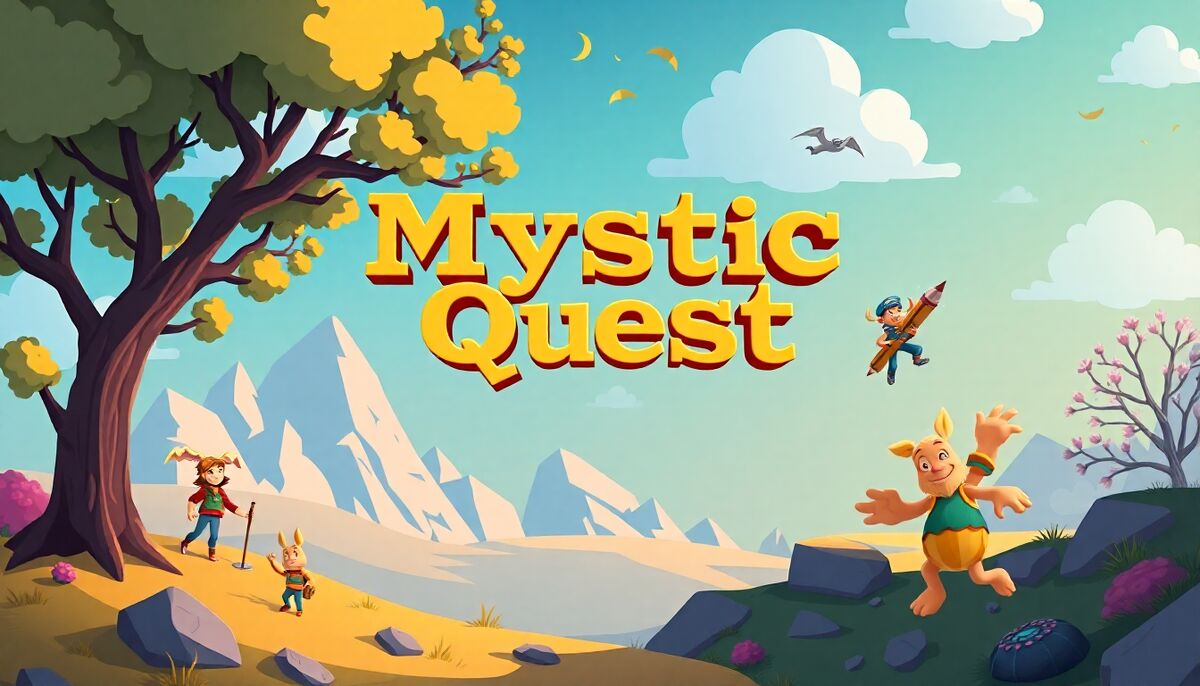
What Mystic Quest Is About
Word search puzzles have a long history, but Mystic Quest brings a clean, focused version of the format to the browser. The game drops you into letter grids packed with hidden words, each level built around a specific theme. Your job is to scan the arrangement, spot the patterns, and select words before moving on to the next challenge. The full puzzle experience is available to play right now, no download required.
The themed structure matters more than it might first appear. Rather than random word lists, each puzzle groups vocabulary around a category, which gives your brain a useful frame for searching. If the theme is animals, you start thinking in that direction. That mental focus narrows the search space and makes the logic feel purposeful rather than arbitrary.
How the Letter Grid Works
Each puzzle presents a grid of scattered letters with words hidden horizontally, vertically, or diagonally. You tap or click and drag across letters to form a word. The interface confirms matches instantly, which keeps the rhythm of play moving without interruption.
Pattern Recognition Over Memorization
The core skill here is not vocabulary size alone. It is the ability to scan a dense grid and isolate meaningful sequences from visual noise. Your eyes need to learn to skip over dead ends quickly and lock onto promising clusters. That pattern recognition sharpens across levels as the grids grow more complex and the word placements become less obvious.
Using Hints Strategically
Hints are available when a puzzle stalls your progress. They nudge you toward a hidden word without giving everything away. The most satisfying approach is to use them sparingly, reserving them for moments when you have genuinely exhausted your own search. Solving a difficult grid without assistance carries a distinct sense of accomplishment that a hint-heavy run cannot replicate.
Progression and Difficulty
Early levels introduce shorter words and straightforward grid layouts. As you advance, word length increases, grids expand, and the thematic categories shift into less familiar territory. The difficulty curve feels gradual rather than punishing, which means the game suits both casual sessions and longer focused play.
- Themed word categories that shift across levels
- Grid complexity increases with each stage
- Instant letter selection feedback
- Optional hints for stuck moments
- Clean interface with no distracting elements
The Logic Behind Finding Words
Experienced word search players develop a method: anchor on first letters, trace likely directions, and eliminate paths that dead-end quickly. In Mystic Quest, this approach becomes more important as levels advance. Starting from rare letters like Q, X, or Z can be more efficient than starting from common ones, since those letters narrow down candidate words faster. Building a personal technique is part of what makes the game feel progressive rather than repetitive.
Who This Game Suits
The puzzle and brain tags describe the audience well. Players who enjoy logic-based challenges, vocabulary exercises, or quiet single-player experiences will find the format satisfying. The one-player structure means there is no time pressure from opponents, only the internal drive to complete each grid. Sessions can be short or extended without losing context, since each level is self-contained.
If you enjoy puzzle games that reward careful observation, the Butterfly Jigsaw Puzzle is another relaxed challenge worth exploring on PlayBino, built around visual assembly rather than word recognition but sharing the same unhurried, brain-focused appeal.
Why the Clean Interface Helps
Many browser games layer menus, animations, and notifications over the core experience. Mystic Quest strips that back. The grid is the focus. Letter selection is responsive. There is no visual clutter competing for attention. For a puzzle format that depends on careful observation, that restraint is a genuine design strength rather than a limitation.