Nightmare Float: Surviving the Haunted Sky
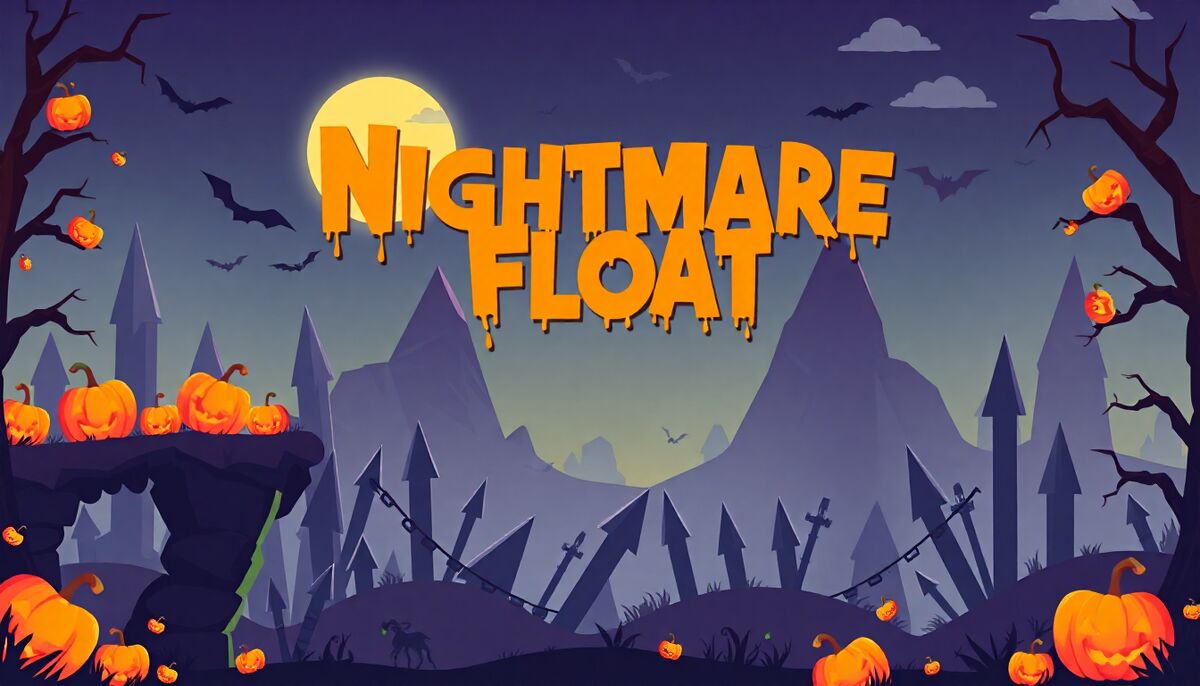
What Is Nightmare Float?
A fragile balloon drifting upward through a dark, haunted forest — that's the setup, and it wastes no time making things dangerous. Shurikens fly across your path, spikes jut out from the shadows, and thick menacing clouds press in from above. The game is a single-player endless runner built around reflexes and timing, where every second you stay airborne adds to your score. Try the full run on PlayBino and see how far your first attempt takes you.
How the Floating Mechanic Feels
Unlike runners where you sprint across the ground, here you're constantly rising. The balloon drifts upward by default, and your job is to steer it left and right through narrowing gaps between obstacles. The movement has a slight floaty momentum to it — tapping or holding shifts your position, but overcorrecting is just as deadly as doing nothing. That tension between drifting and nudging is what makes the arcade feel distinct from other skill-based games in the genre.
Timing Over Speed
The game doesn't reward rushing. Obstacles appear at irregular intervals, and reacting too early to a shuriken can send you straight into a spike cluster. Reading the pattern a half-second ahead consistently outperforms pure reaction speed. The difficulty scales as you climb higher — hazards come faster and leave less room to maneuver.
Hazard Types
Three main threats fill the forest above you:
- Shurikens — thrown horizontally across the screen, often in pairs or staggered sequences
- Spikes — fixed obstacles jutting from the sides or floating in clusters mid-path
- Menacing clouds — slower but wider, forcing you to pick a narrow lane quickly
Each hazard type demands a slightly different response. Clouds require early commitment to a side. Shurikens punish hesitation. Spikes test your ability to hold a steady position without drifting.
Scoring and Progression
Your score grows with every second of survival. There's no checkpoint system — a single hit ends the run and you start from the bottom again. That loop is fast and punishing in the best way for an arcade format. The intensity builds naturally, so early runs feel manageable while later stretches become genuinely chaotic.
Potions scattered along the route are worth collecting. They unlock new balloon characters, which changes the visual experience without altering core mechanics. It gives repeat players a reason to keep going beyond just chasing a high score.
Atmosphere and Audio
The shadowy visuals do a lot of work here. The forest feels genuinely unsettling — dark tree silhouettes, dim lighting, and eerie audio that builds tension as you climb. It's not horror in the traditional sense, but the aesthetic keeps the pressure constant. The sound design reacts to close calls, which adds to the sense that something is always about to go wrong.
Strategy for Longer Runs
Surviving past the early waves comes down to a few consistent habits. Stay near the center of the screen when possible — it gives you the most reaction time in any direction. Avoid hugging the edges unless a hazard forces you there. When two obstacles appear simultaneously, identify which one moves and which is fixed, then route around the fixed one first.
Patience matters more than aggression. The balloon's momentum means sudden sharp movements often cause more problems than the obstacle you were avoiding. Small, controlled nudges tend to be more reliable than big repositioning moves.
A Different Kind of Arcade Challenge
If the reflex-based format appeals to you, the skill and timing focus here has some overlap with other fast-paced browser games. Arrow Fest 3D Online takes a different approach to arcade progression — that alternative arcade challenge is worth a look if you enjoy games built around quick decisions and escalating difficulty. The two games share an arcade sensibility even though their mechanics are quite different.