Noob and Pro Monster School: Chase, Escape, Survive
What Kind of Game Is This?
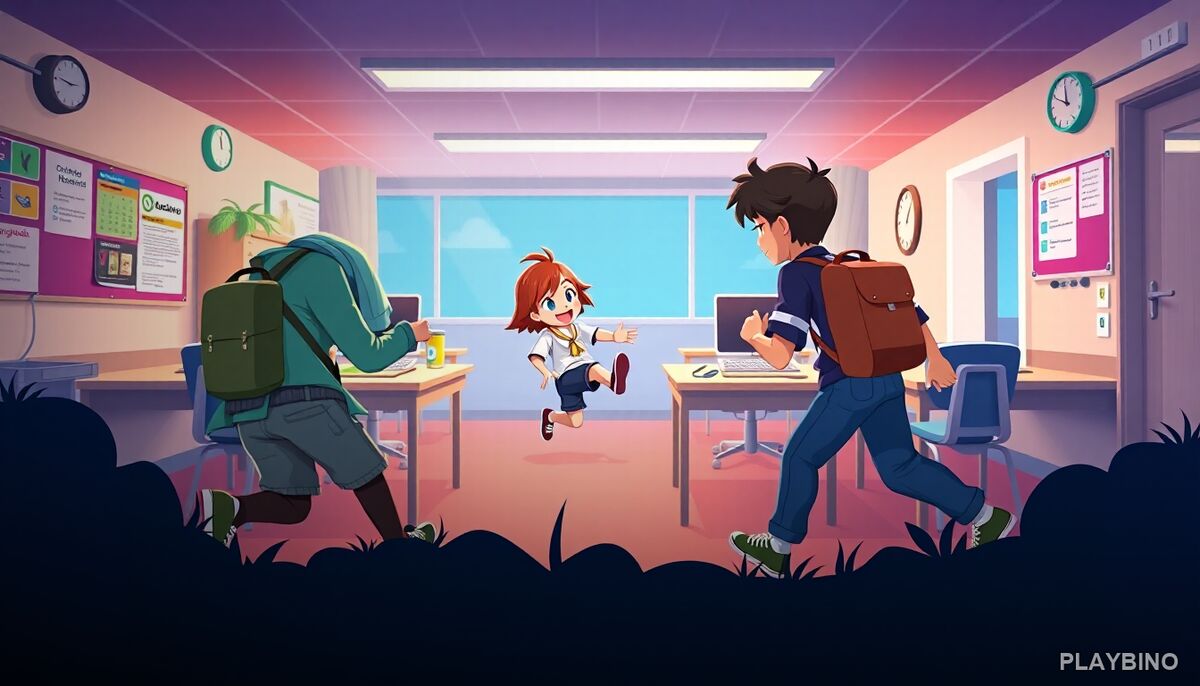
Not every endless runner puts two characters on screen at once and fills the corridors with creatures hunting them down. Noob and Pro Monster School does exactly that — a 2-player action game built around speed, coordination, and survival instinct. The setting is a school that stops feeling safe the moment the first monster appears, and from there, every hallway becomes a sprint for the exit portal.
If you want to jump straight into the chaos, try this monster chase runner on PlayBino and see how far you and a partner can get before the beasts catch up.
The Core Loop: Run, Collect, Escape
Each level drops Noob and Pro into a new corridor layout filled with monsters closing in from behind and ahead. The objective is simple on paper — reach the exit portal — but the path is never clean. Diamonds are scattered throughout each run, and grabbing them adds risk. Slowing down even slightly to collect a diamond can mean the difference between escaping and getting cornered.
The endless runner format means the pressure never fully lifts. Layouts shift between levels, monster placement changes, and the encounters grow deadlier as you push further. Players who ignore the diamonds move faster but score lower. Players who chase every pickup need sharper timing and better spatial awareness.
Diamonds and Risk
The diamond mechanic is what separates casual runs from high-scoring ones. Each diamond requires a small detour or a moment of hesitation, and monsters do not wait. Deciding which pickups are worth the risk becomes a genuine skill over time, especially when corridors narrow and creatures emerge from multiple directions.
Exit Portal Timing
Reaching the portal is not always straightforward. Some layouts place the exit behind obstacles or force both characters through tight sections where monster proximity becomes critical. Rushing without reading the path ahead often ends runs prematurely.
Two-Player Coordination
The duo format is one of the most distinctive parts of the experience. Noob and Pro move through the same environment but can be controlled independently, which means two players can split responsibilities — one focused on diamonds, one focused on clearing the path. Playing solo with both characters requires splitting attention quickly, which adds its own layer of difficulty.
Coordination matters most during chase sequences. When monsters emerge from the shadows and begin closing in, both characters need to move in sync or one gets left behind. The game rewards players who communicate and plan rather than those who simply react.
Monster Behavior and Threat Escalation
The monsters in each level are not static obstacles. They stalk, emerge from shadows, and respond to movement through the corridors. Early levels introduce single creature types with predictable patterns. Later encounters stack multiple monsters with different speeds and approach angles, forcing both players to adapt their route choices mid-run.
Atmospheric tension is a real part of the design. The school environment shifts from recognizable to unsettling as the levels progress, and the audio-visual cues that signal an incoming monster create genuine urgency. Players who stay alert to these signals last longer than those who rely purely on reaction speed.
Who Plays This Well?
This game suits players who enjoy skill-based action with a social element. The 2-player format makes it a strong pick for couch co-op sessions or competitive runs where each player tries to outlast the other. The endless runner structure means there is always a reason to try one more level, especially when a better diamond route or a cleaner escape feels within reach.
Fans of the Noob vs Pro format across browser games will feel at home here. For a different take on that same rivalry, the Noob vs Pro HorseCraft challenge is worth a look if you want to see how the duo handles a completely different type of gameplay.
What Makes Each Run Feel Different
- New corridor layouts per level prevent memorization from becoming the only skill
- Monster spawn positions shift, keeping threat directions unpredictable
- Diamond placement changes the risk calculation on every run
- Two-character control creates different dynamics for solo and co-op play
- Escalating difficulty means early runs feel very different from later ones
The combination of action, monster pressure, and skill-based movement gives the game enough variety to stay engaging across multiple sessions without relying on a single repeated formula.