Noob Chicken Hunter: Dodge Monsters and Collect Every Bird
The Setup: Forest, Chickens, and Danger
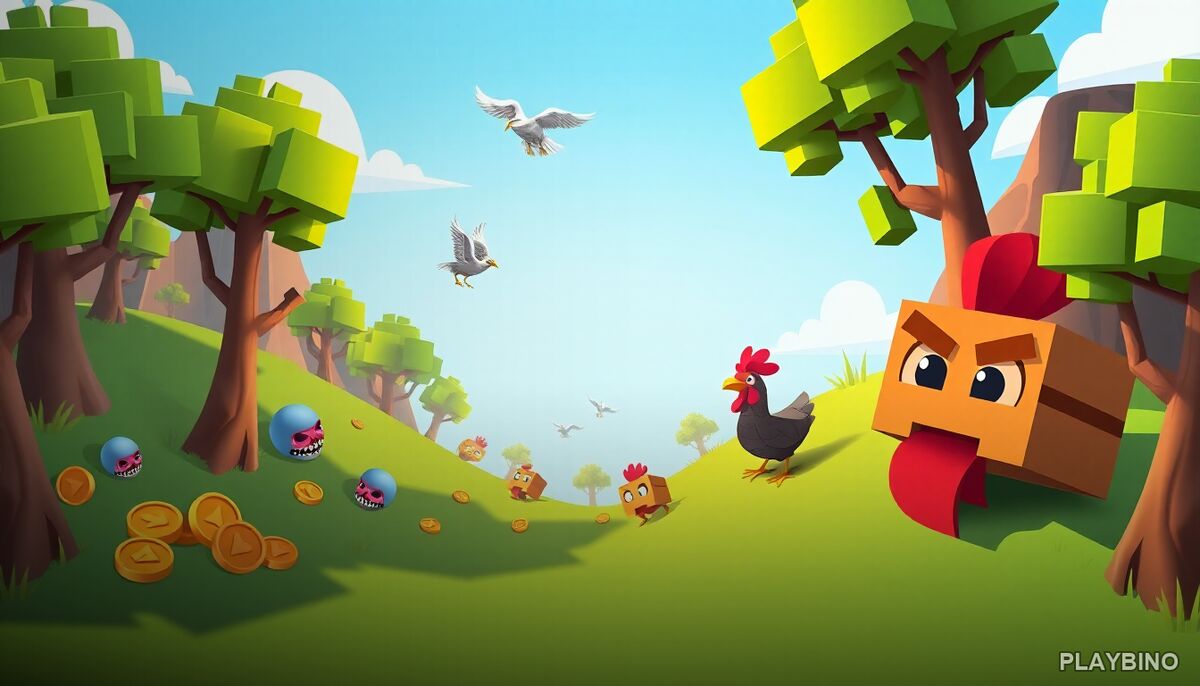
Not every arcade game gives you a mission this specific. In Noob Chicken Hunter, you are dropped into a woodland area scattered with wandering chickens and patrolling monsters. Your job is straightforward on paper: round up every bird before the creatures get to them. In practice, the forest keeps you constantly moving, reading threats, and making split-second decisions about when to chase a chicken and when to back off.
The action-arcade combination works well here. The environment feels alive with movement — chickens drift unpredictably, monsters patrol set routes, and coins sit waiting in awkward spots that require a detour to reach. Every second you spend chasing one bird is a second a monster spends closing in on another.
What You Are Actually Doing Each Run
The core loop revolves around three things: collecting chickens, avoiding monsters, and grabbing coins when the path is clear. None of these tasks are independent. Chasing a coin might pull you into a monster's patrol zone. Herding a chicken toward safety might push you into a corner with limited escape options.
Reading Monster Patterns
Monsters move in predictable patterns, but those patterns overlap in ways that create shifting danger zones. Early on, you can memorize a single creature's route and time your movement around it. As the forest gets more crowded, you need to track multiple threats simultaneously. Watching where each monster turns before committing to a direction is one of the most important habits to build.
Chicken Behavior
The chickens do not wait for you. They wander, change direction, and sometimes drift toward the very areas where monsters are active. Prioritizing which bird to collect first — especially those closest to enemy patrol paths — matters more than raw speed. Rushing toward the nearest chicken without checking the surrounding area is a common early mistake.
Coins and Secondary Objectives
Scattered coins add another layer to each run. They are not required to complete a level, but collecting them pushes your score higher and encourages you to take calculated risks. Some coins are placed in relatively open areas. Others sit near trees or obstacles that limit your exit options. Deciding whether a coin is worth the exposure is a small but recurring strategic choice throughout the game.
Survival Skills That Actually Help
- Move toward chickens that are drifting toward active monster zones first.
- Use trees and obstacles as natural cover when a monster turns in your direction.
- Do not sprint for coins unless the nearest monster is moving away from that area.
- Keep your movement calm near the edges of the map where escape routes are limited.
- Watch the full screen before committing to a new direction after collecting a bird.
Why the Arcade Format Works Here
Noob Chicken Hunter keeps its sessions short and replayable. There is no lengthy tutorial, no complicated upgrade screen, and no slow build-up. You are in the forest immediately, making decisions from the first second. That immediacy is the appeal. The monster threat keeps the tension consistent without making the game feel unfair, and the chicken-collection objective gives every run a clear sense of progress even when things go wrong.
The woodland setting also does quiet work here. Trees and obstacles break up sightlines, which means you cannot always see a monster until it is close. That limited visibility adds genuine pressure without requiring complex mechanics to create it.
A Different Kind of Action Challenge
If the mix of evasion and collection in this game appeals to you, it is worth looking at another action-focused browser challenge that puts navigation and survival at the center of its design. The context shifts, but the demand for quick thinking stays consistent.
Noob Chicken Hunter is a clean arcade experience built around one tense, repeatable idea. The forest is small, the monsters are persistent, and the chickens never cooperate quite as much as you need them to. That friction is exactly what makes each successful run feel earned.