Noob vs Pro HorseCraft: Two Roles, One Forest, Zero Margin for Error
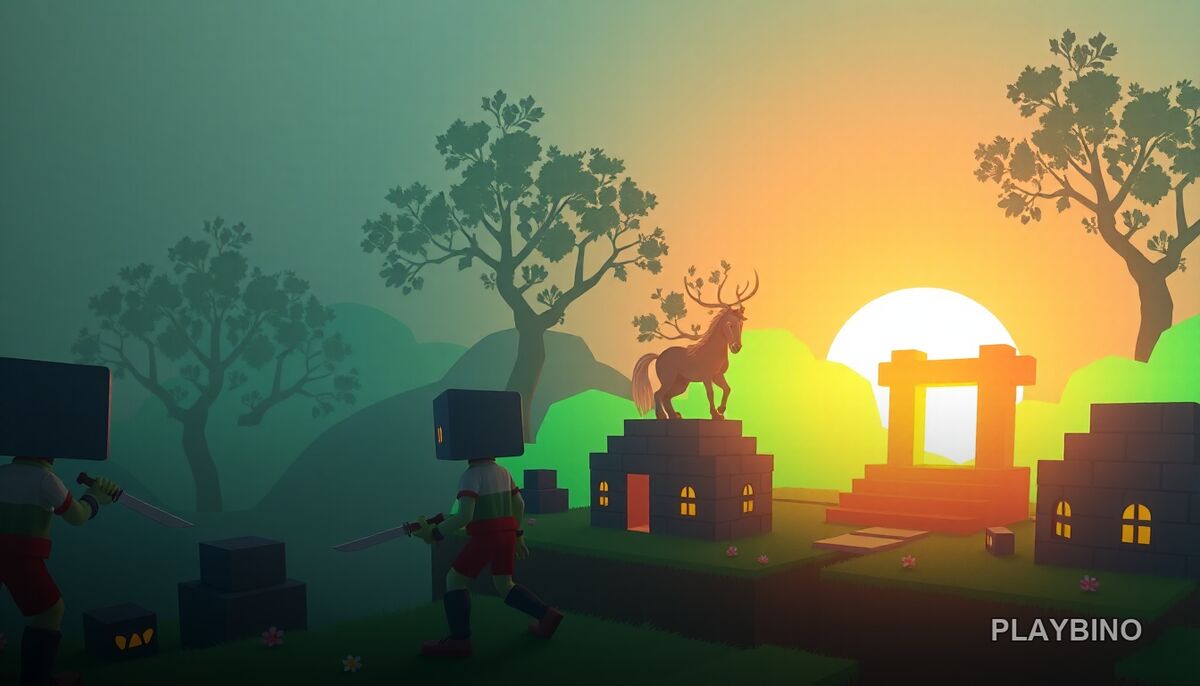
What This Game Actually Is
Most browser games ask you to control one character with one goal. Noob vs Pro HorseCraft splits that into two distinct roles that must work together to survive. You control both a noob and a pro across a monster-filled forest, each with a completely different job. The noob hunts down scattered key fragments, while the pro cuts through enemies with a sword. Neither can succeed without the other, and that tension is what makes the game interesting. Play it on PlayBino and you'll feel that pressure almost immediately.
The Two-Character System
Switching between characters is the core mechanic, and it demands real attention. You can't just focus on one role and ignore the other. The noob is fragile — moving through the forest without any combat ability means every monster on the path is a genuine threat. The pro has the sword to deal with those threats, but can't collect key fragments. These two roles are permanently dependent on each other.
Playing as the Noob
Timing is everything when you're scavenging. Monsters patrol between the key pieces, so rushing toward a fragment without checking the surrounding area usually ends badly. Move when there's a clear window, and retreat when enemies close in. The noob's survival depends almost entirely on reading enemy positions before committing to a route.
Playing as the Pro
The pro's sword gives you offensive power, but that doesn't mean charging into every encounter. Prioritize clearing the path the noob needs to travel next. Eliminating threats before switching back to the noob creates safe windows for collection. If the pro falls behind on enemy control, the noob quickly runs out of safe space to operate.
Forest Hazards and Monster Behavior
The forest isn't just a backdrop. Monsters roam actively, which means the threat landscape shifts as you play. A path that was clear a few seconds ago may not be safe after you've switched characters and spent time on the other side of the map. Staying aware of where enemies are at all times — not just the ones near your current character — is what separates clean runs from restarts.
Key fragments are scattered across the map rather than placed conveniently. Some are in open areas, others are deeper in zones where monster density is higher. The puzzle element comes from deciding which fragment to target first based on current enemy positions, not just proximity.
Strategy: Coordination Over Speed
The biggest mistake new players make is trying to move fast. This is a strategy and action game that rewards patience. Rushing the noob toward fragments while the pro hasn't cleared nearby threats almost always leads to a forced restart. The correct approach is to use the pro to carve out a safe zone, then switch to the noob to collect within that window before enemies respawn or reposition.
- Clear the immediate path with the pro before switching to the noob
- Don't collect fragments out of order if a safer sequence exists
- Watch enemy patrol patterns before committing either character to movement
- Use the pro aggressively near the chest area in the final stage
- Restart early if both characters are in danger simultaneously
The Chest Endgame
Assembling the full key and reaching the hidden treasure chest is the final objective, but it's also where the game applies the most pressure. By the time you have most fragments, the forest has fewer safe zones and monster density tends to feel higher. The cooperative structure means one error — the noob getting cornered, or the pro missing a key enemy — can unravel progress that took several minutes to build. That risk-reward loop keeps the action engaging even on repeated attempts.
If you enjoy games where spatial awareness and timing matter more than reflexes alone, another challenge worth exploring is Roll and Escape, which builds similar tension around movement decisions under pressure.
Who Will Enjoy This
Noob vs Pro HorseCraft sits at an interesting intersection of action, puzzle, and strategy. It's not a pure combat game, and it's not a pure collection game either. Players who like managing two systems at once — offense and exploration — and who don't mind restarting to find the optimal approach will get the most out of it. The 2-player tag also suggests it can be played cooperatively, which adds a social layer that changes the dynamic entirely when each person takes one character.