Nutrition School: Learn Healthy Eating Through Play
What Nutrition School Is About
Most games about food focus on cooking or restaurant management. Nutrition School takes a different angle — it builds understanding of what healthy eating actually means, one interactive step at a time. The structure blends short lessons with hands-on activities, creating a loop where learning and doing reinforce each other naturally. You can play it directly in your browser without any downloads or setup.
The Learning and Discovery Loop
The game opens with accessible lessons covering food groups and nutritional basics. Nothing is overloaded with text. Information arrives in small pieces, giving players time to absorb each concept before moving forward. This pacing suits younger players especially well, but the structure keeps anyone engaged without feeling rushed.
Once a lesson lands, the game shifts into practice mode. Players head to virtual shelves and select ingredients based on what they just learned. The shopping section is not passive — it asks players to apply knowledge actively, choosing items that contribute to a balanced meal rather than just picking randomly.
Feeding and Feedback
After gathering ingredients, players feed their character and watch how those choices play out. This feedback loop is one of the strongest mechanics in the game. Choosing nutritious foods leads to visible positive outcomes, while poor choices have consequences. That direct connection between decision and result is what makes the simulation feel meaningful rather than decorative.
Quiz Rounds and Coin Rewards
Scattered throughout the experience are quiz rounds that check how much has actually stuck. Correct answers earn coins, which adds a light clicker element to the progression. It is a simple reward system, but it works well here because it ties the educational content to a tangible sense of progress. Players are motivated to pay attention during lessons because the quizzes test specific knowledge, not guesswork.
Scoring and Progression
Coins accumulate across quiz rounds and can reflect overall performance. The scoring is not punishing — wrong answers do not derail the experience — but there is enough incentive to aim for accuracy. This balance makes the game approachable for players who might feel anxious about getting things wrong.
Visual Style and Tone
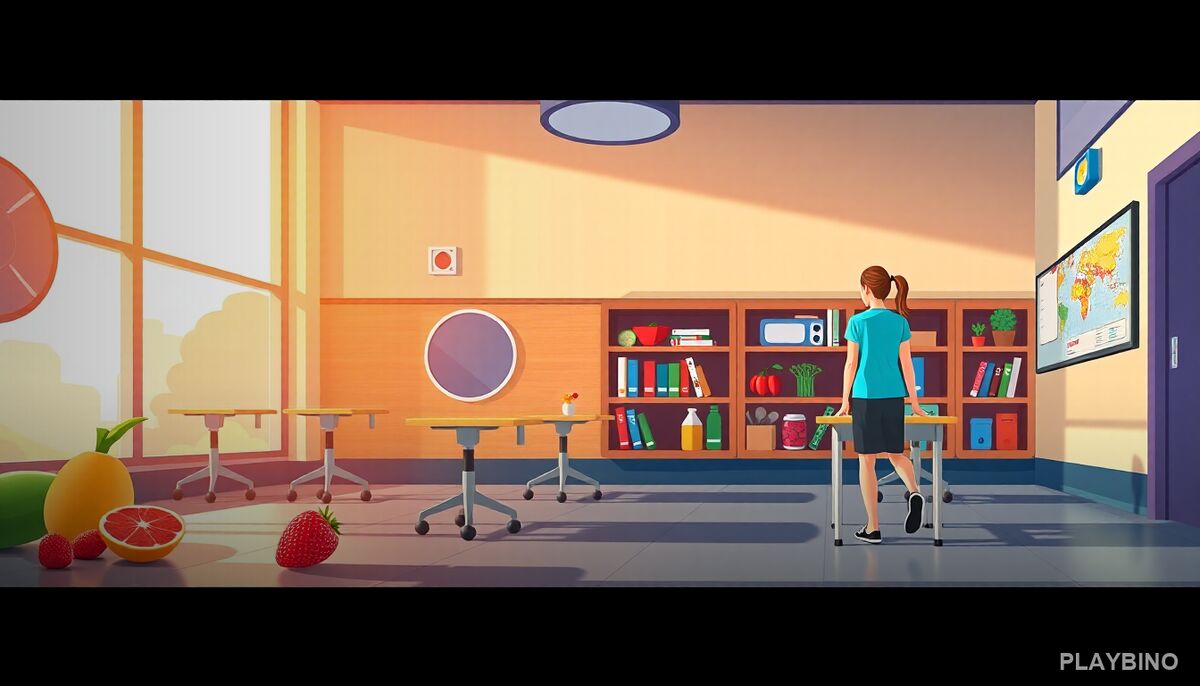
Bright, cheerful visuals run throughout every section. The art style keeps the mood light and the interface easy to read, which matters when the primary audience includes younger children. The educational content works quietly in the background rather than announcing itself constantly, so the experience feels more like play than instruction.
Who This Game Suits
- Children learning about food groups and balanced meals for the first time
- Parents or teachers looking for a low-pressure educational activity
- Anyone curious about nutrition basics in an interactive format
- Players who enjoy simulation and brain games with a practical angle
The single-player structure means there is no competitive pressure. Progress moves at the player's own pace, and the cheerful tone keeps the mood positive throughout. It sits comfortably in the simulation and brain game space without feeling like a textbook dressed up as a game.
A Different Kind of Care Simulation
Nutrition School shares some DNA with virtual care games — the idea that choices affect a character's wellbeing is central to both genres. My Virtual Dog Care on PlayBino explores a comparable care-based simulation where attention and decision-making shape outcomes in a different context. Both games reward thoughtful choices over random clicking, which gives them a similar satisfying rhythm despite covering very different topics.