Obby vs Noob Driver: Two Players, One Car, Zero Room for Error
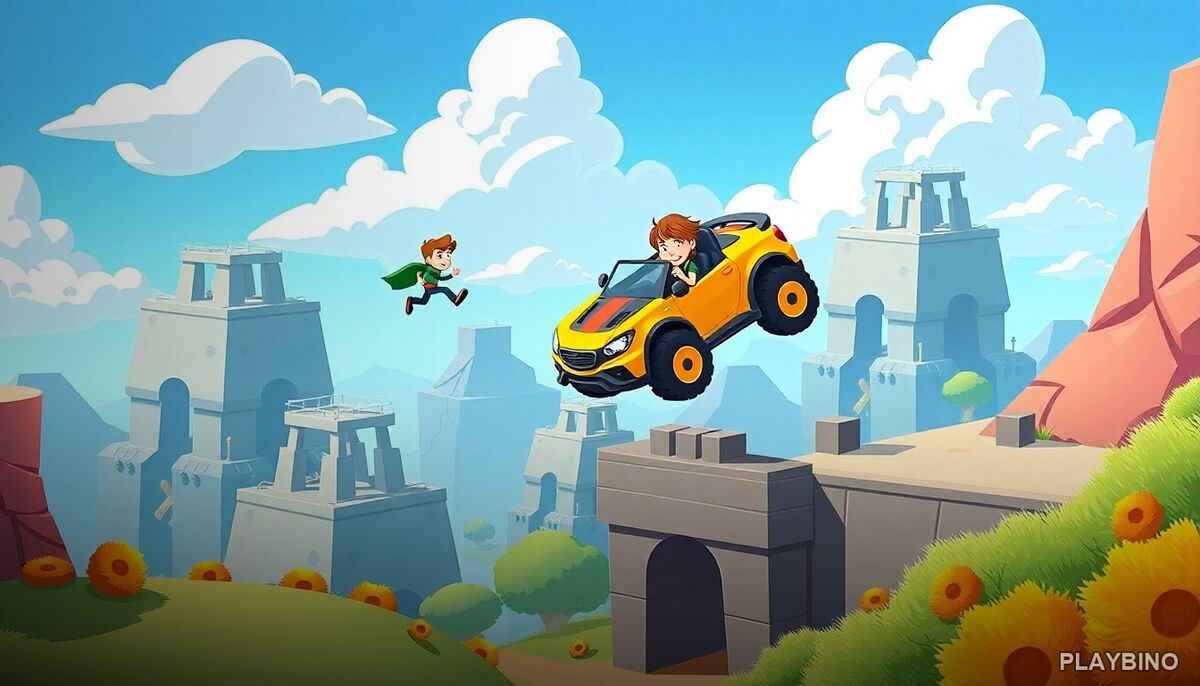
One Vehicle, Two Drivers
Most racing games reward the fastest reflexes. Obby vs Noob Driver takes a different approach entirely. Two players share control of a single car, and the only way to survive the obstacle course is to work together. Neither player can carry the run alone. Play it in your browser and you'll quickly realize that communication matters more than speed here.
How the Shared Control Works
The core mechanic is what makes this 2-player racing puzzle stand out. Each player controls a different aspect of the vehicle's movement, meaning one wrong input at the wrong moment can tip the car off a ledge or send it crashing into a barrier. The game doesn't explain this tension — it lets the course do the teaching.
Timing Over Speed
Rushing through sections almost always ends in failure. The track is built around uneven surfaces and sudden gaps that punish impatience. Both players need to agree — even if just through trial and error — on when to accelerate, when to hold back, and when to let the car settle before moving forward.
Communication as a Mechanic
There's no in-game chat or signal system. The coordination happens naturally between the two people playing. This makes Obby vs Noob Driver feel more like a cooperative puzzle than a traditional racing game. Sitting next to your co-player makes it easier, but the back-and-forth of figuring out each section together is where most of the fun lives.
The Obstacle Course Layout
The track throws a variety of challenges at both players throughout the run. Expect a mix of the following:
- Uneven and tilted surfaces that shift the car's balance
- Gaps in the road requiring precise momentum control
- Hazardous barriers placed at awkward angles
- Sections that require near-simultaneous inputs from both players
The difficulty curve feels deliberate. Early sections introduce the shared control system gently, but the course doesn't stay forgiving for long. Each new segment adds a layer of complexity that forces both players to adapt their approach.
What Makes Each Restart Useful
Crashing and restarting a section isn't just a punishment — it's part of the learning loop. After each failed attempt, both players have a clearer picture of what went wrong. Was the car moving too fast into a gap? Did one player input too early? The puzzle element of the game comes from reading the course and adjusting the shared strategy, not from memorizing a fixed route.
This is where the racing and puzzle tags intersect. The track has a physical logic to it, and understanding that logic is what separates a completed run from a repeated crash.
Who This Game Suits
Obby vs Noob Driver works best when both players are willing to slow down and think. If one player wants to rush and the other wants to be careful, the friction between those styles will cause more crashes than the course itself. The game naturally rewards pairs who communicate, adapt, and find a shared rhythm.
Players who enjoy cooperative challenges with a physical puzzle element will find a lot to work through here. The course keeps both players engaged because neither one can zone out — every section demands active input from both sides.
A Similar Challenge Worth Trying
If the obstacle-course format appeals to you, Obby vs Bacon Rainbow Parkour takes the Obby concept into a parkour-style setting. That challenge has its own rhythm and a different set of movement mechanics worth exploring on PlayBino. The two games share a tone but feel distinct in how they demand player attention.