Object Hunter: The Hidden Object Brain Puzzle You Can Play in Your Browser
What Kind of Game Is This?
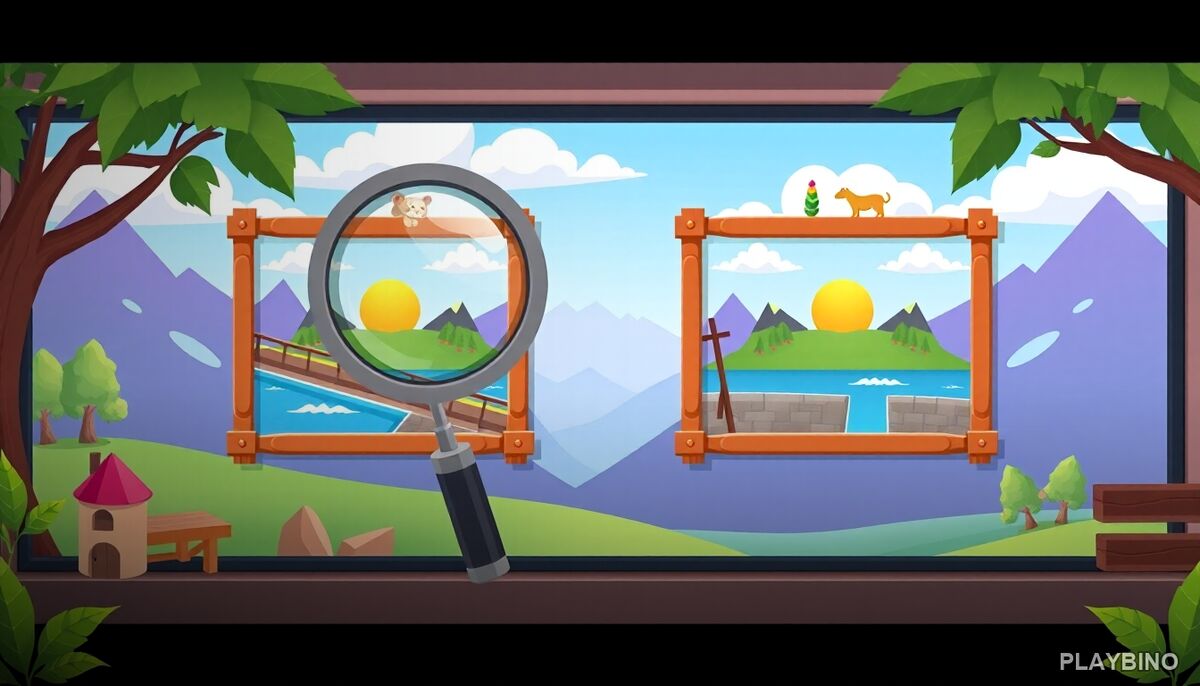
Not every puzzle game demands fast reflexes or complex rules. Object Hunter sits in a quieter category — the kind of brain game where the challenge is purely visual. Your job is to scan richly illustrated scenes and locate specific objects tucked into the environment. No combat, no timers pressuring you, no mechanics to memorize. Just careful observation and the quiet satisfaction of spotting something that was hiding in plain sight.
If you want to try it directly, play it in your browser on PlayBino without any download or setup required.
How the Search Mechanic Works
Each scene presents a detailed visual environment packed with objects, textures, and layered details. A list of targets appears on screen, and the player must locate each one within the scene. The objects are not randomly placed — they are deliberately embedded into the scene's visual noise, often matching the color palette or shape language of nearby elements.
What Makes Objects Hard to Find
The difficulty comes from how well items blend into their surroundings. A small tool might sit among similar-shaped clutter. A colored object might be partially obscured or positioned at an angle that breaks its obvious silhouette. The scenes are designed to reward sustained attention rather than quick scanning.
Progression and Complexity
As you move through the game, scenes become more layered and the objects become less obvious. Early stages ease you into the visual logic of each environment. Later scenes demand genuine focus and a willingness to scan areas you already dismissed. The progression feels earned rather than arbitrary.
The Feel of Playing
Object Hunter has a calm, unhurried rhythm that sets it apart from most puzzle games. There are no punishing consequences for missing a click, and the absence of a countdown timer means you can take your time with each scene. This makes it genuinely suitable for short sessions between tasks or longer stretches of relaxed play.
The satisfaction loop is simple but effective: scan, spot, click, confirm. When you finally locate something you've been hunting for several seconds, the payoff feels real. It's a small moment, but it's the kind of moment that keeps you moving to the next scene.
Who Plays This Type of Game
Hidden object and brain puzzle games appeal to a wide range of players. People who enjoy attention-to-detail challenges, visual puzzles, or simply want something mentally engaging without high pressure tend to gravitate toward this format. It's also a solid choice for anyone who finds typical action or reflex-based games too demanding but still wants something that requires genuine mental effort.
- No time pressure in standard play
- Scenes increase in visual complexity over time
- Objects blend naturally into each environment
- Rewarding feedback when items are found
- Accessible format with genuine brain engagement
A Similar Hidden Object Experience
Hidden Objects: Superthief takes a different angle on the same core concept — searching scenes for concealed items, but with a distinct theme and its own visual style. That game has its own breakdown worth reading if you want to compare how the two approach scene design and object placement before deciding which suits you better.
Scene Design and Visual Detail
One of the stronger aspects of Object Hunter is the quality of its scene construction. Each environment feels intentionally built rather than randomly assembled. Objects are hidden with a sense of craft — placed where the eye naturally skips over them, or disguised by context. This is what separates a well-made hidden object game from a frustrating one. The challenge should feel fair even when it's difficult, and here it generally does.
The brain puzzle tag fits because success depends less on luck and more on developing a systematic approach to scanning. Players who learn to slow down and work through a scene methodically will consistently outperform those who rely on quick visual sweeps.