Ocean Memory Challenge: Flip, Match, and Train Your Brain
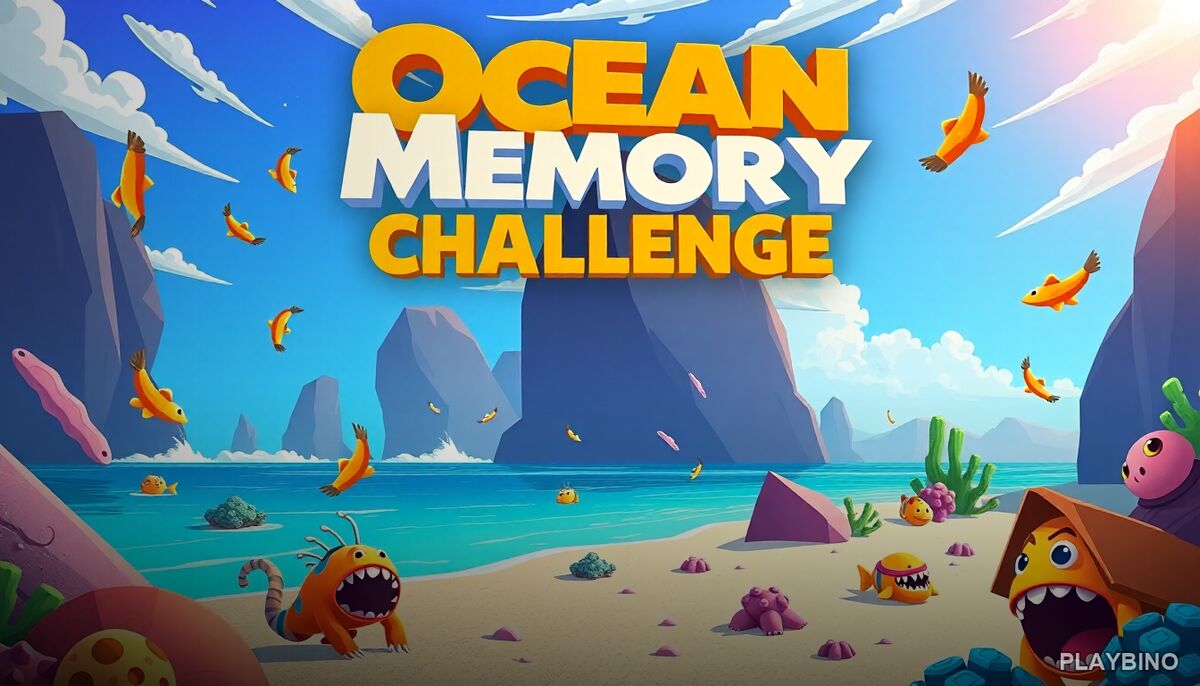
What You're Actually Doing
Every round starts with a board full of face-down tiles. Flip one, then another. If the two revealed cards show the same sea creature or ocean treasure, they clear from the board. If they don't match, both flip back over — and now you need to remember where each one was. That's the entire loop, and it's deceptively demanding. This underwater memory puzzle builds its challenge purely from concentration and recall, no timers forcing panic, no complex controls getting in the way.
The Memory Mechanics That Matter
Matching games live or die by how well they reward attention. Here, every mismatched flip is information. You saw two tiles. You know their positions. The next time one of those creatures appears somewhere else on the board, you have a decision: do you remember where its pair was, or do you need another hint?
Visual Recall Over Speed
The marine setting isn't just decoration. Colorful fish, coral formations, and ocean treasures give each tile a distinct visual identity, which makes them easier to encode in short-term memory. Players who slow down and actually look at each image before flipping the next tile tend to clear the board faster than those who rush.
Tracking Mismatches
The real skill is treating every failed attempt as a data point. Mentally mapping the board — even roughly — turns what looks like guessing into a methodical process. After a few rounds, patterns in your own recall start to emerge. Some positions stick immediately