Oil Tanker Truck Transport: Driving Heavy Cargo Through Mountain Routes
What You're Actually Doing
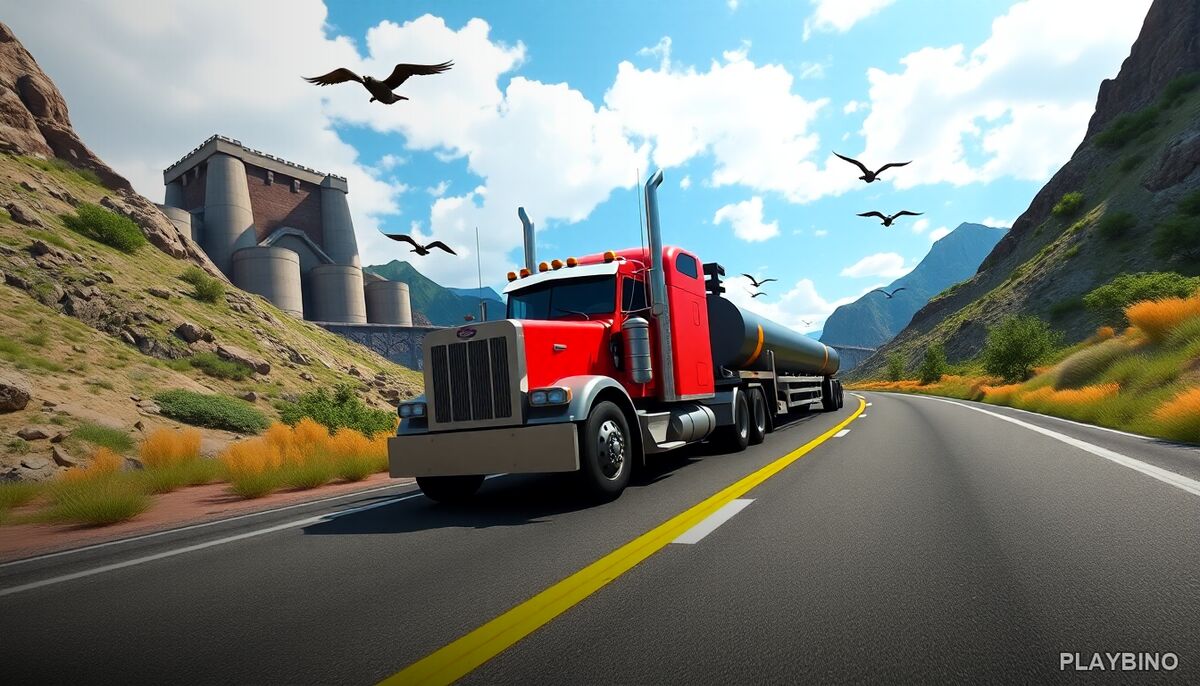
Most driving games reward speed. Oil Tanker Truck Transport punishes it. You're hauling massive fuel tankers along cliff-side mountain roads where momentum is your biggest enemy. The goal is delivery, but the real challenge is keeping a multi-ton vehicle from sliding off a switchback at 40 kilometers per hour. Play it in your browser and the weight of that cargo becomes immediately obvious from the first bend.
How the Physics Shape Every Decision
The handling in this simulation is built around cargo weight and terrain gradient. Loaded tankers don't stop quickly. They don't corner cleanly. When you crest a hill and start descending, the truck pushes forward whether you want it to or not. That momentum either works in your favor on flat stretches or becomes a serious problem on tight downhill curves.
Throttle control matters more than steering. Entering a corner too fast means correcting mid-turn, which often ends badly on narrow roads with no guardrails. The physics create a feedback loop where small mistakes compound — a slightly wide entry leads to a correction, the correction upsets the load balance, and suddenly you're fighting the truck instead of driving it.
Reading Terrain Before You Reach It
The camera angle gives you enough road preview to plan ahead. Spotting a tight hairpin 50 meters out means you can start braking early rather than reacting at the last second. Players who treat this like a racing game will struggle. Players who approach it like a logistics simulation — reading the road, managing speed zones, respecting gradients — will find the routes manageable.
Truck Variety and Route Design
Different truck models handle differently. Some are more responsive but carry less load. Others are sluggish but stable on steep descents. Matching the right vehicle to a specific route type is part of the progression. A truck that performs well on wide mountain passes may feel unwieldy on tight switchback sections.
Route design covers a range of terrain types: steep ascents, narrow cliff paths, winding descents, and mixed-grade roads that shift between challenges within a single level. Weather conditions add another layer — wet roads reduce traction and demand even more conservative speed management.
Where the Tension Comes From
There's a constant push-pull between efficiency and safety. Deliveries have time pressure, which nudges you toward driving faster than is comfortable. The risk-reward calculation on every straight stretch — do I accelerate here or stay cautious for the upcoming bend — keeps the driving mentally active rather than passive.
Losing control near a cliff edge and recovering without going over is genuinely satisfying. The simulation doesn't need explosions or combat to generate tension. The terrain and physics do that work on their own.
Weather and Unpredictability
Wet conditions change the feel of familiar routes. A road you've driven cleanly in dry weather becomes a different problem when traction drops. This prevents routes from feeling solved after one successful run and adds replay value across the level set.
Who This Game Suits
If you enjoy simulation-style driving that prioritizes control over speed, this fits well. The skill ceiling is real — there's a clear difference between surviving a route and completing it efficiently. Players who like the methodical side of racing games, where setup and approach matter more than raw reaction time, will find the most to work with here.
Road Train Truck Driving covers similar territory with a different vehicle type — that driving challenge is worth comparing if you want to see how multi-trailer handling changes the dynamic. Both games sit in the same simulation space but feel distinct in how they create difficulty.
Practical Tips Before You Start
- Brake before corners, not during them — mid-corner braking upsets the load balance.
- Use engine braking on descents by easing off the throttle rather than riding the brakes.
- Watch the road preview in the camera frame to anticipate tight sections early.
- Choose trucks based on route type, not just top speed or load capacity.
- Treat weather levels as a reset — familiar routes behave differently in wet conditions.
PlayBino hosts the full game with no download required, so you can jump into a route immediately and get a feel for the handling before committing to longer runs.