Online Strike Assault: Team Tactics and PvP Combat Guide
What Kind of Game Is This?
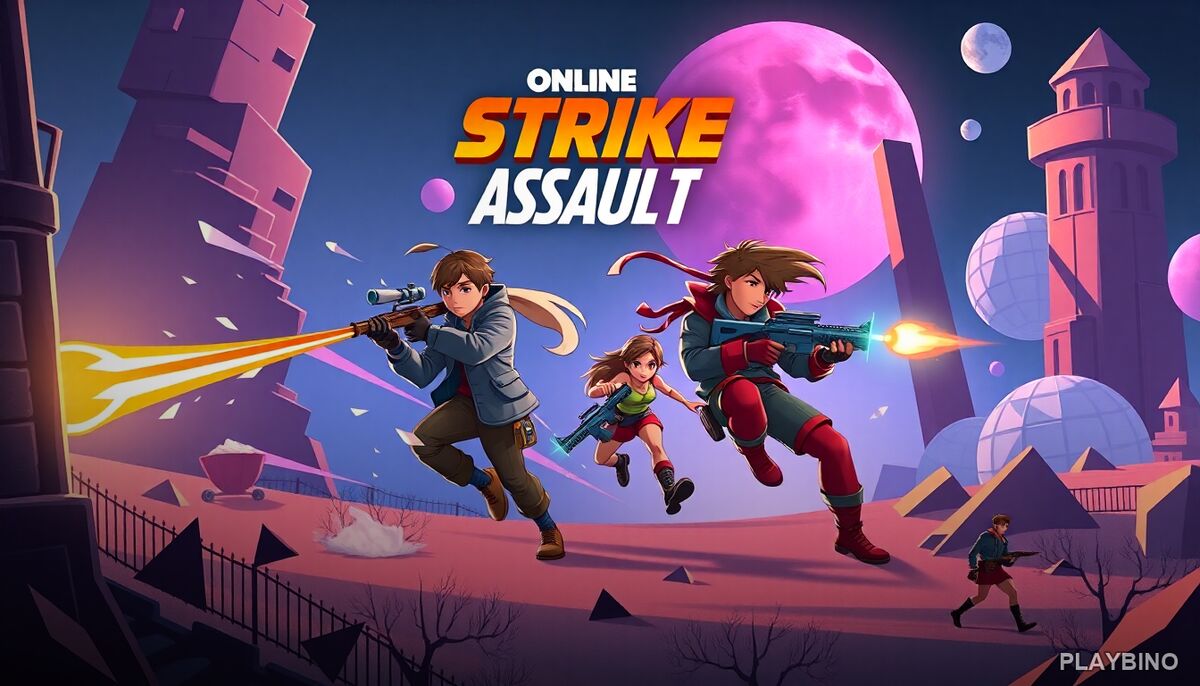
Online Strike Assault is a competitive multiplayer shooter that puts six-player squads against each other in urban combat environments. The goal is straightforward: reach 60 eliminations before the opposing team does. But the path to that number is anything but simple. Matches reward positioning, awareness, and coordinated pushes far more than raw aim alone. Play it directly in your browser and you'll notice quickly that solo plays rarely carry a round.
The Urban Battleground
The maps in Online Strike Assault are built around city layouts — streets, building interiors, alleyways, and open intersections. These environments create natural choke points and sightlines that shape how each match flows. Teams that understand the map geometry gain a significant edge.
Positioning and Sightlines
Holding elevated positions or corners near high-traffic areas can generate consistent eliminations without overextending. The third-person camera perspective adds a layer of awareness that lets players peek around cover before committing to a move. This makes map knowledge and patience genuinely useful tools, not just passive bonuses.
Rotation and Zone Control
Because the format is deathmatch-based, there are no objectives to capture — but controlling central zones still matters. Teams that dominate the middle of the map force opponents into reactive positions, making it easier to pick off isolated enemies. Rotating together as a unit rather than spreading out individually is one of the most effective habits to develop.
Combat Feel and Shooting Mechanics
The shooting in Online Strike Assault is fast and direct. Engagements tend to be short, so the first player to land accurate shots usually wins the duel. That said, the game doesn't reduce everything to pure reaction speed. Cover usage, flanking angles, and timing your movement between bursts all factor into whether you survive a fight or contribute to the enemy's elimination count.
The action stays intense throughout a match because the respawn system keeps both teams active. There's rarely a long lull — pressure builds continuously as the elimination counter climbs on both sides.
Team Strategy Over Individual Plays
What separates Online Strike Assault from simpler shooting games is its emphasis on collective strategy. A single skilled player can contribute meaningfully, but a coordinated squad that communicates push timings and covers each other's flanks will consistently outperform a group of disconnected individuals.
- Assign roles loosely — some players push aggressively while others hold defensive positions
- Avoid clustering in one spot, which makes the squad vulnerable to area attacks
- Track where eliminations are happening to anticipate where the next engagement will occur
- Adapt mid-match if the current approach isn't generating enough eliminations
The PvP format means every match plays out differently. Teams adjust, momentum shifts, and a squad that's trailing by ten eliminations can absolutely close the gap with a well-executed push sequence.
Who Will Enjoy This Game
Players who like multiplayer shooters with a strategic layer will find a lot to engage with here. The action format is familiar enough to pick up quickly, but the team dynamics add depth that keeps matches interesting beyond the first few rounds. Combat Reloaded 2 is another browser-based shooter worth comparing — that similar PvP experience covers a comparable style of competitive play if you want to explore the genre further on PlayBino.
Momentum and Match Pacing
One of the more interesting design elements in Online Strike Assault is how momentum works. A team that strings together several quick eliminations can psychologically pressure the opponent into making riskier plays. Conversely, a squad that slows down and plays defensively after taking an early lead can sometimes lose it by becoming too passive.
The 60-elimination target creates a natural arc to each match. Early game is about establishing map control. Mid-game is where strategy adjustments happen. Late game, when both teams are close to the target, becomes the most tense and rewarding phase — every engagement carries real weight.