Only Up! Forward: Vertical Platforming With No Safety Net
What Kind of Game Is This?
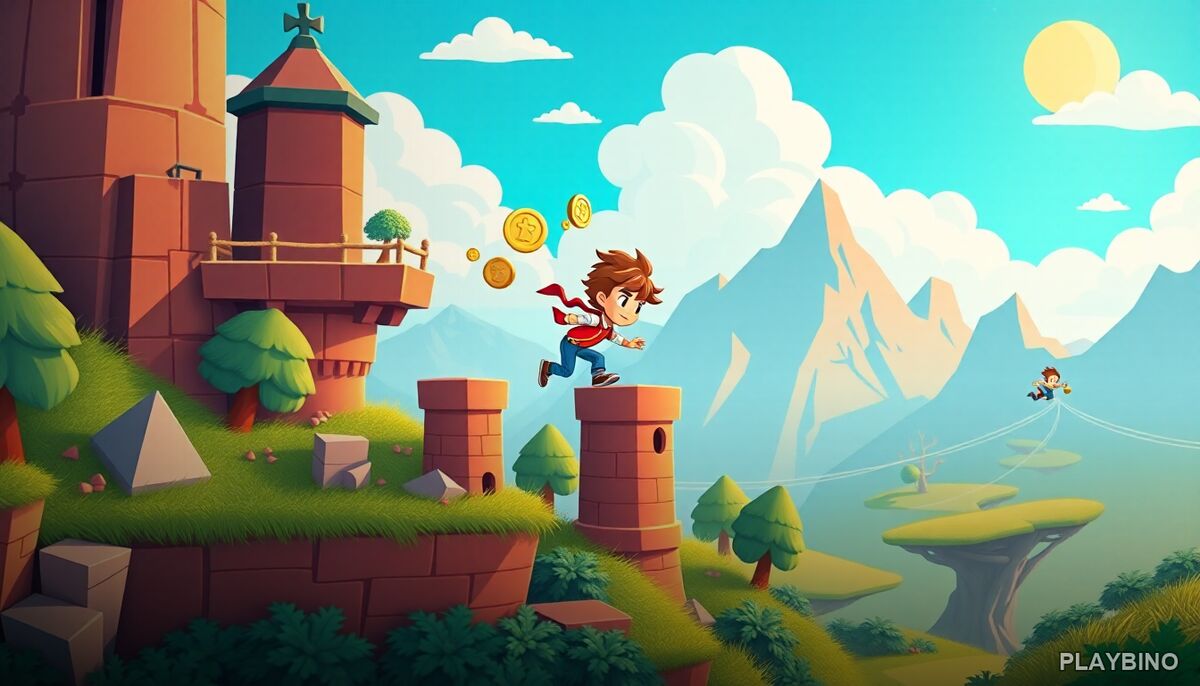
Only Up! Forward is a single-player skill platformer built entirely around vertical movement. There are no enemies, no timers, and no combat — just you, a series of increasingly unstable platforms, and a world that stretches endlessly upward. The premise sounds simple, but the execution demands real concentration. Try the full climb and you'll quickly understand why each platform feels like a small decision with large consequences.
The Core Loop: Climb, Fall, Repeat
The game gives you one direction: up. Every run starts from the bottom, and the only way to make progress is to move carefully across floating debris, rusted scaffolding, and improbable aerial structures that form a path toward the sky. There are no checkpoints placed generously throughout the world. Fall from a significant height and you return to the start — or close enough to it that the loss stings.
That structure creates a specific kind of tension. Each platform you land on safely feels like a small win. The higher you climb, the more that accumulated progress becomes something you want to protect. One mistimed jump, one moment of overconfidence, and it disappears. That cycle of risk and reward is what keeps players returning.
Movement and Timing
Controls are straightforward: move, jump, and navigate the geometry of each section. What makes it hard is the precision required. Platforms vary in size, angle, and spacing. Some require a running jump; others need a careful step. Reading the path ahead and committing to a route without hesitation is a skill that develops gradually over repeated attempts.
The Environment as Motivation
One of the more interesting design choices here is how atmosphere drives progression. The world changes as you ascend. Early sections feel grounded — broken urban structures, industrial wreckage. Higher up, the environment becomes stranger and more surreal, with floating fragments and skyward geometry that doesn't follow any logical architecture. Curiosity about what comes next does a lot of the work in pulling you forward through difficult sections.
There's a quiet quality to the experience. No soundtrack pushing urgency, no flashing UI elements demanding attention. Just the space above you and the question of whether you can reach it.
Why the No-Checkpoint Design Works
Removing frequent checkpoints is a deliberate choice, not an oversight. It forces players to treat every step seriously. In most platformers, a fall is a minor setback. Here, it carries real weight. That weight transforms the climbing into something that feels genuinely earned rather than routine.
Players who enjoy this kind of pressure — where progress is slow but meaningful — will find the structure satisfying. Those who prefer more forgiving designs may find it frustrating, and that's a fair response. The game is built for patience and repetition, not speed or casual play.
What Makes a Good Run
- Staying focused during long unbroken sequences rather than rushing
- Identifying safe landing spots before committing to a jump
- Recognizing which sections caused previous falls and adjusting approach
- Resisting the urge to speed up when progress feels comfortable
A Similar Vertical Challenge
The original Only Up! shares the same core concept — upward climbing with high fall penalties — and that version has its own distinct world and path worth exploring if this style of platformer appeals to you. Comparing the two runs gives a good sense of how much variety a single concept can support.
Who This Game Is For
Only Up! Forward suits players who find satisfaction in slow, deliberate progress. It's a skill game in the truest sense — not reflex-based like a shooter or logic-based like a puzzle game, but built around spatial awareness, patience, and the willingness to start over without frustration. If a single successful climb after many failed attempts sounds rewarding rather than exhausting, this game on PlayBino will hold your attention for longer than expected.