Only Up Parkour 2: Climbing, Timing, and the Cost of One Bad Jump
What Kind of Game Is This?
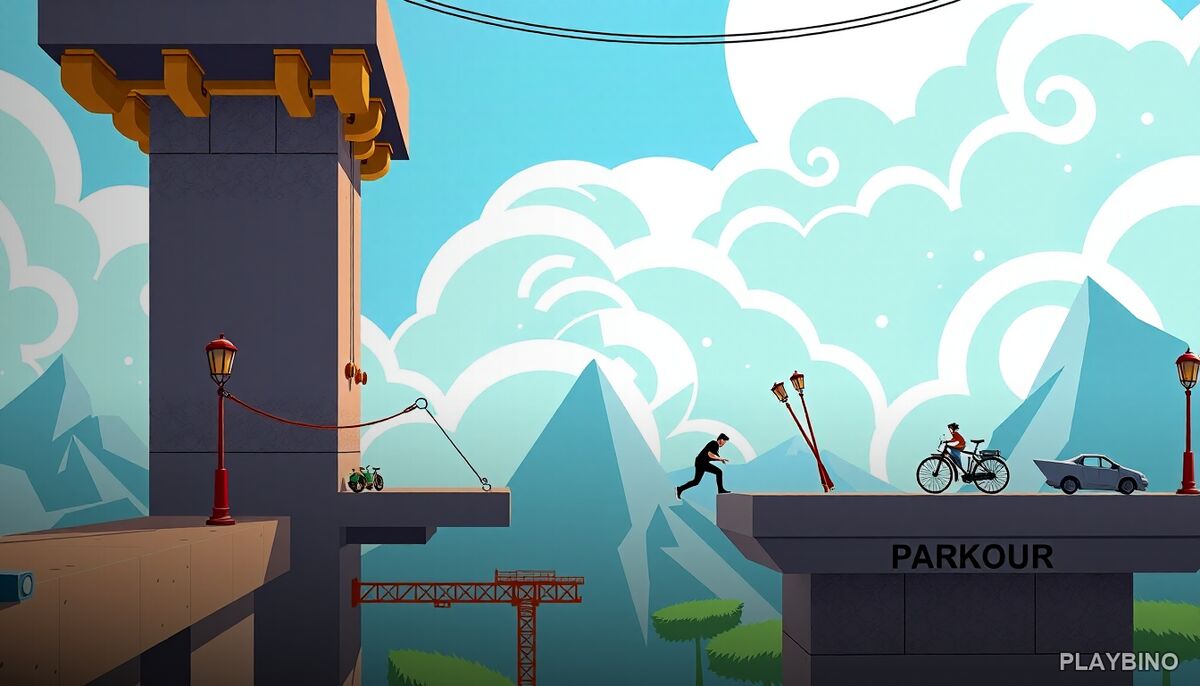
Vertical platformers have a specific kind of tension that flat side-scrollers rarely match. Every step upward feels earned, and every fall feels devastating. Only Up Parkour 2 leans hard into that dynamic. You climb through a suspended world of platforms, narrow ledges, and moving obstacles that stretch endlessly upward. There is no health bar, no lives system, and no checkpoint mercy. Progress is measured in altitude, and losing it hurts. If you want to feel that pressure firsthand, try the full run in your browser before reading further.
The Vertical Obstacle Course Structure
The game builds its challenge around a single upward path that constantly changes shape. Early sections introduce basic platform jumps with forgiving spacing. As you climb higher, the course introduces moving platforms, tighter gaps, and sequences where one mistimed step sends you back down a significant distance.
Each new section functions almost like a puzzle. You look ahead, identify the pattern, and plan your approach before committing. The platforms are not random — they follow logical sequences that reward observation. The problem is that recognizing the pattern and executing it cleanly are two completely different skills.
Moving Platforms
These are the most punishing obstacle type in the game. A moving platform requires you to time your jump to land on it mid-travel, then immediately prepare for the next move before it carries you into a wall or off a ledge. Waiting too long costs you the window. Jumping too early puts you in the wrong position.
Narrow Ledges and Gap Sequences
Some sections reduce the landing area to almost nothing. These require precise horizontal control and a clean landing with no momentum overflow. Gap sequences chain multiple short jumps together, and the margin for error on each one compounds across the whole sequence.
How the Controls Feel
The movement in Only Up Parkour 2 is responsive but unforgiving. There is no floaty jump that gives you extra air time to correct mistakes. What you input is what you get. That directness is part of what makes the game satisfying when a sequence clicks — you know the success came from your own timing, not from the game catching you.
Acceleration and stopping distance matter more than they first appear. Running into a jump carries more horizontal momentum than a standing jump, which affects where you land on narrow platforms. Learning to control your speed before each jump is one of the first real skills the game demands.
The Psychological Side of Progress
One of the more interesting aspects of this type of skill game is how it handles failure. A bad fall does not just reset a small section — it can erase several minutes of careful climbing. That creates a specific kind of pressure that increases the longer a run goes well. By the time you are high up and playing carefully, the fear of falling becomes its own obstacle.
Players who enjoy this kind of challenge often describe a rhythm that develops after enough attempts. Sections that once felt impossible start to feel automatic. The muscle memory built through repetition eventually turns difficult sequences into reliable ones, and that progression feels genuinely rewarding.
A similar psychological loop appears in This Game About Climbing, which takes a different mechanical approach to the same upward-movement tension. Worth a look if the vertical climbing format appeals to you.
Who This Game Suits
Only Up Parkour 2 is built for players who are comfortable with repetition and incremental improvement. It rewards patience and attention more than speed. If you find yourself frustrated by games that reset progress on failure, this one will test that tolerance significantly. But if you enjoy the satisfaction of finally clearing a section that stopped you for ten attempts, the game delivers that feeling consistently.
- Single-player, no time pressure outside your own nerves
- Skill-based progression with no random elements
- Short sessions work well — each attempt is a complete run
- Difficulty scales naturally with altitude rather than artificial modifiers
Strategy for Consistent Climbing
The most effective approach is to treat each new section as a learning phase before a performance phase. On first contact with an unfamiliar obstacle cluster, slow down and observe. Watch moving platform cycles. Identify where the safe landing zones are. Then attempt the sequence at controlled speed rather than full momentum.
Once a section is familiar, commit to it cleanly. Hesitation mid-sequence often causes more falls than aggression does. PlayBino hosts the game directly in the browser with no download needed, which makes it easy to restart quickly and keep the learning loop moving without friction.