Pac Ring Adventure: Circular Maze Action Explained
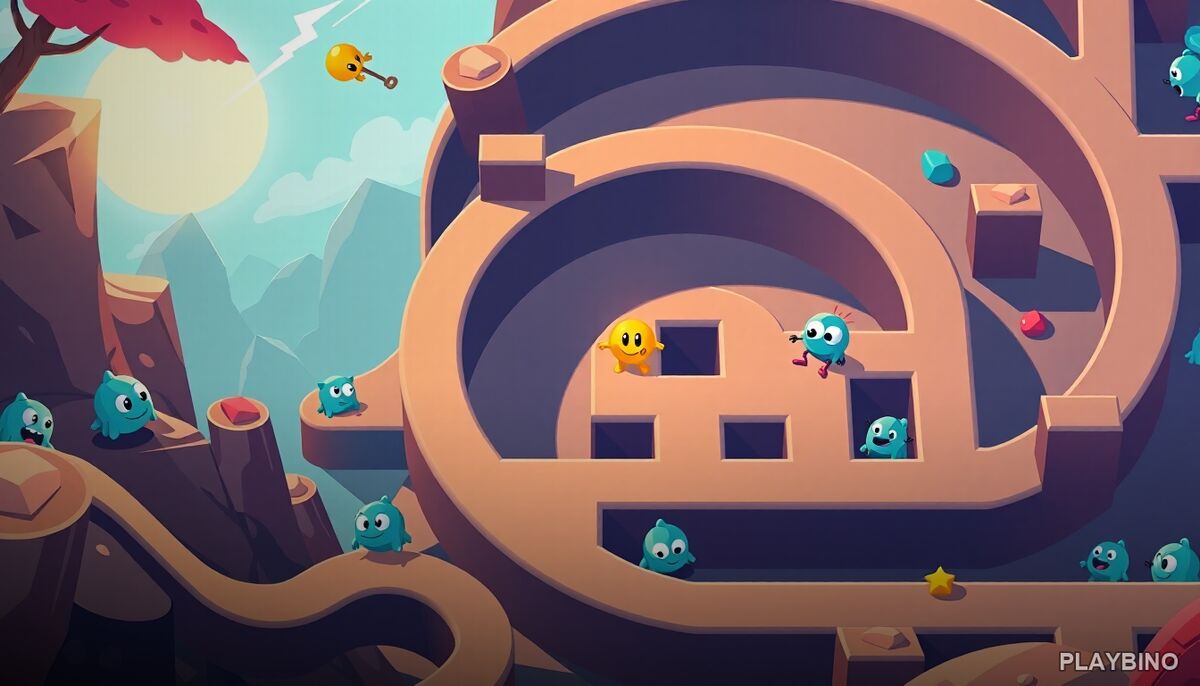
A Fresh Spin on Maze-Chase Gameplay
Most arcade maze games rely on grids and straight corridors. Pac Ring Adventure breaks that formula by routing everything through circular paths. The ring structure changes how you think about movement — instead of turning corners, you're constantly orbiting, timing your arc, and deciding when to push forward or hold back. Try the full challenge and you'll notice immediately how different the spatial logic feels compared to classic maze runners.
What You're Actually Doing Each Round
The core loop is familiar: collect pellets, avoid enemies, survive long enough to clear the ring. But the circular layout forces you to think in loops rather than escape routes. Enemies patrol the same rings you're working through, which means every pellet run is also a collision risk calculation. You can't simply outrun a pursuer down a long corridor — you have to time your laps and use the ring's geometry to create distance.
As levels progress, the enemy count rises and the rings tighten. What felt like a manageable orbit in early stages becomes a high-pressure chase where a half-second of hesitation costs you a life.
Power-Ups and Tactical Decisions
Temporary Advantages
Scattered across each ring are power-ups that shift the dynamic. Speed boosts let you lap enemies before they can react. Invincibility windows flip the situation entirely — suddenly the chasers become the targets. Knowing when to grab a power-up versus saving it for a worse moment is one of the more interesting decisions the game creates.
Balancing Collection and Survival
Pellet collection isn't passive. Clearing a ring requires moving through every section, which means you'll inevitably cross paths with enemies. The game rewards players who map out efficient routes mentally rather than just reacting. Leaving pellets in a dangerous zone and returning later with a power-up active is a legitimate strategy that becomes more important in later levels.
Controls and Game Feel
The controls are responsive and straightforward, which matters a lot in a game built around precise timing. Movement along the rings feels smooth, and the character responds quickly enough that close calls feel earned rather than unfair. The bright visuals keep the ring paths easy to read even when multiple enemies are on screen, so the challenge stays in the decision-making rather than the visibility.
Who This Game Suits
If you enjoy single-player arcade action with a scoring focus, this one delivers steady escalation. The early levels are accessible, but the difficulty curve is real — later stages require both quick reflexes and a calm enough head to plan two or three moves ahead. It's the kind of game where a good run feels genuinely satisfying because it required actual thought, not just fast fingers.
- Ring-shaped paths replace traditional maze corridors
- Enemies patrol the same routes as the player
- Power-ups include speed boosts and invincibility
- Difficulty increases through tighter rings and more enemies
- Single-player arcade format with progressive levels
Similar Arcade Experience on PlayBino
The pellet-chase genre has more variety than it might seem. Pacman Rush takes a different approach to the same core idea — faster pacing, different level design, and its own set of mechanics worth exploring. That arcade challenge is a solid next stop if you want to compare how two games handle the same basic concept from different angles.