PacRing Adventure: Circular Maze Strategy and Survival Tips
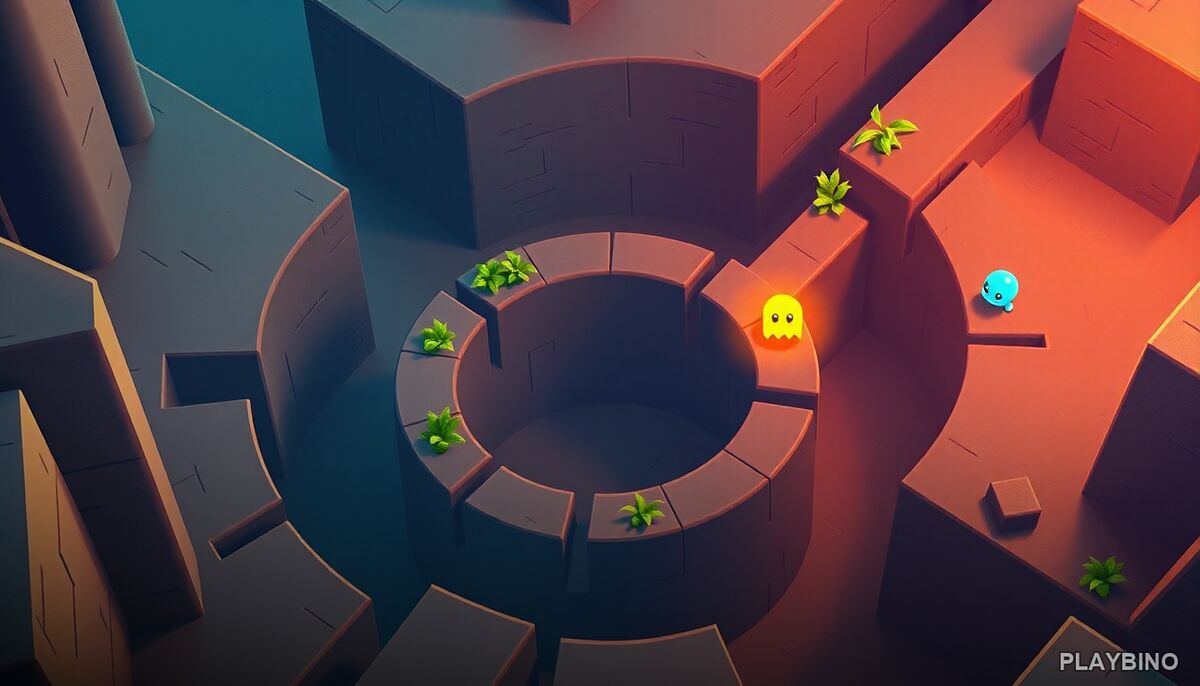
A New Shape for an Old Formula
Most maze-chase games operate on a grid. Straight corridors, sharp corners, predictable angles. PacRing Adventure throws that layout out entirely and replaces it with ring-shaped stages where every path curves. That single design decision changes how you think about movement, escape, and threat assessment. If you want to experience the shift firsthand, try the full challenge in your browser before reading further.
The circular structure means enemies approaching from opposite ends of the same ring can effectively trap you in the middle. There are no dead ends in the traditional sense, but there are pinch points where two patrol routes converge. Recognizing those moments early is what separates a clean run from a sudden restart.
How the Ring Layout Changes Movement
On a flat grid, you read the map in straight lines. On a ring, you read it in arcs. Your character moves along curved pathways, and the visual perspective shifts how you judge distance and timing. An enemy that looks far away on the outer ring can close the gap faster than expected because the arc shortens the effective distance.
Escape Routes
Each ring level offers multiple curved paths leading away from any given point. The key is not finding an exit — it is choosing the right one. Moving inward toward a smaller ring often feels safer but can leave you with fewer options when enemies converge. Staying on the outer ring gives more room but exposes you to faster-moving patrols.
Pellet Routing
Clearing all pellets is the objective, so efficient routing matters. You cannot simply chase pellets randomly. Plan a rough arc through each ring section so you are not backtracking through areas enemies have already reclaimed. Leaving clusters of pellets in dangerous zones for later is a common mistake that forces risky re-entries.
Enemy Behavior and Pattern Recognition
Enemies in PacRing Adventure follow distinct patrol patterns rather than purely chasing you. Early stages introduce slow, predictable movers that loop the same arc repeatedly. Later rings add faster enemies and those that switch direction unpredictably, demanding more active attention.
Spending the first few seconds of a new stage observing enemy movement before committing to a path pays off. Each enemy has a rhythm. Once you identify it, you can thread gaps with confidence rather than reacting blindly. The action-puzzle balance here leans toward puzzle thinking — the arcade reflexes come second to reading the board correctly.
Power-Up Timing
Power-ups appear at fixed positions on each ring. The temptation is to grab them immediately, but holding off until enemies are clustered nearby delivers far more value. A power-up used in an open section with no threats nearby is essentially wasted.
- Identify power-up positions before committing to a route.
- Let enemies approach before activating an advantage.
- Use the temporary window to clear dense pellet clusters you were avoiding.
- After the effect expires, move away from the area where enemies were last stunned — they recover quickly.
Stage Progression and Difficulty Curve
Early rings function as a tutorial in disguise. The layouts are simple enough that you can afford mistakes. As stages advance, the rings multiply, enemy counts increase, and the pellet distribution becomes less forgiving. Some later levels place pellets specifically in high-traffic enemy zones, forcing you to time entries precisely.
The action tag in this game earns its place in the harder stages. Reflexes do matter once the puzzle layer has been worked out. The two demands — planning and execution — scale together rather than one overtaking the other, which keeps the progression feeling balanced rather than suddenly punishing.
Players who enjoy collecting-based arcade challenges with a layer of spatial reasoning might also find Steve Diamond Hunter interesting. That similar arcade experience shares the collection-and-survival structure in a different setting worth exploring.
Who This Game Suits
PacRing Adventure works well for players who like arcade games with a thinking component. Pure reflex players may find the early stages too slow. Pure puzzle players may find the later action demands challenging. The middle ground — someone comfortable reading patterns and reacting to them — is where this game feels most rewarding. PlayBino hosts it as a no-download browser game, so the barrier to trying a few stages is essentially zero.