Parking Order: Solving Spatial Logic Puzzles One Car at a Time
What Kind of Game Is This?
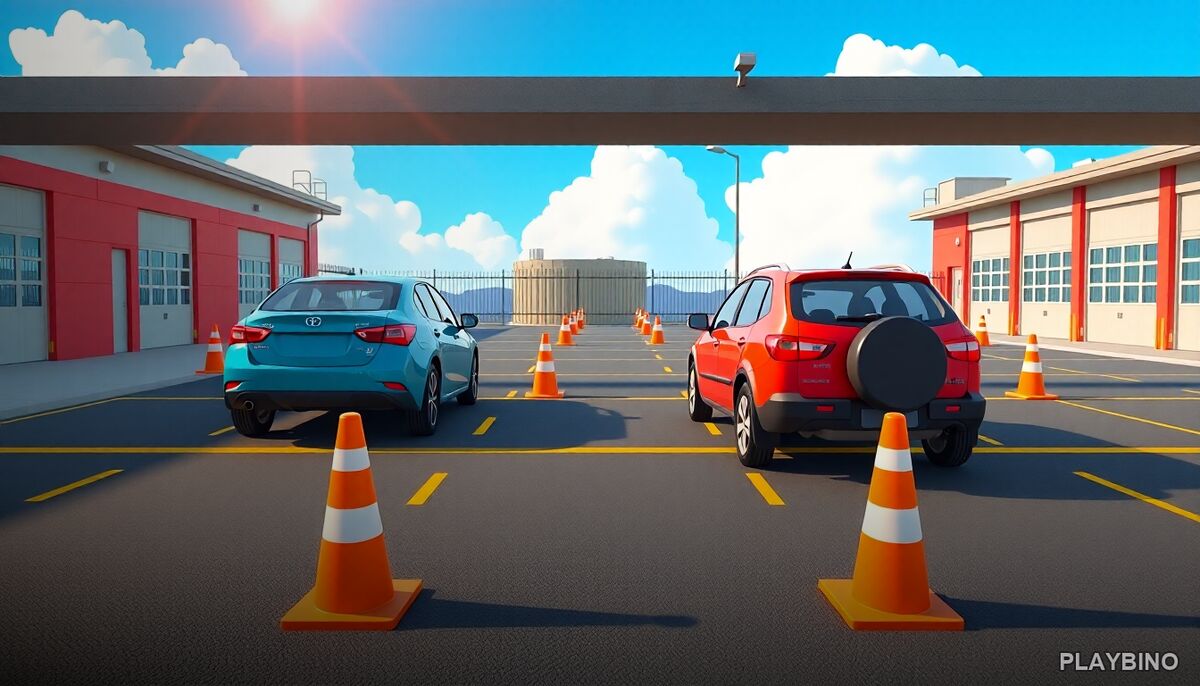
Parking Order sits firmly in the logic puzzle category, but it has a very specific spatial twist. Instead of matching shapes or rotating tiles, you're dealing with cars — real, blocky vehicles crammed into tight parking lots. The core challenge is sequencing: one car needs to leave first, but it's buried behind three others, and those others are blocked too. Every level is a small knot you have to untangle.
The minimalist visual design strips away distractions. There's no timer ticking down, no flashy animations demanding attention. Just the lot, the cars, and the problem. The full challenge is available directly in your browser, no download needed.
How the Puzzle Mechanics Work
Each level presents a parking lot with multiple vehicles. One car — usually highlighted or indicated — must exit first. The catch is that other cars are blocking the path. You slide vehicles forward and backward along their lanes to create a clear route.
Movement and Constraints
Cars can only move along the axis they're already aligned with. A horizontal car slides left or right; a vertical car moves up or down. You can't rotate them or change their orientation. This constraint is what makes the puzzle genuinely difficult — you're working within a rigid grid, and every move affects the positions of surrounding vehicles.
Sequencing Logic
The real mental work is figuring out the order of moves. Moving car A might free car B, but car B's new position could block car C, which you actually needed to shift first. This chain-reaction thinking is what separates early levels from later ones. By the time the lot fills with six or seven vehicles, you're essentially solving a small planning problem before you touch anything.
How Difficulty Scales
Early levels introduce the basic idea with two or three cars and obvious solutions. The game doesn't stay gentle for long. New levels add more vehicles, tighter configurations, and layouts where nearly every car is interdependent. Some arrangements require five or six preparatory moves before the target car can even begin to move toward the exit.
One misstep — moving a car into a position that blocks two others simultaneously — can lock the puzzle entirely and force a restart. That restart pressure encourages careful thinking rather than trial and error, which is exactly what a good logic puzzle should do.
Strategy Tips Worth Knowing
- Identify the exit path first. Before touching anything, trace the route the target car needs to take. Which cars are directly in that path?
- Work backwards from the exit. Clear the car closest to the exit first, then the one behind it, and so on.
- Look for cars with only one possible move. These are your anchors. Build your sequence around them.
- Avoid moving cars into dead-end positions. If a car has no room to move after you place it somewhere, it becomes a permanent obstacle.
- Count available spaces before committing. A lane that looks open might not have enough room for the car you want to slide into it.
Who This Game Suits
If you enjoy logic puzzles that reward patience and forward planning over reflexes, this is a strong fit. There's no action element, no score multiplier, no time pressure. The satisfaction is purely cognitive — that moment when the correct sequence clicks into place and every car flows out cleanly.
Park Inc takes a different angle on parking-themed gameplay, and that parking management experience is worth exploring if you want something with a broader simulation feel alongside the puzzle logic.
Progression and Replay Value
The level structure keeps things moving without overwhelming new players. Each stage introduces a slightly more complex configuration, so the learning curve feels earned rather than arbitrary. PlayBino hosts the game with clean browser performance, meaning load times don't interrupt the thinking process.
There's no open-world element or meta-progression system here. The value is in the puzzles themselves — each one a self-contained spatial problem. Players who enjoy working through logic challenges methodically will find plenty to engage with as the lot configurations grow more intricate across later stages.