Parking Resolver: Spatial Puzzle Driving Game Guide
What Kind of Game Is This?
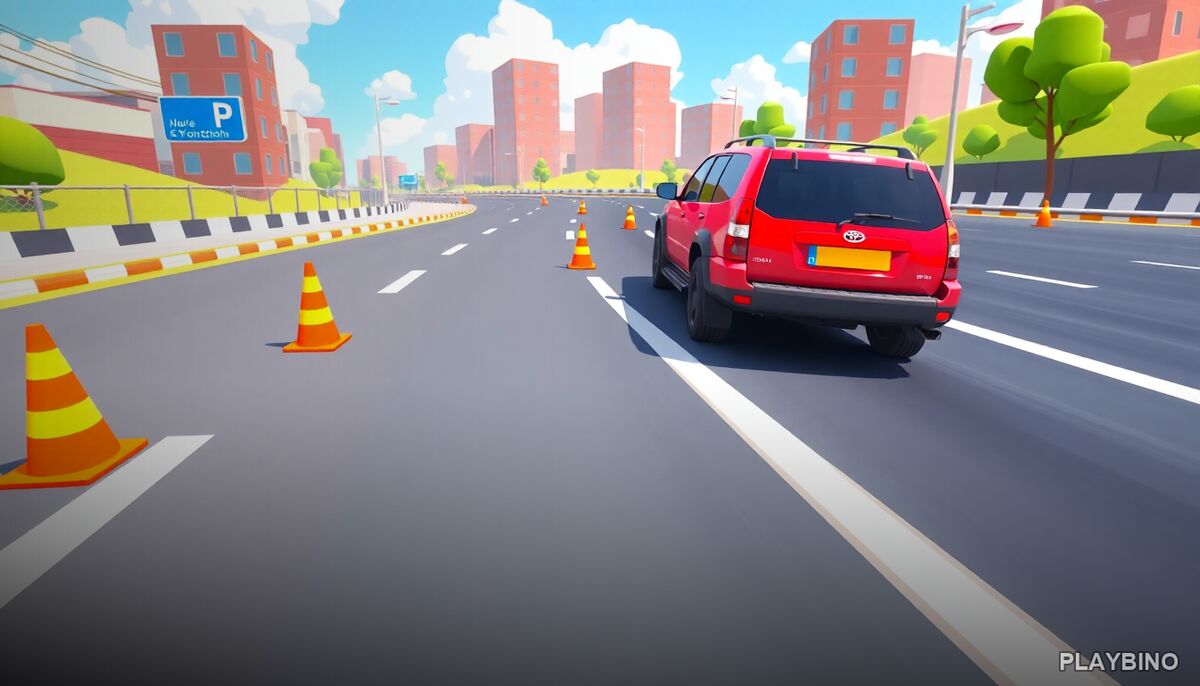
Parking Resolver is a spatial puzzle and simulation game built around one deceptively simple concept: get the vehicle into the designated spot without hitting anything. That sounds straightforward until the layouts start stacking obstacles, surrounding vehicles, and narrow corridors that demand real precision. Try the full challenge in your browser and you'll quickly realize that speed is rarely the answer here.
The Core Mechanic and Why It Feels Different
Most driving games reward quick reflexes. This one rewards patience and spatial reading. Before moving, you need to assess the gap, the angle of approach, and whether there's enough clearance to complete the maneuver without clipping a barrier or a parked car. The physics are responsive enough that small steering corrections actually matter, which makes every clean park feel genuinely earned rather than lucky.
Distance Judgment
A lot of the difficulty comes from judging distances in tight spaces. The camera perspective can compress how close obstacles actually are, so players who slow down and inch forward tend to perform better than those who commit to a single fast approach.
Angle and Reversing
Several levels require reverse parking or multi-point turns. These scenarios add a layer of planning because the vehicle's turning radius becomes a real constraint. You can't always drive straight in — sometimes you need to set up the angle two or three moves ahead.
Level Progression and Difficulty Curve
Early levels function as a proper introduction. The parking spaces are generous, obstacles are minimal, and the time pressure is light. This gives you a chance to understand how the steering and braking respond before things get complicated. Around the mid-game, layouts start combining multiple parked vehicles, tighter corridors, and more demanding angles simultaneously. Later levels add time limits that force you to balance accuracy with urgency — a combination that sharpens the puzzle feel considerably.
- Opening stages: wide spaces, single obstacles, low time pressure
- Mid-game: multi-vehicle environments, tighter gaps, angle-dependent entry
- Advanced levels: narrow corridors, reverse parking, strict time limits
- Late stages: mixed vehicle types with varying turning radii
Strategy That Actually Helps
The most consistent approach across all levels is to prioritize positioning over speed. Getting the vehicle aligned before committing to the final approach saves far more time than rushing and having to reset. When a level has a time limit, spend the first few seconds reading the layout rather than immediately moving — that mental map pays off during execution.
For reverse parking scenarios specifically, look for reference points on the environment you can use to gauge depth. The back bumper's relationship to a wall or curb is often a reliable indicator of when to stop. Players who learn to use environmental cues rather than guessing tend to clear these stages more consistently.
Who This Game Suits
If you enjoy puzzle games where the challenge is spatial and logic-based rather than action-heavy, this fits well. The simulation side means it doesn't play like an arcade racer — there's no drifting or speed-based scoring. It's closer to a skill puzzle where the vehicle is your tool for solving a geometric problem. Truck Space 2 takes a similar approach to vehicle maneuvering with larger rigs, and that driving-focused challenge is worth exploring if you like this style of spatial puzzle.
Replay Value and Progression Feel
Parking Resolver on PlayBino doesn't rely on flashy unlocks or meta-progression to keep you engaged. The satisfaction comes from clearing a level cleanly after several attempts, or finding a more efficient entry line on a replay. The variety in level layouts — different vehicle types, different obstacle arrangements — means the puzzle logic stays fresh rather than repeating the same solution pattern across stages. That consistency of challenge, without relying on gimmicks, is what makes it hold up across multiple sessions.